




Can Walking Poles Be Used as Crutches in an Emergency? A Critical Guide
Imagine this scenario: you are miles from the trailhead, deep in the backcountry, when a misstep results in a twisted ankle or a suspected stress fracture. You have no cell service, no rescue team nearby, and the walk out suddenly seems impossibly far. In that moment, you look at the trekking poles in your hands and wonder: can these serve as makeshift crutches? The answer is both hopeful and cautionary—yes, in a genuine emergency, walking poles can provide temporary support, but they come with significant limitations and risks that every hiker must understand.
Recommended trekking pole purchase link: https://s.click.aliexpress.com/e/_c4M7OWaN
The Short Answer
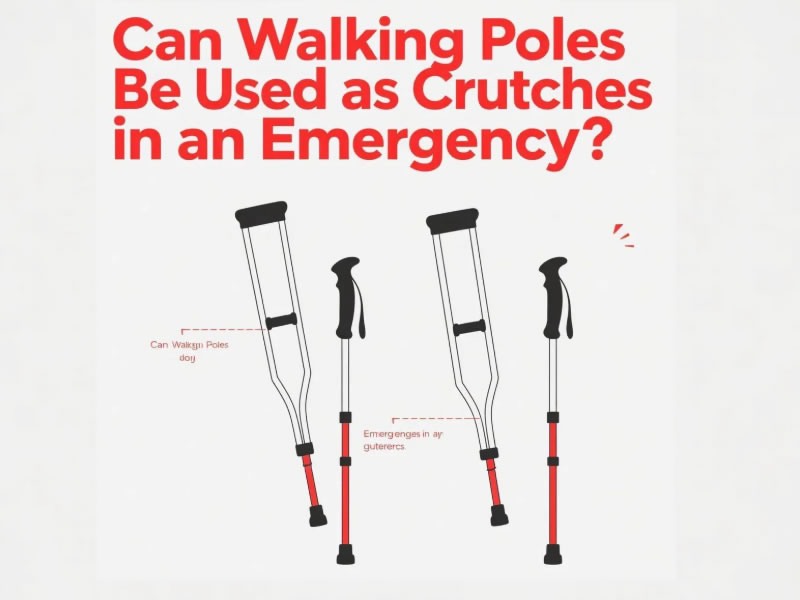
Walking poles can be used as improvised crutches in a true emergency when no other options exist. However, they are not designed or safe for this purpose under normal circumstances. Unlike medical crutches, trekking poles lack padded underarm supports, are not engineered to bear full body weight, and may fail catastrophically under the wrong loads. Using them as crutches should be a last resort, not a planned strategy.
How Walking Poles Differ from Medical Crutches
Understanding the design differences explains why poles are a poor substitute:
Weight Distribution: Medical crutches feature wide, padded platforms that transfer weight through the rib cage and upper arms, not directly into the armpits. Walking poles transfer force through the hands and wrists—a much smaller surface area that quickly fatigues and cannot support full body weight comfortably or safely.
Structural Engineering: Crutches are built to withstand vertical loads equal to or exceeding a person's full body weight, with safety margins for dynamic forces like hopping. Trekking poles are designed for partial weight support—typically 20-30 percent of body weight during normal walking. Subjecting them to full weight-bearing loads risks bending aluminum or snapping carbon fiber.
Locking Mechanism Integrity: Adjustable poles rely on flick-locks or twist-locks to maintain length. Under the repetitive, heavy loads of crutch-like use, these mechanisms can slip or fail, causing sudden collapse and potential falls.
Stability Base: Crutches have wide, non-slip tips designed for stability on various surfaces. Pole tips are narrow and can slip on hard surfaces or sink into soft ground when bearing full weight.
When You Might Consider It
Despite these limitations, there are wilderness scenarios where improvising is necessary:
- A minor injury that makes walking painful but not impossible, where partial weight relief could help you self-evacuate
- A more serious injury where waiting for rescue would take longer than attempting a slow, supported exit
- Situations where you have no other mobility aids and must move to reach safety or shelter
In these cases, using poles as crutches may be the least bad option. The key is understanding how to do so as safely as possible.
How to Use Walking Poles as Improvised Crutches
If you must use poles for emergency support:
- Use Both Poles: Never rely on a single pole for crutch-like support. Two poles provide better stability and distribute weight more evenly.
- Shorten Them: Adjust poles shorter than your normal walking length. Your elbows should be slightly bent when the tips are on the ground, allowing you to push down through straight arms—this transfers weight through your skeleton rather than muscles.
- Keep Injury Side Elevated: If one leg is injured, hold both poles on your strong side. Move the poles forward simultaneously with your injured leg, allowing them to bear weight as you step. This "three-point" gait mimics proper crutch technique.
- Avoid Armpit Pressure: Never jam pole tops into your armpits. This risks nerve damage (crutch palsy) and provides unstable support. Weight should go through your hands and straight arms.
- Move Slowly and Deliberately: Test each pole plant before committing weight. Be especially cautious on uneven or slippery terrain.
- Inspect Poles Frequently: Stop regularly to check locking mechanisms and look for signs of bending or stress. If a pole shows damage, stop using it for weight support.
Emergency Modifications
If you have resources, consider improvising improvements:
- Wrap clothing or padding around the grip area to create a larger, more comfortable hand platform
- If available, add wide rubber tips to prevent slipping on hard surfaces
- For underarm support (use with extreme caution), pad the top of the pole with clothing, but never hang full body weight from this position
Risks and Limitations
Using poles as crutches carries real dangers:
- Pole Failure: Collapse or breakage during weight-bearing can cause falls, potentially worsening injuries.
- Hand Fatigue: Hands and wrists fatigue quickly under full body weight, increasing fall risk as you tire.
- Nerve Compression: Improper technique can compress nerves in hands, wrists, or armpits.
- Slip Risk: Narrow tips provide less traction than proper crutch feet.
- Delayed Appropriate Care: Relying on inadequate support may cause further injury, complicating recovery.
Better Alternatives to Consider
Before resorting to poles as crutches, consider:
- Improvising a Splint: Stabilize the injured leg with a improvised splint using pack frames, tent poles, or branches, then use poles for balance rather than full weight support.
- Creating a Litter: If with others, improvise a carry system rather than forcing the injured person to walk.
- Waiting for Rescue: If you have communicated your situation and help is coming, staying put may be safer than moving with inadequate support.
Prevention and Preparation
The best approach is avoiding the need for improvised crutches altogether:
- Carry a lightweight emergency splint or SAM splint in your first aid kit
- Learn basic wilderness first aid, including injury assessment and improvised splinting
- Hike with a partner when possible
- Carry communication devices like satellite messengers or personal locator beacons
- Choose appropriate trails for your skill and fitness level
The Bottom Line
Can walking poles be used as crutches in an emergency? Yes—as an absolute last resort when no other options exist and moving is necessary for survival. But they are dangerous substitutes that significantly increase fall risk and can fail under load. If you must use them, do so with extreme caution, using both poles on your strong side, keeping them short, and moving slowly. The moment you reach safety or encounter other resources, seek proper medical attention and proper mobility aids. Your poles are excellent hiking tools—but they were never meant to be crutches.
Disclaimer: This article provides general information and does not constitute medical advice. In any medical emergency, seek professional help as soon as possible. Always carry appropriate communication devices and know basic wilderness first aid.




