




Can Walking Poles Improve Posture in Seniors? A Comprehensive Guide to Aging Well
As we age, maintaining good posture becomes increasingly challenging—and increasingly important. The forward hunch, rounded shoulders, and protruding neck commonly seen in older adults are not merely cosmetic concerns. Poor posture contributes to balance problems, back pain, reduced lung capacity, and increased fall risk. In the search for effective, accessible interventions, a simple tool has emerged as surprisingly powerful: walking poles. But can they truly improve posture in seniors? The evidence and expert opinion suggest a resounding yes—with important caveats about proper selection and technique.
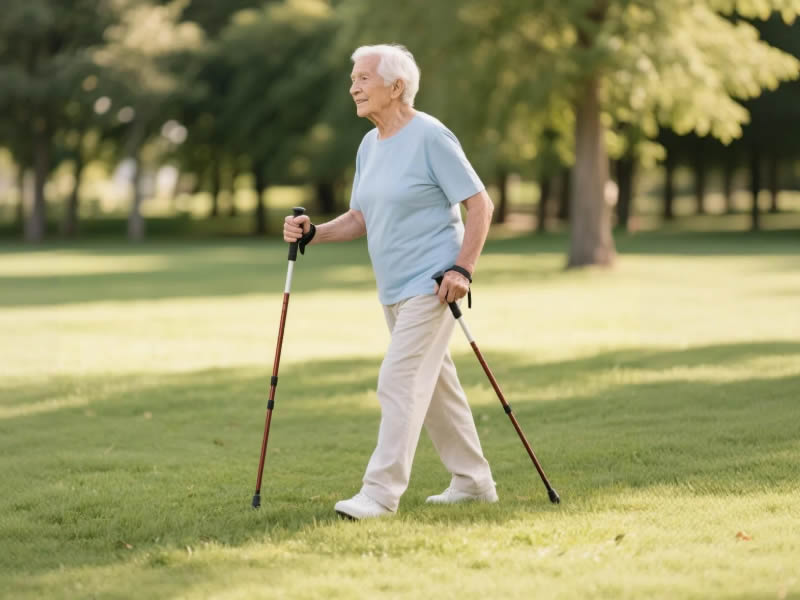
Recommended trekking pole purchase link: https://s.click.aliexpress.com/e/_c4M7OWaN
The Posture Problem in Aging
Age-related postural changes result from multiple factors:
- Muscle Weakness: Core muscles that support the spine weaken over time
- Joint Stiffness: Arthritis and reduced flexibility limit range of motion
- Bone Changes: Vertebral compression fractures can alter spinal alignment
- Proprioceptive Decline: Reduced awareness of body position leads to compensations
- Compensatory Patterns: Years of sitting, driving, and daily activities reinforce poor habits
The resulting "hyperkyphotic" posture—excessive forward curvature of the upper back—is associated with reduced mobility, impaired balance, and even decreased survival rates in older adults.
How Walking Poles Improve Posture
Walking poles address postural issues through several mechanisms:
External Cueing: Poles provide constant tactile feedback. When you hold poles correctly, your hands are positioned slightly behind your body's midline, naturally encouraging shoulders to roll back and the chest to open. This external cue counteracts the tendency to slump forward.
Core Engagement: Proper pole use requires activation of core muscles to maintain stability. This engagement strengthens the very muscles needed for upright posture, creating a positive feedback loop over time.
Weight Distribution: By transferring some body weight to the arms, poles reduce the compressive load on the spine. This can decrease the discomfort that often leads seniors to adopt protective, flexed postures.
Rhythmic Movement: The alternating arm swing of pole walking promotes natural spinal rotation and extension, counteracting the stiffness that contributes to fixed forward postures.
Balance Enhancement: Improved stability reduces the fear of falling, which often causes seniors to walk in a guarded, forward-flexed position. Confidence encourages upright stance.
Evidence Supporting Postural Benefits
Research on Nordic walking—walking with specially designed poles—has demonstrated significant postural improvements in older adults. Studies show:
- Increased trunk extension and reduced forward head position
- Improved gait parameters including stride length and walking speed
- Enhanced balance and reduced fall risk
- Greater participant confidence and willingness to walk regularly
While standard trekking poles differ slightly from Nordic walking poles, the fundamental biomechanics—and postural benefits—are similar.
Choosing Poles for Postural Improvement
Not all poles offer equal postural benefits. Look for these features:
Adjustable Height: Proper sizing is critical for posture. Poles that are too long force you to reach up, potentially elevating shoulders and creating tension. Poles that are too short encourage further forward flexion. Your physical therapist can help determine correct length—typically, with tip beside foot, elbow should form 90 degrees.
Ergonomic Grips: Grips that promote neutral wrist position and natural hand placement encourage proper arm swing and shoulder positioning. Cork or foam materials provide comfort without requiring a tight grasp.
Lightweight Construction: Heavy poles increase fatigue and may encourage compensatory postures. Carbon fiber or lightweight aluminum models are easier to manage.
Straps That Fit: Properly adjusted straps allow you to relax your grip while maintaining control, reducing upper body tension that can compromise posture.
Interchangeable Tips: Rubber feet provide stability on pavement, while carbide tips work on trails. The right tip for the surface improves confidence and encourages upright walking.
Recommended Poles for Seniors
LEKI Wanderfreund
The LEKI Wanderfreund is specifically designed for therapeutic walking and postural improvement. Its unique rolling tip maintains continuous ground contact, promoting smooth, natural gait. The ergonomic grip encourages proper hand position, and the lightweight construction reduces fatigue. Many physical therapists recommend these for postural rehabilitation.
Exerstrider Poles
Exerstrider specializes in fitness walking poles with postural benefits. Their angled grips are designed to promote upright stance and proper arm swing. The company provides excellent educational resources on technique specifically for postural improvement.
Black Diamond Trail Ergo Cork
These poles feature comfortable cork grips that mold to the hand and promote natural wrist alignment. The lightweight aluminum construction is manageable for most seniors, and the flick-lock adjustments are secure and easy to use.
Hugo Mobility Quad Cane
For seniors who need more substantial support, the Hugo Mobility Quad Cane offers exceptional stability with four points of ground contact. While not technically walking poles, it can serve as a transition device for those building confidence.
Proper Technique for Postural Benefits
To maximize postural improvement:
- Stand Tall Before Starting: Before taking a step, consciously roll shoulders back and down, lift your chest, and engage your core slightly. Imagine a string pulling you up from the crown of your head.
- Hand Position Matters: Grips should be held with hands relaxed, thumbs on top. The poles should angle slightly backward, not forward, to encourage upright stance.
- Use the Straps: Insert hands upward through straps, then grip handles. Straps should bear weight, allowing relaxed hands that don't pull you forward.
- Focus on Arm Swing: Arms should swing naturally from the shoulders, not the elbows. The pole plant should occur slightly behind the body's midline, encouraging chest opening.
- Maintain Awareness: Periodically check your posture during walks. Are shoulders creeping up toward ears? Is your chin jutting forward? Gently correct as needed.
- Practice in Front of a Mirror: Initially, practice pole stance and basic movement in front of a mirror to develop body awareness.
Safety Considerations for Seniors
- Consult Healthcare Provider: Before starting any new exercise, discuss it with your doctor, especially if you have existing conditions like severe osteoporosis, balance disorders, or cardiovascular concerns.
- Start Slowly: Begin with short sessions on level ground. Five to ten minutes may be plenty initially.
- Use Proper Footwear: Supportive shoes with good traction complement pole use and enhance safety.
- Choose Safe Environments: Smooth, level paths free of obstacles are ideal for learning. Avoid crowded areas initially.
- Stay Hydrated: Seniors are more susceptible to dehydration. Carry water and take breaks.
- Listen to Your Body: Some muscle soreness is normal, but joint pain or dizziness warrants stopping.
Beyond Poles: Comprehensive Postural Health
Walking poles are powerful tools, but they work best as part of a comprehensive approach:
- Strengthening Exercises: Targeted core and back extensor exercises complement pole walking
- Stretching: Gentle chest-opening and neck stretches counteract tightness
- Ergonomics: Attention to sitting posture, computer setup, and daily activities
- Bone Health: Adequate calcium, vitamin D, and weight-bearing exercise
- Regular Eye Exams: Vision affects posture—people lean forward to see better
The Psychological Dimension
Beyond biomechanics, poles offer psychological benefits that indirectly improve posture. Seniors who feel more stable and confident walk taller—literally. The fear of falling naturally causes people to hunch forward protectively. By reducing that fear, poles allow the body to assume its natural, upright alignment.
When Poles May Not Be Enough
Some postural changes require professional intervention:
- Severe, fixed kyphosis that doesn't improve with active correction
- Back pain that worsens with walking
- Neurological symptoms like numbness or weakness
- Recent falls or near-falls
In these cases, physical therapy evaluation is essential before relying on poles alone.
The Bottom Line
Can walking poles improve posture in seniors? Absolutely—when chosen appropriately and used correctly. By providing external cues for upright alignment, engaging core muscles, reducing spinal load, and building confidence, poles address multiple factors that contribute to age-related postural decline. Models like the LEKI Wanderfreund and Exerstrider poles are specifically designed with postural benefits in mind.
The key lies in proper sizing, technique, and gradual progression. Working with a physical therapist or experienced instructor can accelerate learning and ensure safety. For most seniors, the investment in quality poles and proper instruction pays dividends in improved posture, reduced pain, enhanced confidence, and greater willingness to stay active—all essential components of healthy aging.
Remember that posture is not fixed. With consistent effort and the right tools, seniors can stand taller, walk more comfortably, and enjoy the freedom of movement that comes with a well-aligned body. One step at a time, with poles in hand, the path to better posture is open to all.
Disclaimer: This article provides general information and does not constitute medical advice. Always consult your healthcare provider before starting any new exercise program, especially if you have existing health conditions or concerns about balance or bone health.




