




Can I Carry Walking Poles in Carry-On Luggage? A Complete Guide to Air Travel with Trekking Gear
For outdoor enthusiasts who love to explore new destinations on foot, walking poles are essential travel companions. They provide stability on unfamiliar terrain, reduce joint impact during long days of sightseeing, and enhance confidence on challenging trails. But when it comes to air travel, a crucial question arises: can you carry walking poles in your carry-on luggage? The answer is more complex than a simple yes or no, involving security regulations, airline policies, and practical considerations that every traveler should understand before heading to the airport.
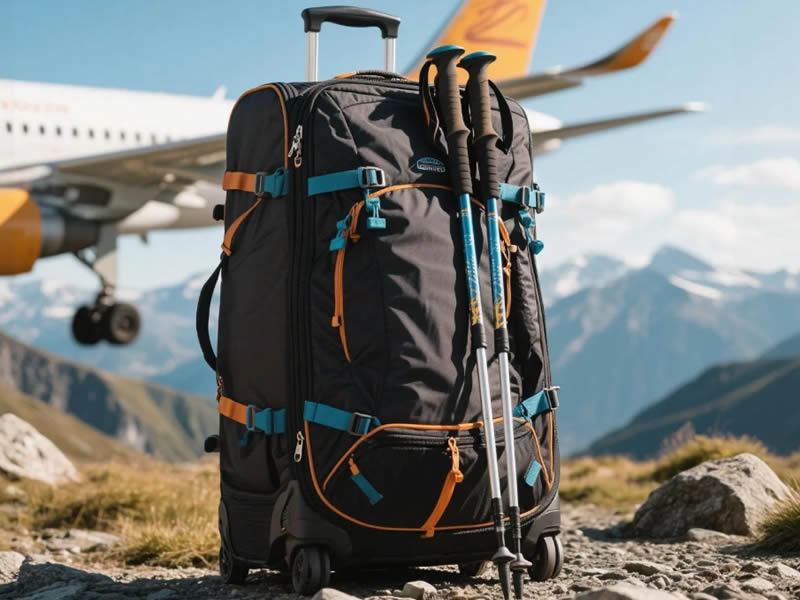
Recommended trekking pole purchase link: https://s.click.aliexpress.com/e/_c4M7OWaN
The Short Answer
Generally, no—walking poles are prohibited in carry-on luggage by most aviation security agencies worldwide. The Transportation Security Administration (TSA) in the United States, along with its international counterparts, classifies walking poles as potential weapons due to their rigid construction and pointed tips. Even collapsible poles, when extended, can be used as striking instruments. For this reason, they are typically restricted to checked baggage only.
However, like many security rules, there are nuances, exceptions, and strategies that travelers should know to avoid having their valuable gear confiscated at the security checkpoint.
Why Walking Poles Are Restricted
Understanding the rationale behind the restrictions helps explain why even innocent trekking gear ends up on the prohibited list:
Potential as Blunt Weapons: Extended walking poles, whether aluminum or carbon fiber, can be used to strike with significant force. Security agencies categorize them alongside items like baseball bats, clubs, and martial arts equipment.
Sharp Tips: Even poles with rubber tips removed have pointed carbide ends that could potentially be used as stabbing implements.
Rigid Construction: Unlike flexible items that clearly cannot cause harm, walking poles maintain their shape and could theoretically be used aggressively.
Inconsistent Design: With hundreds of pole models featuring different locking mechanisms, tips, and materials, security screeners cannot easily distinguish between "safe" and "unsafe" designs at a glance.
TSA Regulations
The TSA's official position is clear: walking poles are prohibited in carry-on baggage. They are listed on the TSA's "What Can I Bring?" website under prohibited items. According to TSA guidelines:
- Carry-On Bags: Not allowed
- Checked Bags: Allowed
This applies regardless of whether poles are collapsible, foldable, or disassembled. Even poles packed in their original carrying case will be rejected at the security checkpoint if discovered in carry-on luggage.
International Variations
While the TSA's rules are definitive for U.S. travel, international regulations vary and can be confusing:
European Union (EU): The European Aviation Safety Agency generally follows similar rules—walking poles are considered prohibited in cabin baggage. However, enforcement can vary slightly between member states and even individual screeners.
United Kingdom: The UK Civil Aviation Authority explicitly lists walking poles as items that "must not be taken into the cabin of an aircraft." They are strictly prohibited in hand luggage.
Canada: The Canadian Air Transport Security Authority (CATSA) classifies walking poles as prohibited in carry-on, with allowances for medically necessary mobility aids (which require documentation).
Australia: Similar restrictions apply—walking poles must be checked.
Asia and Other Regions: Most Asian countries follow International Civil Aviation Organization (ICAO) guidelines, which generally prohibit walking poles in cabin baggage. However, enforcement can be less consistent, and some travelers report occasional success with very compact, multi-section poles.
The "Medical Device" Exception
Some travelers wonder whether walking poles qualify as medical devices that might be exempt from restrictions. The answer is nuanced:
- Prescribed Mobility Aids: If you use walking poles as a medically necessary mobility aid due to a disability or condition, you may be permitted to carry them. However, you will likely need documentation from your healthcare provider and should contact the airline well in advance.
- General Use: For recreational use, walking poles do not qualify as medical devices and remain prohibited.
- Airline Discretion: Even with documentation, the final decision rests with the airline and security screener. Never assume an exception without prior approval.
The "Success Story" Trap
Online forums are filled with anecdotes from travelers who claim to have successfully carried walking poles through security. These stories are tempting but dangerous to rely on for several reasons:
Inconsistent Enforcement: Security screeners have discretion. What works at one airport on one day may fail at another.
Changing Rules: Security regulations evolve. A success story from two years ago may reflect outdated policies.
Screener Judgment: Some screeners may miss poles in a cluttered bag, but this is luck, not policy.
Consequences of Failure: If caught, you will face a choice: surrender your poles (potentially expensive, well-loved gear) or exit security to check them (missing your flight). Neither is appealing.
Better to plan for compliance than rely on exceptions.
How to Travel with Walking Poles
Given the restrictions, here are practical strategies for traveling with poles:
Check Them In: The simplest, safest approach is to pack poles in checked luggage. Use a padded pole case or wrap them in clothing to protect both poles and other gear. Remove baskets and rubber tips and pack them separately to avoid loss.
Consider Collapsibility for Packing: While collapsibility doesn't help for carry-on, it does make poles easier to pack in checked bags. Three-section or four-section poles pack into smaller spaces, leaving room for other gear.
Ship Ahead: For extended trips, consider shipping poles to your destination (e.g., to your hotel or a local outfitter). This avoids airport hassles entirely but requires planning and may incur costs.
Rent at Your Destination: Many popular outdoor destinations have shops that rent quality poles. This eliminates transport concerns and saves packing space. Research rental options before departure.
Buy at Your Destination: For longer trips, purchasing poles upon arrival and donating or selling them before departure can be practical, especially for budget-friendly models.
Use Trekking Poles with Detachable Sections: Some poles completely disassemble into sections that might theoretically be packed in ways that don't resemble poles. However, security may still recognize them. This is risky.
Packing Tips for Checked Luggage
If checking your poles:
- Use a Protective Case: Dedicated pole cases prevent damage and keep poles together.
- Wrap in Clothing: If no case, wrap poles in soft items like jackets to cushion them.
- Remove and Secure Tips: Rubber feet and baskets can fall off in transit. Pack them in a small bag.
- Distribute Weight: If packing multiple pairs, distribute them across suitcases to balance weight.
- Declare at Check-In: When checking poles, mention them to the agent—they may have specific handling instructions.
Alternative: Trekking Umbrellas
For travelers who primarily need sun/rain protection and occasional balance support, trekking umbrellas are sometimes permitted in carry-on (though policies vary). They don't offer the same weight-bearing capacity but can be a compromise for some.
The Bottom Line
Can you carry walking poles in carry-on luggage? For the vast majority of travelers, the answer is no. Security regulations in the US, Europe, and most of the world explicitly prohibit walking poles in cabin baggage. While rare exceptions exist for medically necessary mobility aids with documentation, recreational poles must be checked.
The safest approach is to plan for compliance: pack poles in checked luggage, ship them ahead, or arrange rentals at your destination. This avoids the stress, uncertainty, and potential disappointment of having your gear confiscated at the security checkpoint.
Remember that these regulations exist for everyone's safety. By following the rules and planning accordingly, you can ensure that your walking poles arrive safely at your destination—ready to support your adventures without ever causing travel headaches.
Disclaimer: This article provides general information based on current regulations. Airline and security policies change frequently and vary by country and carrier. Always verify current rules with your specific airline and the aviation security agency of your departure country before traveling.




