




Do Walking Poles Damage National Park Trails? A Comprehensive Look at Erosion and Responsible Use
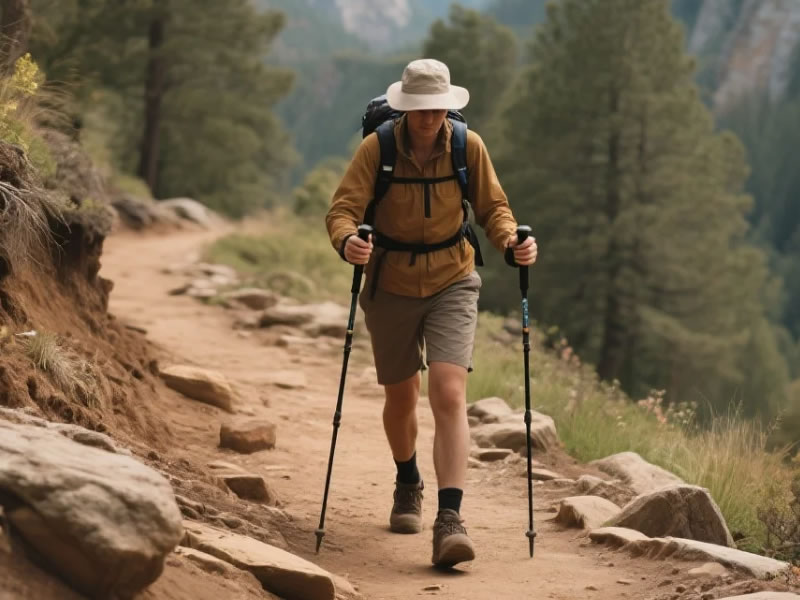
Walking poles have become an increasingly common sight on trails across the globe, prized for the stability they offer and the strain they take off knees during long descents. However, as their popularity has surged, so too has a critical question for land managers and conservationists: do walking poles damage national park trails? Recent scientific studies confirm that the answer is yes, uncapped poles can contribute significantly to trail erosion, but the good news is that this impact is entirely preventable with a simple piece of rubber.
Recommended trekking pole purchase link: https://s.click.aliexpress.com/e/_c4M7OWaN
The Science of the "Small Hole"
For years, the impact of poles was anecdotal, but recent research has provided concrete data. A pivotal 2025 study conducted in Sagarmatha National Park (Mount Everest) in the Nepal Himalaya directly investigated this issue. The researchers found that a staggering 53.6% of visitors used trekking poles. More importantly, of those users, 59.2% were employing "uncapped" poles—meaning the bare metal (carbide or steel) tip was making direct contact with the trail surface-2.
The study utilized smartphone-based 3D scanning to quantify the damage. The results showed that these uncapped metal tips generated numerous small holes on the trail surface-2. While a single hole is insignificant, the cumulative effect of thousands of hikers over a season is profound. These punctures break the soil's surface crust, making it vulnerable. The study noted this was especially destructive after the monsoon season when the trail surface was loose and wet, as the holes accelerated soil loss and water erosion -2. This mechanical breakdown is a primary trigger for the degradation of bare-soil trails.
Another 2025 experimental study on trail surface deformation reinforced these findings. It concluded that the inclusion of trekking poles in the experiment had an "additional effect, enhancing the lateral spread of soils"-10. In other words, poles don't just create vertical holes; they help push soil sideways off the trail bed, widening the path and increasing the overall footprint of human impact.
The Manager's Perspective: A Discouraged Tool
This research aligns with on-the-ground observations from park managers. In a response from the U.S. National Park Service regarding trails in the alpine tundra, an official stated that hiking poles are discouraged because they have "resulted in significant soil erosion on these side slopes"-6. The fragile, slow-growing vegetation and thin soils of high-altitude and northern parks are particularly susceptible to this kind of damage. While poles are tolerated when snow covers the ground (acting as a protective layer), their use on bare, vegetated, or wet soil is a recognized problem -6.
The Simple Solution: Rubber Tips (Capped Poles)
The research from the Himalayas doesn't just highlight a problem; it also points directly to a solution. The study underscores "the necessity for improved trail management practices, including the advocacy for capped poles, to mitigate further trail erosion"-2-4.
"Capped poles" refer to trekking poles fitted with rubber tips, often called "paws," "ferrules," or "protectors" -9. These simple accessories slide over the sharp metal tip and offer multiple benefits -5-9:
- Erosion Prevention: They distribute the force of the pole plant over a wider, softer area, preventing the puncture of the soil crust.
- Impact Reduction: They cushion the impact against the ground, reducing the jarring effect on your wrists and elbows, especially on hard surfaces like pavement -9.
- Noise Reduction: They eliminate the "tap tap tap" of metal on rock, providing a quieter, more natural trail experience -7-9.
These tips are widely available, durable (often made from vulcanized rubber or TPU), and fit most standard pole diameters (e.g., 11mm) -3-7.
Conclusion: Responsible Trekking in Protected Areas
So, do walking poles damage national park trails? The evidence is clear: metal-tipped poles do. They act as small picks, loosening soil and accelerating the erosion process that land managers work hard to control. However, this does not mean you should leave your poles at home. It means you should practice responsible trekking.
By equipping your poles with rubber tips, you transform them from a tool of degradation into a low-impact aid for your adventure. This small act of preparation aligns perfectly with Leave No Trace principles, ensuring that the trails remain healthy and sustainable for generations of hikers to come. As the research suggests, the widespread adoption of capped poles is a vital step in reconciling our love for national parks with the ecological need to conserve them




