




Walking Poles with LED Lights for Night Hiking? Illuminating the Trail After Dark
As daylight hours shorten and adventures extend into twilight, night hiking has become increasingly popular. Whether you're catching a sunset from a summit, navigating back to camp after dark, or simply enjoying the tranquility of a moonlit trail, visibility becomes a critical concern. Enter a innovative solution: walking poles with integrated LED lights. But are they practical, or just another gimmick? This comprehensive guide explores the world of illuminated trekking poles and helps you decide if they belong in your gear closet.
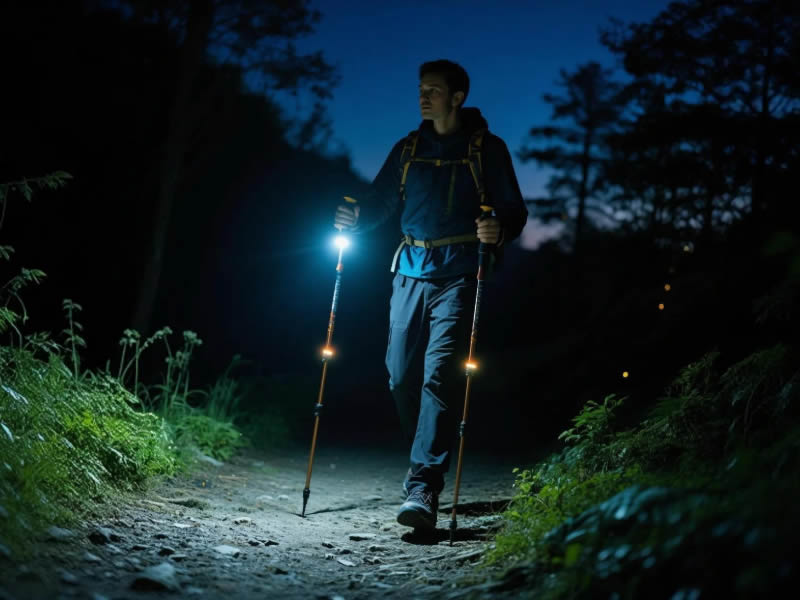
Recommended trekking pole purchase link:https://s.click.aliexpress.com/e/_c4M7OWaN
The Concept: Light Where You Need It
Walking poles with LED lights integrate illumination directly into the pole design, typically in one of two configurations:
Grip-Mounted Lights: Small LED flashrooms built into the top of the grip, pointing forward along the trail. These provide direct illumination of your path.
Shaft-Mounted Lights: LEDs positioned along the shaft, often pointing downward to illuminate the ground immediately beneath you. Some designs include multiple LEDs for 360-degree visibility.
Pole-Tip Illumination: Rare designs that light up the tip itself, helping you see exactly where you're planting.
The concept is elegant: light that moves with your natural hand position, illuminating exactly where you're about to step without requiring an extra device.
Benefits of Illuminated Poles
Hands-Free Illumination: Unlike flashlights that occupy a hand, or headlamps that require turning your head, illuminated poles light your path while leaving both hands free for balance and stability.
Enhanced Safety: Being visible to others is crucial at night. Illuminated poles make you noticeable to other hikers, mountain bikers, and in some cases, vehicles near trailheads.
Improved Depth Perception: Light mounted low to the ground illuminates trail obstacles—roots, rocks, changes in elevation—from an optimal angle, enhancing depth perception.
Reduced Glare: Light positioned below eye level minimizes the backscatter and glare that can occur with headlamps in dusty or foggy conditions.
Emergency Backup: Even if you primarily use a headlamp, illuminated poles provide redundancy—critical if your primary light fails.
Convenience: No separate device to carry, charge, or fumble for when darkness falls unexpectedly.
Models Featuring Integrated Lights
Black Diamond Trail Pro Shock with Flashlight
Black Diamond, a leader in trekking innovation, offers poles with integrated flashlight functionality:
- Grip-Mounted LED: A bright LED flashlight built into the top of the grip
- Beam Direction: Adjustable angle to illuminate the trail ahead
- Power Source: Standard AAA batteries (included in grip)
- Pole Features: All the quality of Black Diamond's Trail Pro series—shock absorption, comfortable grips, reliable flick-lock adjustments
- Activation: Simple button operation, usable even with gloves
Pros: Quality pole first, light second; adjustable beam; reliable brand
Cons: Adds weight; batteries require management
LEKI Voyager with Light Attachment
LEKI's Voyager system offers modular illumination:
- Optional Light Module: Attaches to the pole strap or grip
- Brightness: Sufficient for trail illumination
- Integration: Works with Voyager's GPS module ecosystem
- Flexibility: Use light only when needed
Pros: Modular design; use light or GPS as needed; LEKI quality
Cons: Additional purchase; module can be lost
Generic LED Trekking Poles
Various manufacturers offer budget-friendly illuminated poles:
- Shaft-Mounted LEDs: Multiple lights along lower section
- Battery Compartments: Typically in grip or upper shaft
- Price: Significantly lower than premium brands
- Quality: Varies widely; read reviews carefully
Pros: Affordable entry point; fun for kids
Cons: Questionable durability; dimmer illumination
Alternative: Add-On Light Solutions
For those who already love their current poles, add-on lights offer flexibility:
Pole-Mounted Flashlights: Small, rugged flashlights with adjustable mounts that attach to pole shafts. Brands like Nite Ize and Fenix offer quality options.
LED Light Strips: Self-adhesive, waterproof LED strips that wrap around pole sections. Battery packs attach to shafts.
Glow-in-the-Dark Accessories: Reflective tape or glow bands that enhance visibility without active illumination.
Headlamps (The Classic Solution): Don't overlook the simplicity and effectiveness of a quality headlamp. Modern headlamps offer exceptional brightness, long battery life, and hands-free operation.
Comparing Illuminated Poles vs. Headlamps
| Feature | Illuminated Poles | Headlamp |
|---|---|---|
| Light Position | Low, at ground level | Eye level |
| Hands-Free | Yes | Yes |
| Weight | Adds to pole weight | Separate device weight |
| Battery Life | Limited by pole batteries | Often longer with separate batteries |
| Backup | None if pole fails | Can carry spare |
| Cost | Premium for integrated | Wide range available |
| Flexibility | Light fixed to pole | Light moves with head |
Are They Worth It?
The answer depends on your night hiking patterns:
Yes, illuminated poles make sense if you:
- Frequently hike at dusk or night
- Appreciate having light exactly where you step
- Want reduced glare compared to headlamps
- Value integrated solutions over multiple devices
- Hike in areas where being visible to others is crucial
Consider them less if you:
- Rarely hike after dark
- Already have a high-quality headlamp you love
- Are weight-conscious (every ounce matters)
- Prefer modular, interchangeable gear
- Have budget constraints
Practical Tips for Night Hiking with Illuminated Poles
Battery Management: Always carry spare batteries. Cold temperatures drain batteries faster. Test lights before each night hike.
Combine Light Sources: Use illuminated poles alongside a headlamp for optimal illumination. Headlamp for distance, poles for immediate path.
Be Visible to Others: Even with illuminated poles, wear reflective clothing and consider additional lights if hiking near roads.
Know Your Beam Pattern: Practice with your poles in safe areas to understand exactly what they illuminate and where shadows fall.
Adjust for Terrain: On steep descents, angle grip lights downward. On flats, adjust for optimal forward illumination.
Maintain Your Lights: Keep LED lenses clean. Check battery contacts for corrosion. Store poles with batteries removed.
Real-World Experiences
"I started using Black Diamond illuminated poles for sunset hikes in the desert," shares Maria, an avid hiker. "The light is perfectly positioned to show me where I'm stepping, and I love not having a headlamp strap around my head. Battery life is adequate for 3-4 hour hikes."
"I bought cheap LED poles online," admits Tom. "They were fun for one season, but the lights dimmed quickly and one stopped working entirely. Now I stick with my headlamp and use reflective tape on my regular poles."
The Future of Illuminated Poles
As LED technology improves and batteries become lighter, expect to see:
- Brighter, More Efficient LEDs: Better illumination with less power consumption
- Rechargeable Batteries: USB-C charging integrated into grips
- Smart Features: Lights that adjust brightness based on ambient conditions
- Improved Designs: Lighter, more balanced poles with integrated lighting
The Bottom Line
Walking poles with LED lights offer genuine benefits for night hikers: hands-free illumination positioned optimally for trail navigation, enhanced visibility to others, and the convenience of an integrated solution. Black Diamond leads the category with quality poles that happen to include lights, while LEKI offers modular options for their Voyager system. Budget-conscious hikers can explore add-on solutions that work with existing poles.
For frequent night hikers, illuminated poles can be valuable tools that enhance safety and enjoyment after dark. For occasional users, a quality headlamp combined with reflective accessories on standard poles may be more practical.
Ultimately, the best approach is the one that gets you out on the trail—whether illuminated by pole-mounted LEDs, a trusted headlamp, or the magic of a full moon. The trail awaits, day or night.
Disclaimer: This article provides general information about gear selection. Always prioritize safety when night hiking—tell someone your plans, carry extra batteries and emergency supplies, and know your route and its hazards before dark.




