




Future of Walking Poles – What New Features Are Coming? A Glimpse Into Tomorrow's Technology
Walking poles have evolved remarkably from simple wooden sticks to sophisticated engineering marvels. But the pace of innovation is accelerating. As materials science advances, smart technology shrinks, and environmental consciousness grows, the next generation of walking poles promises features that seem almost science fiction today. This forward-looking guide explores emerging technologies and trends that will shape the walking poles of tomorrow.
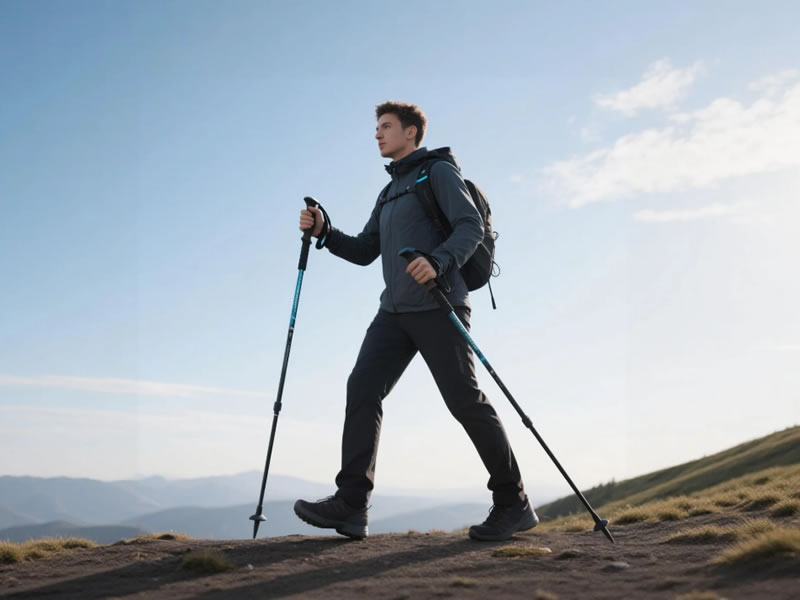
Recommended trekking pole purchase link:https://s.click.aliexpress.com/e/_c4M7OWaN
The Big Picture: Where We're Headed
The future of walking poles points toward three overarching directions:
Smarter Integration: Poles that communicate, navigate, and monitor your health and safety.
Greener Materials: Sustainable, recycled, and biodegradable components that reduce environmental impact.
Greater Adaptability: Poles that automatically adjust to terrain, user needs, and changing conditions.
Smart Technology Integration
Advanced GPS and Navigation
Current GPS-enabled poles are just the beginning. Future iterations will offer:
- Turn-by-Turn Navigation: Haptic feedback (vibrations) in grips indicating when to turn left or right
- Route Recording: Automatic trail logging without user input
- Waypoint Sharing: Poles that mark interesting spots and share coordinates with hiking partners
- Offline Maps: Preloaded topographic maps accessible via grip-mounted displays or projected onto trail via laser
Health and Biometric Monitoring
Poles are uniquely positioned to collect health data through grip sensors:
- Heart Rate Monitoring: Continuous pulse tracking through grip contact
- Cadence Analysis: Real-time feedback on walking efficiency
- Fatigue Detection: Sensors identifying gait changes indicating exhaustion
- Calorie Tracking: More accurate than wrist-based devices
- Hydration Alerts: Reminders based on sweat rate and conditions
Safety and Emergency Features
Life-saving technology will become standard:
- Fall Detection: Automatic emergency alerts if sudden impact detected followed by immobility
- Location Sharing: Real-time position sharing with emergency contacts
- Weather Alerts: Built-in barometers that warn of approaching storms
- Emergency Beacons: Integrated PLB (Personal Locator Beacon) functionality
- Two-Way Communication: Satellite messaging without separate devices
Augmented Reality Integration
Imagine pointing your pole and seeing trail information:
- Heads-Up Display: Information projected onto small glasses or contact lenses from pole sensors
- Trail Information: Pole tips that "read" trail markers and provide audio guidance
- Wildlife Identification: Camera-equipped poles that identify flora and fauna
Materials Revolution
Advanced Sustainable Materials
Environmental concerns will drive material innovation:
- Bio-Composites: Plant-based alternatives to carbon fiber with similar strength-to-weight ratios
- Recycled Carbon Fiber: Reclaiming and reusing carbon fiber from aerospace and automotive industries
- Self-Healing Materials: Shafts that repair minor scratches and dings
- Bamboo Hybrids: Bamboo cores with recycled aluminum wraps
Graphene and Nanomaterials
Graphene, the "wonder material," offers extraordinary possibilities:
- Ultralight Strength: Graphene-reinforced shafts stronger than carbon fiber at half the weight
- Embedded Sensors: Graphene circuits woven into the pole material itself
- Energy Storage: Poles that function as batteries for charging devices
Smart Materials
Materials that respond to conditions:
- Temperature-Adaptive Grips: Surfaces that stay cool in heat, warm in cold
- Moisture-Wicking Finishes: Grips that actively move sweat away from hands
- Photochromic Finishes: Poles that change color in sunlight for better visibility
Modular and Adaptive Design
Self-Adjusting Length
Imagine poles that automatically adjust to terrain:
- Terrain-Sensing Tips: Sensors detecting slope angle, automatically adjusting length
- Motorized Adjustment: Push-button length changes without manual unlocking
- Memory Settings: Poles that remember your preferred lengths for different conditions
Fully Modular Systems
Future poles will be completely customizable:
- Interchangeable Intelligence Modules: Swap GPS, camera, or sensor grips based on trip needs
- Tool-Free Component Changes: Quick-release tips, baskets, and sections
- 3D-Printed Custom Grips: Grips molded to your exact hand shape from scans
- Universal Compatibility: Industry-wide standards for tips, baskets, and accessories
Integrated Lighting Revolution
Beyond simple LEDs:
- Adaptive Headlights: Lights that automatically brighten in dark conditions, dim in daylight
- Pattern Projection: Lights that project your position to others (useful for group hiking at night)
- Emergency Strobe: Powerful strobe for rescue situations
- Induction Charging: Poles that charge wirelessly when stored
Energy Harvesting
Poles that generate their own power:
- Kinetic Energy: Piezoelectric materials in shafts generating electricity from each step
- Solar Integration: Flexible solar films on upper sections
- Thermal Harvesting: Converting temperature differentials into power
- Self-Powered Sensors: Never needing to charge your smart poles
Connectivity and Ecosystem Integration
Seamless Device Integration
Poles will communicate with your entire gear ecosystem:
- Auto-Sync with Fitness Apps: No manual data transfer
- Gear Coordination: Poles that communicate with boots, packs, and clothing for comprehensive performance analysis
- Social Features: Share routes and stats with friends automatically
- Rescue Coordination: Direct link to emergency services with location and health data
Voice Control
Hands-free operation through voice commands:
- "Navigate to camp": Poles load route guidance
- "Send location": Shares position with contacts
- "How far have I walked?": Instant statistics
- "Emergency mode": Activates all safety features
Sustainability and Circular Economy
Repair-First Design
Future poles will be designed for decades of use:
- User-Replaceable Components: Every part replaceable with basic tools
- Standardized Parts: Industry-wide compatibility for common components
- Repair Networks: Manufacturer-supported repair centers globally
- Digital Manuals: Step-by-step repair guides accessible via QR codes
Take-Back Programs
Manufacturers will close the loop:
- Guaranteed Recycling: Free return shipping for end-of-life poles
- Material Recovery: Components reclaimed for new products
- Leasing Models: Subscribe to poles, return for upgrades
- Carbon Offsetting: Embedded carbon offset programs
Biodegradable Options
For ultimate sustainability:
- Fully Compostable Poles: Natural materials that safely decompose
- Seed-Embedded Grips: Plant your old grips to grow wildflowers
- Minimal Packaging: Zero-waste shipping materials
Timeline: When Will We See These Features?
| Feature Category | Near Term (1-3 Years) | Mid Term (3-7 Years) | Long Term (7-15 Years) |
|---|---|---|---|
| Smart Technology | GPS, basic sensors | Health monitoring, augmented reality | Full AI integration |
| Materials | Higher recycled content | Graphene hybrids | Self-healing materials |
| Adaptability | Improved modularity | Self-adjusting length | Fully adaptive systems |
| Energy | Longer battery life | Kinetic harvesting | Self-powered |
| Sustainability | More repairable designs | Take-back programs | Circular economy |
Challenges to Overcome
The path to these innovations isn't without obstacles:
Weight vs. Features: Adding technology inevitably adds weight. Miniaturization and material advances must keep pace.
Cost: Advanced features will command premium prices initially, limiting accessibility.
Durability: Electronics must withstand the rigors of the trail—impacts, moisture, temperature extremes.
Battery Life: Powering sophisticated features requires energy solutions that don't fail mid-hike.
User Acceptance: Not all hikers want smart poles. Simplicity will always have its place.
The Human Element
Despite all these advances, some things won't change:
- The satisfying thunk of a pole planting on solid ground
- The rhythm of arms swinging in natural cadence
- The independence from technology that draws many to the outdoors
- The simple pleasure of a well-made tool
Future poles will offer options, not requirements. For those who want them, incredible capabilities await. For those who prefer simplicity, excellent traditional poles will remain available.
What Industry Insiders Say
"We're just scratching the surface of what's possible," says a product developer at a major pole manufacturer. "The convergence of lightweight materials, flexible electronics, and environmental awareness is creating opportunities we couldn't have imagined a decade ago."
"The holy grail is a pole that's virtually weightless, infinitely adjustable, and completely sustainable," adds a materials scientist. "We're closer than people think."
The Bottom Line
The future of walking poles is extraordinarily bright. Smart integration will transform poles from passive support tools into active hiking companions that navigate, monitor, and protect. Sustainable materials will reduce environmental impact without sacrificing performance. Adaptive designs will automatically adjust to terrain and conditions.
For hikers, this means poles that are lighter, smarter, greener, and more capable than ever before. Whether you're a data-loving tech enthusiast, a sustainability-focused eco-hiker, or someone who simply appreciates well-designed tools, the coming years will bring options that enhance your trail experience.
The walking pole of tomorrow will be more than a stick—it will be a partner in adventure, a guardian of safety, and a steward of the environment. One step at a time, we're walking into an exciting future.
Disclaimer: This article explores emerging technologies and trends; actual product availability and features will vary. The future is inherently uncertain—enjoy the journey of discovery as these innovations become reality.




