




Can Walking Poles Help with Fear of Heights? Understanding the Psychological and Physical Support
For millions of people, the mere thought of standing on an exposed ridge or looking down a steep drop triggers visceral fear. Acrophobia, or fear of heights, ranges from mild unease to paralyzing terror that prevents otherwise capable hikers from enjoying spectacular trails. While walking poles cannot cure phobias, they can be powerful tools for managing height-related anxiety, providing both physical stability and psychological reassurance. This comprehensive guide explores how poles help, their limitations, and strategies for hiking exposed terrain with greater confidence.
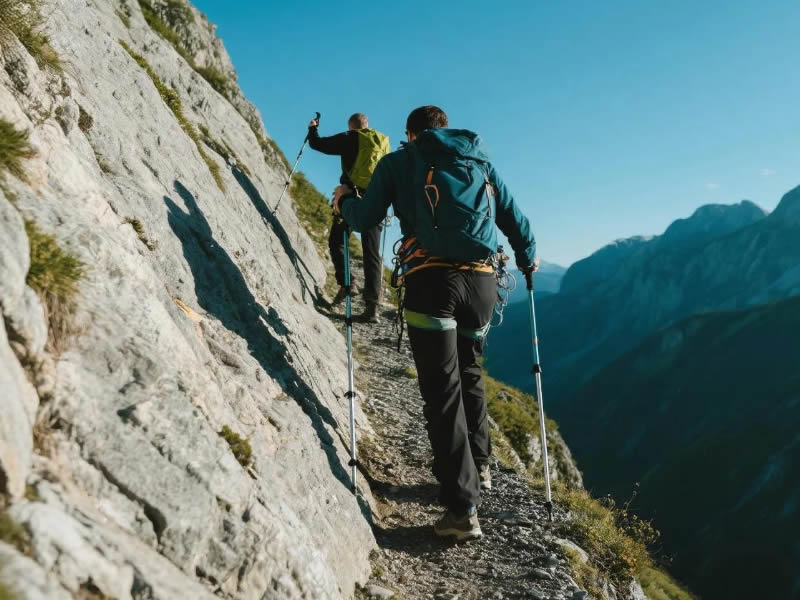
Recommended trekking pole purchase link:https://s.click.aliexpress.com/e/_c4M7OWaN
The Short Answer
Yes, walking poles can help manage fear of heights for many people. They provide physical stability that reduces the body's fear response, create a wider base of support that feels safer, and offer a focus point that distracts from anxiety-provoking stimuli. However, poles are not a cure for severe phobias and work best as part of a comprehensive approach including gradual exposure, proper technique, and sometimes professional support.
Understanding Fear of Heights
Fear of heights is a natural human response, rooted in our evolutionary past. At its core, it's about perceived danger and lack of control. On exposed trails, the brain registers:
- Instability: Uneven terrain feels more threatening when a fall could have serious consequences.
- Lack of Control: The sense that one misstep could lead to disaster.
- Sensory Overload: Visual cues of height combined with physical sensations of imbalance.
These factors trigger the body's stress response: increased heart rate, shallow breathing, muscle tension, and sometimes dizziness—all of which actually worsen balance, creating a vicious cycle.
How Walking Poles Address Height Anxiety
1. Physical Stability (The Foundation)
The most direct way poles help is by improving actual stability:
- Wider Base of Support: Two poles create four points of ground contact, significantly widening your stability base. This makes you objectively less likely to fall, which your brain recognizes.
- Instant Correction: If you wobble or lose balance momentarily, poles provide immediate counterbalance before a fall can develop.
- Reduced Sway: Studies show that using poles reduces postural sway on uneven terrain, meaning you physically move less, which feels more secure.
2. Psychological Safety Net
Beyond physical stability, poles create a psychological safety net:
- Perceived Control: Having poles in hand feels like having more control over your body and the situation.
- Third Point of Contact: On exposed sections, you can consciously maintain three points of contact (two feet plus one pole, or two poles plus one foot), mimicking climbing techniques that feel inherently safer.
- Emergency Option: Knowing you have poles to catch yourself if you slip reduces the catastrophic thinking that fuels anxiety.
3. Distraction and Focus
Anxiety often intensifies when we focus on the source of fear. Poles provide a constructive focus:
- Placement Focus: Concentrating on where to place each pole distracts from looking at the drop.
- Rhythmic Movement: The repetitive motion of planting and stepping creates a calming rhythm.
- Task Orientation: Breaking the exposure into manageable tasks (plant, step, breathe) reduces overwhelming feelings.
4. Sensory Grounding
Poles provide tactile feedback that grounds you in the present:
- Solid Contact: Feeling the pole firmly planted on rock or earth reinforces stability.
- Vibration Sense: Feedback through the poles tells you about ground conditions, reducing uncertainty.
- Physical Anchor: The poles become literal anchors that connect you to the trail.
5. Confidence Feedback Loop
As with general trail confidence, poles create a positive cycle:
- Poles provide stability
- You navigate a scary section successfully
- Success builds confidence
- Increased confidence reduces fear
- You're willing to try more challenging terrain
Choosing Poles for Height-Anxious Hikers
To maximize the anxiety-reducing benefits, select poles with:
Secure, Reliable Locks: Nothing undermines confidence like a pole that might collapse. Flick-locks from trusted brands (Black Diamond, LEKI) provide the most reliable performance.
Comfortable, Grippy Handles: Cork or foam grips that remain secure even with sweaty palms (common during anxiety episodes).
Shock Absorption (Optional): For some, the slight cushioning reduces the jarring sensations that can heighten anxiety.
Rubber Tips for Rock: On exposed rocky trails, rubber tips provide better traction than carbide on smooth stone.
Proper Length: Correctly sized poles provide optimal leverage and control.
Techniques for Using Poles on Exposed Trails
Before the Exposure:
- Check Equipment: Ensure all locks are tight before approaching exposed sections.
- Breathe: Practice deep breathing before stepping onto the exposed area.
- Visualize: Mentally rehearse the section with confident pole placement.
During the Exposure:
- Maintain Three Points of Contact: Always have two feet and one pole, or two poles and one foot, in solid contact.
- Move Deliberately: Slow, controlled movements feel safer and actually are safer.
- Focus on Pole Placement: Let the poles guide your attention away from the drop.
- Use the "Look Up" Technique: Train your eyes on the trail ahead, not the drop beside you.
- Verbal Cues: Repeat calming phrases like "solid ground, solid poles, I'm safe."
If Anxiety Spikes:
- Stop: Find the most stable spot and pause.
- Plant Both Poles: Firmly plant both poles, creating a stable four-point base.
- Breathe: Take several deep breaths while feeling the solid connection of poles to ground.
- Reground: Look at the immediate trail, not the distant drop.
- Continue Slowly: When ready, proceed with deliberate, small steps.
Limitations: When Poles Aren't Enough
Walking poles are powerful tools but have limitations:
Severe Phobia: For individuals with diagnosed acrophobia, poles alone are unlikely to resolve the fear. Professional help (therapy, gradual exposure under guidance) may be necessary.
Panic Responses: If anxiety escalates to panic, rational pole use becomes impossible. The focus must be on calming the panic response first.
Over-Reliance: Becoming dependent on poles for emotional regulation can be problematic if they're lost or forgotten.
False Security: Poles improve stability but don't eliminate fall risk. Overconfidence can be dangerous.
Combining Poles with Other Strategies
For best results, integrate poles with:
Gradual Exposure: Work up to exposed trails systematically. Start with mild exposure, build confidence, progress slowly.
Mindfulness Techniques: Use poles as anchors for mindfulness practice on the trail.
Breathing Exercises: Coordinate breath with pole plants (inhale preparing, exhale planting).
Hiking with Confident Partners: The reassurance of a calm companion amplifies poles' benefits.
Professional Support: For significant fear, consider therapy (CBT, exposure therapy) alongside pole use.
Real Hiker Experiences
"I've always loved mountains but dreaded exposed trails," shares Michael, a hiker who struggled with heights. "My heart would race, knees would shake. I started using poles and practiced on gradually more exposed trails. Now I can handle ridges that used to terrify me. The poles give me something to focus on besides the drop."
"My acrophobia was so bad I'd freeze on any trail with exposure," says Jennifer, who worked with a therapist. "We incorporated poles into my exposure therapy. They became my safety tool. Two years later, I just completed a ridge traverse I never thought possible."
The Science Behind It
Research supports the connection between physical stability and fear reduction:
- Postural Control: Better physical stability correlates with reduced anxiety in height situations.
- Proprioceptive Input: Enhanced sensory feedback (from poles) reduces the disorientation that can trigger fear.
- Attentional Focus: Directing attention to task-relevant cues (pole placement) reduces attention to fear stimuli.
When to Seek Professional Help
Consider consulting a mental health professional if:
- Fear prevents you from hiking altogether
- Anxiety causes physical symptoms that don't subside
- You experience panic attacks on trails
- Fear significantly impacts quality of life
- Self-help strategies (including poles) aren't sufficient
The Bottom Line
Can walking poles help with fear of heights? For many people, yes—significantly. By providing physical stability, psychological reassurance, constructive focus, and sensory grounding, poles address multiple factors that contribute to height anxiety. They transform exposed trails from terrifying ordeals into manageable challenges, opening up spectacular terrain that might otherwise remain inaccessible.
However, poles are tools, not cures. They work best when combined with gradual exposure, proper technique, and sometimes professional support. For those willing to practice and persist, poles can be invaluable partners in overcoming height fears—one deliberate step at a time.
Remember that fear of heights is common and nothing to be ashamed of. With the right tools and approach, you can expand your comfort zone and experience trails you never thought possible. The mountains are waiting.
Disclaimer: This article provides general information about managing fear of heights and does not constitute medical or mental health advice. Individuals with severe phobias or anxiety disorders should consult qualified professionals for personalized treatment.




