




How Do Walking Poles Affect Hiking Enjoyment? A Comprehensive Look at the Trail Experience
For many hikers, the question of whether to use walking poles goes beyond physical support—it touches on the very essence of how we experience the trail. Do poles enhance the joy of hiking, or do they become one more thing to manage? The answer, like hiking itself, is nuanced and personal. This comprehensive guide explores the multifaceted ways walking poles affect hiking enjoyment, from the practical benefits that reduce suffering to the subtle ways they can enhance or detract from your connection with nature.
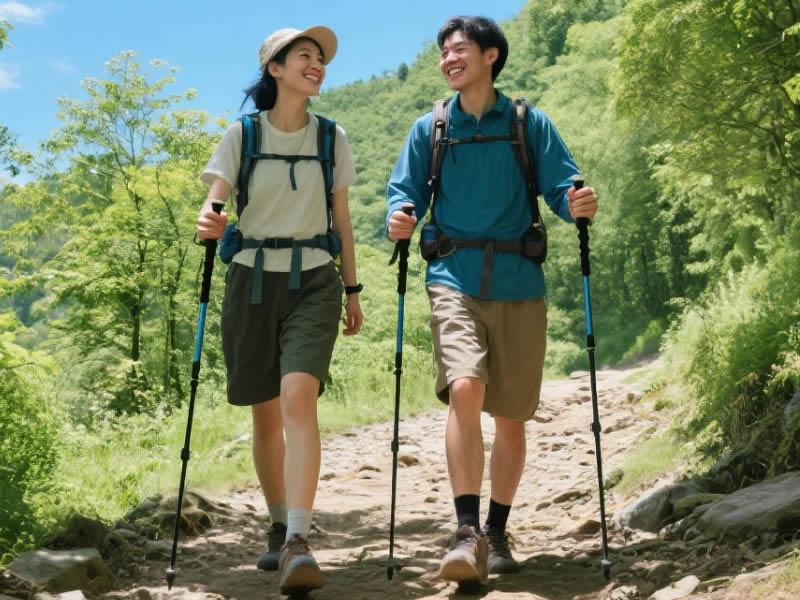
Recommended trekking pole purchase link:https://s.click.aliexpress.com/e/_c4M7OWaN
The Short Answer
For the vast majority of hikers, walking poles significantly enhance hiking enjoyment. They reduce joint pain and fatigue, improve stability and confidence, and allow hikers to focus on the scenery rather than their discomfort. However, poorly chosen or improperly used poles can become sources of frustration. The key lies in selecting the right poles and using them mindfully.
The Positive Impacts on Enjoyment
1. Pain Reduction (The Biggest Factor)
Nothing destroys hiking enjoyment faster than pain. Poles directly address this:
- Knee Relief: On descents, poles can reduce knee impact by 20-30 percent. For hikers with joint concerns, this transforms painful downhills into comfortable strolls.
- Back Support: By engaging upper body muscles, poles reduce strain on the lower back during climbs.
- Foot Comfort: Transferring weight to arms reduces pressure on feet, helpful for those with plantar fasciitis or general foot fatigue.
- Overall Endurance: Less pain means longer, more enjoyable hikes.
2. Increased Confidence
Confidence directly correlates with enjoyment:
- Stability on Rough Terrain: Poles provide security on roots, rocks, and uneven ground.
- Stream Crossing Assurance: Water crossings become adventures rather than ordeals.
- Steep Section Navigation: Both ascents and descents feel more manageable.
- Weather Adaptability: Rain, snow, or ice become less intimidating.
When you feel safe and in control, you relax and enjoy the experience more.
3. Reduced Fatigue
Fatigue diminishes enjoyment by clouding the mind and making every step a chore:
- Weight Distribution: Poles spread workload across more muscle groups, delaying overall fatigue.
- Rhythm and Pacing: Poles help establish steady rhythms that conserve energy.
- Uphill Assistance: On climbs, poles provide extra propulsion, reducing leg exhaustion.
- Downhill Control: On descents, poles act as brakes, reducing quad fatigue.
4. Enhanced Connection to the Trail
Some hikers report that poles deepen their trail experience:
- Tactile Feedback: Poles transmit information about trail conditions through your hands, creating a richer sensory experience.
- Rhythmic Movement: The regular planting of poles can become meditative, enhancing presence.
- Extended Range: By reducing fatigue, poles allow you to explore farther and see more.
- Wildlife Viewing: Poles provide stability while you stop to observe animals or scenery.
5. Social Benefits
For group hiking, poles offer unexpected enjoyment enhancements:
- Pacing Tool: Poles help maintain consistent group speed.
- Conversation Starter: Fellow hikers often ask about poles, creating connections.
- Shared Experience: Teaching others to use poles can be rewarding.
- Inclusive Activity: Poles enable people of varying fitness levels to hike together.
Potential Negative Impacts on Enjoyment
1. Noise and Distraction
Poorly maintained or cheap poles can be annoying:
- Rattling Sections: Constant clicking pulls attention away from nature sounds.
- Scraping Sounds: Metal tips on rock create unpleasant noise.
- Loose Mechanisms: Worrying about pole failure distracts from enjoyment.
Solution: Invest in quality poles, maintain them properly, and use rubber tips on hard surfaces.
2. Hand Fatigue and Discomfort
Uncomfortable grips ruin the experience:
- Hard Plastic: Causes hand pain on long hikes.
- Poor Fit: Grips too large or small create strain.
- Sweaty Hands: Slippery grips require constant adjustment.
Solution: Choose cork or foam grips that fit your hands and manage moisture.
3. Constant Adjustment Fuss
Poles that require frequent adjustment interrupt the flow:
- Slipping Locks: Having to retighten mid-hike is frustrating.
- Length Changes: On varied terrain, constantly adjusting can be tedious.
- Strap Tangles: Poor strap design creates ongoing annoyance.
Solution: Quality poles with reliable locks hold adjustments. Consider whether you need adjustability or can use fixed-length poles.
4. Feeling "Cluttered"
Some hikers feel poles interfere with their connection to the trail:
- Hands Occupied: Can't easily touch rocks, trees, or feel the environment.
- Extra Gear: Another thing to manage at rest stops.
- Visual Obstruction: Poles in peripheral vision can feel distracting.
Solution: Practice using poles as extensions rather than obstacles. Some hikers use one pole instead of two for a middle ground.
5. Social Awkwardness
In groups where others don't use poles:
- Pace Differences: Pole users may move at different speeds.
- Space Concerns: Poles require more room on narrow trails.
- Stigma: In some circles, poles are seen as "cheating" or for the unfit.
Solution: Hike with like-minded companions or confidently own your choice. Remember that your enjoyment matters most.
The Psychology of Pole Use
Beyond physical effects, poles influence enjoyment through psychological mechanisms:
The Competence Effect: Mastering pole technique creates feelings of competence that enhance overall enjoyment.
The Safety Margin: Knowing you have extra support reduces anxiety, freeing mental energy for appreciation.
The Ritual Element: For some, the routine of adjusting and using poles becomes a meaningful part of the hiking ritual.
The Gear Connection: Appreciating well-designed equipment can itself be a source of pleasure.
Maximizing Enjoyment: Choosing the Right Poles
The poles you choose dramatically affect your experience:
For Maximum Enjoyment, Look For:
- Comfortable Grips: Cork or foam that feels good in your hands.
- Quiet Operation: Quality construction that doesn't rattle or click.
- Reliable Locks: Mechanisms that hold without constant adjustment.
- Appropriate Weight: Light enough not to fatigue, substantial enough to feel solid.
- Proper Length: Correctly sized for your height and typical terrain.
Top Enjoyment-Focused Picks:
- Black Diamond Alpine Cork: The cork grips are supremely comfortable, and quality construction means no annoying rattles.
- LEKI Wanderfreund: Rolling tips create smooth, quiet operation that doesn't distract.
- Black Diamond Distance Carbon Z: Ultralight design means you'll forget you're carrying them.
Mindful Pole Use for Enhanced Enjoyment
Try these approaches to deepen your experience:
The First Five Minutes: Pay attention to how poles feel. Notice the grip texture, the weight, the rhythm they create.
Trail Feedback: Tune into what poles tell you about the trail—surface changes, stability, upcoming obstacles.
Breath Synchronization: Coordinate breath with pole plants for a meditative rhythm.
Gratitude Pause: Periodically acknowledge the support poles provide, appreciating how they enable your adventure.
When to Put Poles Away
Sometimes enjoyment means not using poles:
- Very Easy Terrain: On flat, smooth trails where poles feel unnecessary.
- Scrambling Sections: When you need hands free for rock climbing.
- Social Situations: If poles create awkwardness in a group.
- Just Because: Some days you might simply prefer the freedom of pole-free hiking.
What Hikers Say
"I resisted poles for years," shares Mark, a convert. "Thought they were for old people or those with injuries. Then I tried them on a steep descent. My knees didn't hurt for the first time ever. Now I actually enjoy downhills. Poles transformed my hiking."
"My first poles were cheap and noisy," says Jennifer, who upgraded. "They rattled constantly and drove me crazy. I stopped using them. Then I invested in quality poles with cork grips. Night and day difference. Now they're part of my hiking joy."
"I use poles on some hikes and not others," reports Mike, a flexible user. "On technical terrain, they're essential and add to the experience. On gentle meadow trails, I prefer hands-free. Having the choice is part of the enjoyment."
The Bottom Line
How do walking poles affect hiking enjoyment? For most hikers, the effect is profoundly positive. By reducing pain, increasing confidence, delaying fatigue, and deepening trail connection, poles transform challenging aspects of hiking into manageable—even enjoyable—experiences.
However, this positive effect depends on choosing the right poles and using them thoughtfully. Ill-fitting, noisy, or unreliable poles become sources of frustration rather than support. The investment in quality equipment pays dividends in enhanced enjoyment on every trail.
Ultimately, poles are tools that serve your experience. When they work well, they fade into the background, allowing you to focus on what matters: the views, the company, the movement, the profound joy of being present on the trail. When they work against you, they become obstacles to that joy.
Choose wisely, maintain carefully, and use mindfully. Your poles should support your adventure, not define it. With the right approach, they'll help you hike farther, feel better, and enjoy more—one step at a time.
Disclaimer: This article provides general information about the experiential aspects of using walking poles. Individual experiences vary based on equipment, technique, and personal preference. The best approach is the one that maximizes your personal enjoyment.




