




Do Walking Poles Make You Look More Experienced? Perception vs. Reality on the Trail
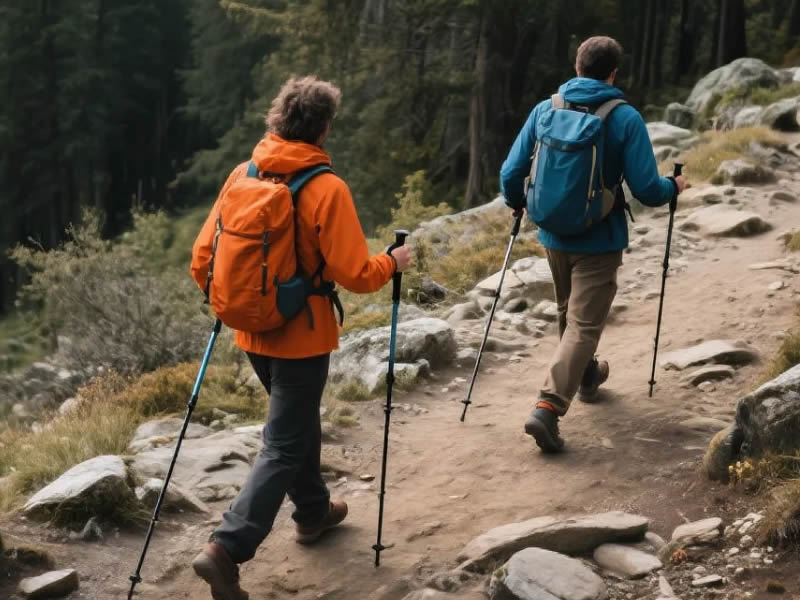
In the world of hiking, appearances can be deceiving. A hiker with expensive gear, technical clothing, and all the latest gadgets might look the part of an experienced outdoors person—but seasoned trail veterans know that gear alone doesn't create competence. Walking poles occupy an interesting place in this dynamic. They certainly project an image of preparedness, but do they actually make you look more experienced? The answer reveals as much about human perception as it does about hiking culture.
Recommended trekking pole purchase link:https://s.click.aliexpress.com/e/_c4M7OWaN
The Short Answer
To casual observers, yes—walking poles generally make you look more experienced, prepared, and serious about hiking. They signal that you've invested in proper equipment and understand the benefits of additional support. However, to truly experienced hikers, poles alone don't indicate skill level. What matters is how you use them. Proper technique, smooth movement, and appropriate terrain choices demonstrate real experience—with poles serving as tools that enable, not guarantee, competent hiking.
Why Poles Create a Perception of Experience
1. They Signal Preparedness
In our cultural shorthand, having specialized gear suggests specialized knowledge. Walking poles are not essential for casual walking—choosing to carry them implies you anticipate challenges that require their use. This suggests:
- You understand trail conditions and have prepared accordingly
- You value safety and stability
- You're hiking for more than just a casual stroll
2. They Change Your Body Language
Poles physically alter how you move, which affects how others perceive you:
- More Upright Posture: Poles encourage standing tall, which projects confidence.
- Deliberate Movement: Pole users often take more measured, intentional steps.
- Stability: You wobble less on uneven terrain, appearing more in control.
- Rhythm: The coordinated movement of arms and legs looks purposeful and practiced.
3. They're Associated with Serious Hiking
In popular imagination, poles are linked to:
- Long-distance thru-hikers (Appalachian Trail, Pacific Crest Trail)
- Mountain climbers and technical terrain
- Nordic walkers (associated with fitness walking)
- Older, experienced hikers who know the value of joint protection
4. They Create a "Complete" Look
Visually, poles complete the hiking ensemble. Just as a photographer looks more professional with a tripod, a hiker with poles looks more equipped for the task at hand.
The Reality: What Truly Experienced Hikers Notice
While poles may impress casual observers, seasoned hikers look for different indicators:
Proper Technique:
Experienced hikers notice:
- Are you using the straps correctly (hand up through strap, relaxed grip)?
- Is your pole length appropriate for the terrain?
- Do you adjust length for climbs and descents?
- Are you planting poles smoothly or stabbing at the ground?
- Do you maintain the natural opposite arm/opposite leg rhythm?
Gear Choices:
They notice:
- Are your poles appropriate for the terrain (correct tips, baskets)?
- Quality of construction (cheap no-name brands vs. reputable manufacturers)?
- Signs of proper maintenance (clean, functioning locks)?
- Matching poles (odd mismatched sets suggest borrowing or inexperience)?
Trail Awareness:
Most importantly, they notice:
- Do you yield appropriately to other hikers?
- Are you aware of how your poles affect those behind you?
- Do you collapse poles when not needed in crowded areas?
- Do you follow Leave No Trace principles?
When Poles Can Make You Look LESS Experienced
Ironically, using poles incorrectly can have the opposite effect:
Common Mistakes That Signal Inexperience:
- Too Long or Short: Poles clearly the wrong length (elbow angle far from 90 degrees)
- Stabbing Motion: Aggressively jabbing poles into ground rather than planting smoothly
- Dragging Tips: Letting tips drag noisily behind rather than lifting
- Ignoring Others: Swinging poles into the path of fellow hikers
- Struggling with Mechanisms: Fumbling with locks or adjustments
- Wrong Tips for Surface: Using carbide on rock (noisy, damaging) or rubber in mud (no traction)
The Confidence Factor
One of the most important ways poles affect perceived experience is through confidence. When you feel stable and in control, you project that assurance:
- You look around more, taking in scenery rather than staring at your feet
- You move with fluidity rather than hesitation
- You're more likely to help others or offer advice
- You appear relaxed and comfortable in the environment
This authentic confidence, enabled by poles, is more convincing than any gear choice alone.
The Evolution of Perception
Interestingly, the perception of poles has changed over time:
Historically: Poles were for the elderly, injured, or extremely serious mountaineers. Using them might have marked you as less capable.
Modern View: Poles are recognized as smart tools for hikers of all abilities. Using them suggests you understand biomechanics and joint protection.
Future Trend: As more research supports pole benefits, and as more hikers adopt them, they'll likely become as unremarkable as hiking boots—just another smart gear choice.
What Really Demonstrates Experience
If you want to look and be more experienced, focus on these factors:
1. Proper Technique
- Learn to use straps correctly (hand up through strap, relaxed grip)
- Maintain opposite arm/opposite leg rhythm
- Adjust length for terrain (shorter climbs, longer descents)
- Plant smoothly, not aggressively
2. Trail Etiquette
- Be aware of others when using poles
- On narrow trails, keep poles close to body when passing
- Collapse poles when not needed in crowded areas
- Never point tips at others
3. Appropriate Gear Choices
- Match poles to your typical terrain
- Maintain equipment (tighten locks, replace worn tips)
- Choose quality over flashy features
- Learn basic field repairs
4. Overall Trail Competence
- Navigation skills (map, compass, GPS)
- Leave No Trace principles
- Weather awareness and appropriate clothing
- Fitness and pacing appropriate for terrain
The Bottom Line
Do walking poles make you look more experienced? To casual observers, yes—they project preparedness, seriousness, and competence. But to truly experienced hikers, poles are just tools. What matters is how you use them, how you move on the trail, and how you interact with the environment and other hikers.
The good news is that poles can help you become more experienced by enabling you to tackle more challenging terrain, hike longer distances, and develop better movement patterns. They provide the stability and confidence that allow you to focus on developing other skills—navigation, observation, trailcraft—that truly define an experienced hiker.
So by all means, use poles. Choose quality equipment, learn proper technique, and practice trail etiquette. You'll not only look more experienced—you'll actually become more capable. And in the end, that's what matters most on the trail.
Disclaimer: This article explores social perceptions of hiking equipment. The most important factor is your personal comfort and safety, not how others perceive you. Hike your own hike.




