




Walking Poles That Float – Do They Exist? A Complete Guide to Keeping Your Gear Afloat
Picture this: you're crossing a serene lake by canoe, your walking poles strapped to your pack. A wave rocks the boat, and in an instant, one pole slips overboard. You watch in horror as it sinks silently to the bottom, gone forever. This scenario haunts every paddler who also hikes. The obvious question arises: are there walking poles designed to float? The answer reveals interesting limitations of materials and creative solutions for water-loving adventurers.
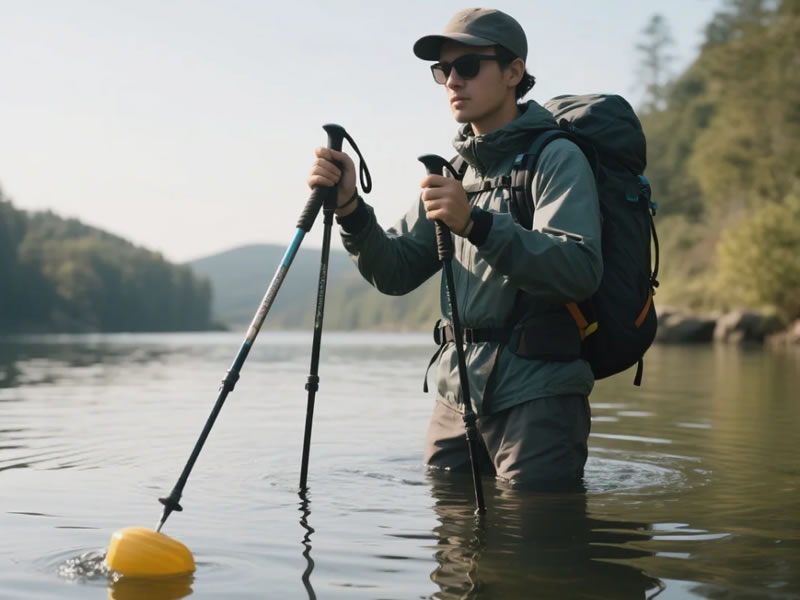
Recommended trekking pole purchase link:https://s.click.aliexpress.com/e/_c4M7OWaN
The Short Answer
No, walking poles do not float naturally. The materials they're made from—aluminum, carbon fiber, titanium—are all denser than water and will sink. However, you can add flotation accessories like LEKI's Floatation Balls or DIY solutions such as foam wraps or pool noodles to keep your poles on the surface. The best strategy, though, is prevention: secure your poles with tethers and use careful packing techniques when near water.
Why Walking Poles Sink
Understanding the physics explains why floating poles are rare:
Material Density Comparison:
| Material | Density (g/cm³) | Buoyancy |
|---|---|---|
| Water | 1.0 | Reference |
| Aluminum | 2.7 | Sinks |
| Carbon Fiber | 1.5-1.8 | Sinks |
| Titanium | 4.5 | Sinks |
| Cork (grip) | 0.2-0.3 | Floats |
| Foam (grip) | 0.1-0.5 | Floats |
While grips may float, the shaft's density ensures the pole will sink, often quickly. The small volume of buoyant grip material is insufficient to overcome the weight of the shaft.
The Quest for Floating Poles
Manufacturers have explored this niche but faced challenges:
Historical Attempts:
- Hollow Aluminum Poles: Some early designs used sealed hollow sections for buoyancy, but these compromised strength and durability.
- Foam-Core Shafts: Experimental poles with foam cores added weight and complexity.
- Modular Float Attachments: The most practical approach—separate floatation devices that attach when needed.
Current Options: Floatation Accessories
Since true floating poles aren't practical, the market offers accessories:
LEKI Floatation Balls
The most recognized solution, designed for LEKI poles but adaptable:
- Design: Hollow plastic balls that clamp around the pole shaft
- Placement: Typically installed just above the basket
- Buoyancy: Provides enough lift to keep pole near surface
- Compatibility: Designed for LEKI but can be adapted to other poles
- Use Case: Ideal for canoe/kayak trips, stream crossings, or any water-adjacent hiking
Pros: Purpose-built, effective, removable
Cons: Adds weight and bulk, LEKI-specific attachment may not fit all poles
DIY Floatation Solutions
Creative hikers have developed effective homemade options:
Pool Noodle Segments:
- Cut a 6-8 inch section of pool noodle
- Slit lengthwise to wrap around pole shaft
- Secure with zip ties or waterproof tape
- Place near grip or above basket
Pros: Cheap, adjustable, effective
Cons: Bulky, may degrade in UV, looks DIY
Foam Pipe Insulation:
Similar to pool noodles but thinner and more discreet. Wrap and secure with tape.
Closed-Cell Foam Wrap:
Used in backpacking for sit pads; can be wrapped around poles and secured.
Inflatable Bladders:
Some innovative hikers use small inflatable pouches that attach when needed, deflating for storage.
Tennis Balls:
Drill a hole through a tennis ball and thread onto pole. Limited buoyancy but better than nothing.
The Tether Solution: Prevention Beats Flotation
The most reliable approach isn't floating—it's not dropping in the first place:
Pole Tethers:
- Wrist Leashes: Keep poles attached to you at all times near water
- Boat Tethers: In canoes/kayaks, secure poles to the boat with short lines
- Floatation Tethers: Some paddlers combine a small float on the tether itself
Packing Strategies:
- Inside the Boat: Store poles inside the hull, not on deck
- Dry Bags: Seal poles in dry bags that will float if dropped
- Secure Strapping: Use multiple attachment points when poles are on packs
Canoe/Kayak Specific Tips:
- Create a "Pole Zone": Designate a secure spot for poles
- Use Float Bags: In whitewater, seal poles in small float bags
- Practice Recovery: Have a plan for if poles go overboard (paddle blade as scoop)
Real-World Scenarios and Solutions
Scenario 1: Coastal Kayaking with Hiking Stops
- Challenge: Multiple landings, constant pole handling
- Solution: LEKI Floatation Balls plus tethers. Keep poles clipped to kayak when not in use.
Scenario 2: Canoe Trip with Portages
- Challenge: Poles needed for hiking sections, vulnerable during paddling
- Solution: DIY pool noodle floats that can be removed during portages. Secure poles inside canoe with bungees.
Scenario 3: Stream Crossings on Hike
- Challenge: Risk of dropping poles in fast water
- Solution: Wrist straps essential. Consider temporary floats for deep crossings.
Scenario 4: Fishing and Hiking Combo
- Challenge: Poles near water constantly
- Solution: Permanent foam wraps that also provide extra grip cushioning.
What About Grips That Float?
Some hikers wonder if replacing grips with massive buoyant ones could make poles float. While theoretically possible, the volume required would make grips absurdly large and uncomfortable. The small cork or foam grips on standard poles simply don't provide enough buoyancy.
The Physics of Floatation
To make a typical 250g pole float, you need to displace approximately 250ml of water. That's equivalent to:
- A 1-inch diameter foam sleeve 20 inches long
- A 6-inch pool noodle section (typical diameter)
- Multiple floatation balls spaced along shaft
This explains why flotation accessories need to be substantial—and why poles don't float naturally.
Manufacturer Responses
When asked about floating poles, major manufacturers consistently respond:
Black Diamond: "Our poles are designed for performance and durability, not flotation. We recommend using tethers and being careful near water."
LEKI: "While we offer Floatation Balls as accessories, no trekking pole can truly float due to material density. Always secure your gear."
Komperdell: "The best floating pole is the one that doesn't fall in the water. Use wrist straps and pack carefully."
The Bottom Line
Do walking poles that float exist? No, not as a product category. The materials that make poles strong and light also make them denser than water. However, you have several practical options to prevent losing poles to the depths:
- Flotation Accessories: LEKI Floatation Balls or DIY pool noodle sections can keep poles on the surface if dropped.
- Tethers: Wrist straps and boat tethers prevent drops in the first place.
- Smart Packing: Secure poles inside boats or packs, not on deck.
- Practice Caution: Near water, handle poles deliberately and be aware of the risk.
For paddlers who also hike, the combination of LEKI Floatation Balls (or a DIY equivalent) plus diligent tethering offers the best protection. For everyone else, simple wrist straps and awareness may be sufficient.
Remember that prevention is always better than recovery. A pole that never hits the water is worth more than any flotation device. But if disaster strikes, a little foam can mean the difference between a momentary fright and a permanent loss.
Disclaimer: This article provides general information about gear selection and modification. DIY modifications may affect pole performance and safety. Always test any flotation solution before relying on it in critical situations.




