




Walking Poles for Sand Dunes – Necessary or Not? A Complete Guide to Conquering Soft Sand
There's something magical about sand dunes—the sweeping curves, the wind-sculpted ridges, the sense of being in a vast, otherworldly landscape. From the towering dunes of Death Valley to the iconic Great Sand Dunes in Colorado, from the Sahara's endless ergs to coastal dunes along every shoreline, these environments offer unique hiking experiences. But anyone who has trudged through soft sand knows the truth: it's brutally exhausting. Each step sinks, every incline becomes a struggle, and energy evaporates faster than water in the desert sun. This raises a crucial question: are walking poles necessary for sand dune hiking? The answer might surprise you.
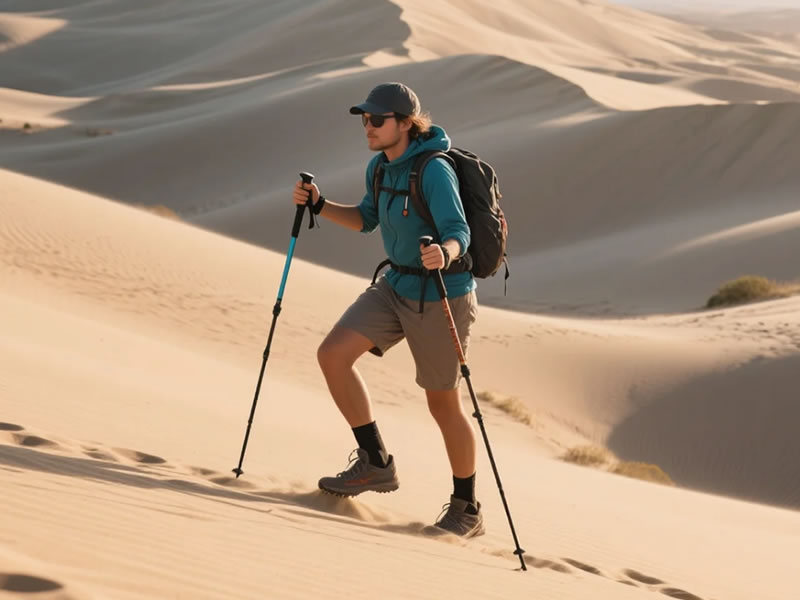
Recommended trekking pole purchase link:https://s.click.aliexpress.com/e/_c4M7OWaN
The Short Answer
Yes, walking poles are absolutely game-changing for sand dune hiking. While not strictly "necessary" in the sense that you can physically walk without them, they transform the experience from an exhausting, quad-burning slog into a manageable, even enjoyable, adventure. Poles with large sand baskets provide flotation that prevents sinking, propulsion that helps you ascend, and stability on loose, shifting surfaces. For any significant dune hiking, they're not just helpful—they're transformative.
Why Sand Dunes Are So Demanding
Understanding the physics of sand explains why poles make such a difference:
Energy Drain: Walking in soft sand requires up to twice the energy of walking on firm ground. Each step sinks, and you must lift your foot against the sand's suction.
Instability: Sand shifts constantly. Every step requires micro-adjustments from your ankles, knees, and hips.
Incline Challenge: Dunes are rarely flat. Ascending a sand slope is like climbing a staircase that collapses beneath you with each step.
Heat Exposure: Dune environments are often hot and exposed. The extra exertion increases heat stress and dehydration risk.
Descending Difficulty: Going down is its own challenge—it's easy to slip, lose control, or bury your feet deep in soft sand.
How Poles Transform Dune Walking
1. Flotation (The Most Important Benefit)
Standard trekking baskets are designed for snow or mud. In sand, they're useless—they sink immediately, providing no support. But large sand baskets (3-4 inches in diameter) distribute your weight across a wider area, preventing the pole from plunging deep into the sand. This means:
- Each plant provides actual support
- You're not exhausting your arms pulling poles out of deep sand
- The poles act like tiny snowshoes for your hands
2. Propulsion on Ascents
On steep dunes, your legs alone struggle to propel you upward. Poles provide:
- Additional thrust: Push with your arms to help lift your body
- Rhythm: The coordinated movement of arms and legs maintains momentum
- Reduced leg fatigue: Sharing the workload between upper and lower body
3. Stability on Shifting Surfaces
Sand moves constantly. Poles provide:
- Four points of contact: Two feet plus two poles create a stable platform
- Immediate correction: When a foot slips, poles provide counterbalance
- Confidence: You can move more deliberately, knowing you have support
4. Descending Control
Going down dunes is often harder than going up:
- Braking: Poles act as brakes, preventing uncontrolled slides
- Balance: They help you stay upright on steep, shifting slopes
- Depth finding: Probe ahead to find stable footing before committing
5. Energy Conservation
The combination of flotation, propulsion, and stability means:
- You move faster with less effort
- You can hike longer before exhaustion
- You have more energy for enjoying the scenery
Critical Features for Dune Poles
Large Sand Baskets (Non-Negotiable)
Standard baskets are useless. You need:
- Baskets at least 3-4 inches in diameter specifically designed for sand
- Secure attachment that won't fail under suction
- Easy interchangeability so you can swap for different conditions
Pro Tip: Many poles accept universal baskets. Purchase dedicated sand baskets separately if your poles didn't include them.
Sturdy, Durable Construction
Sand is abrasive. It will wear down mechanisms and scratch shafts. Choose:
- Aluminum poles that can handle gritty conditions
- Sealed locking mechanisms that resist sand infiltration
- Replaceable tips—sand will wear them faster than rock
Comfortable Grips
In hot, sweaty conditions, grip matters:
- Cork grips absorb sweat and remain comfortable
- Foam grips offer good traction when wet
- Avoid rubber—it can become slippery with sweat
Adjustable Length
Dune terrain varies constantly. Being able to adjust length optimizes:
- Ascents: Shorter poles for better leverage
- Descents: Longer poles for stability and braking
- Traverses: Different lengths for side-hilling
Recommended Poles for Sand Dunes
Best Overall: Black Diamond Alpine Cork with Sand Baskets
The Alpine Cork is a versatile choice that excels in sand with the right baskets:
- Construction: Durable aluminum
- Grips: Cork—comfortable in heat, sweat-absorbing
- Locks: FlickLock—reliable, easy to clean if sand infiltrates
- Baskets: Interchangeable—add large sand baskets (sold separately)
- Tips: Carbide, replaceable
Why They Work: The cork grips remain comfortable in heat. The flick-locks are easy to maintain when sand gets in. Add sand baskets, and you're equipped for anything.
Best for Deep Sand: Leki Makalu with Sand Baskets
Leki's quality construction shines in demanding conditions:
- Construction: Durable aluminum
- Locks: Speed Lock—well-sealed, less prone to sand infiltration
- Baskets: Accepts largest sand baskets in Leki line
- Grips: Cork or Aergon options
- Durability: Proven in harsh environments
Why They Work: The sealed locks resist sand better than many competitors. The large baskets available provide maximum flotation.
Best Budget: Cascade Mountain Tech Aluminum with Added Sand Baskets
For occasional dune hikers:
- Construction: Aluminum
- Grips: Cork on many models
- Locks: Flick-lock style—functional
- Baskets: Purchase sand baskets separately
- Value: Affordable enough to replace if sand damages mechanisms
Essential Accessories for Dune Hiking
Sand Baskets
Purchase dedicated sand baskets. They're inexpensive and transform performance.
Tip Covers
To prevent sand from packing into tip mechanisms when not in use.
Gaiters
Keep sand out of your boots—poles won't help if your feet are full of grit.
Water
Dune environments are often hot and dry. Carry extra.
Techniques for Dune Walking
Use Large Baskets Always
In sand, you need maximum flotation. Don't bother with standard baskets.
Plant Deliberately
Place poles where you want support. Let the basket float on the surface—don't jam it deep.
Adjust Length for Grade:
- Ascending: Shorten poles for better leverage—you want to push down and back
- Descending: Lengthen poles for stability—you want to plant ahead and brake
- Side-hilling: Keep uphill pole shorter, downhill pole longer
Follow Existing Tracks
If others have gone before, their compacted path will be firmer. Plant poles in these tracks when possible.
Maintain Rhythm
The steady, rhythmic motion of poles helps maintain momentum in energy-sapping sand.
Remove Baskets for "Dune Running"
For experienced dune hikers who want to "surf" down steep slopes, removing baskets allows poles to sink deeper, providing better braking control. This is advanced technique—not for beginners.
Rest Strategically
Sand hiking is exhausting. Take breaks on firmer patches (dune crests, areas with vegetation). Plant poles firmly during rests.
What Dune Hikers Say
"Before I used poles with sand baskets, dunes were my least favorite terrain," shares Mark, a Death Valley enthusiast. "Now they're my favorite. The poles make the climbs possible and the descents controlled. I wouldn't attempt a dune hike without them."
"I learned the hard way at Great Sand Dunes," says Jennifer, a Colorado hiker. "First time, no poles. I was destroyed after a mile. Second time, I brought poles with sand baskets. Made it to the top of High Dune and still had energy to enjoy the view."
The Bottom Line
Are walking poles necessary for sand dunes? If you want to actually enjoy the experience rather than just survive it, yes, absolutely. The combination of flotation from large sand baskets, propulsion on ascents, stability on shifting surfaces, and control on descents transforms dune hiking from exhausting ordeal into exhilarating adventure.
Without poles, you'll struggle, sink, and exhaust yourself. With properly equipped poles, you'll float across the sand, conquer steep slopes, and descend with confidence. The investment in quality poles and dedicated sand baskets pays dividends in energy saved and enjoyment gained.
For serious dune hiking, choose durable aluminum poles with comfortable cork grips, reliable locking mechanisms, and—most importantly—large sand baskets. The Black Diamond Alpine Cork with added sand baskets is a proven combination. Leki's Makalu series offers excellent sealed mechanisms. Even budget poles can work with the right baskets.
The dunes are waiting. Don't let soft sand stop you. With the right poles, you'll glide across landscapes that would otherwise leave you exhausted and defeated.
Disclaimer: This article provides general information about gear selection for sand dune hiking. Conditions vary by location and season. Always carry adequate water, sun protection, and navigation tools in dune environments.




