




Can Walking Poles Handle Volcanic Ash Terrain? A Complete Guide to Surviving the Black Sands
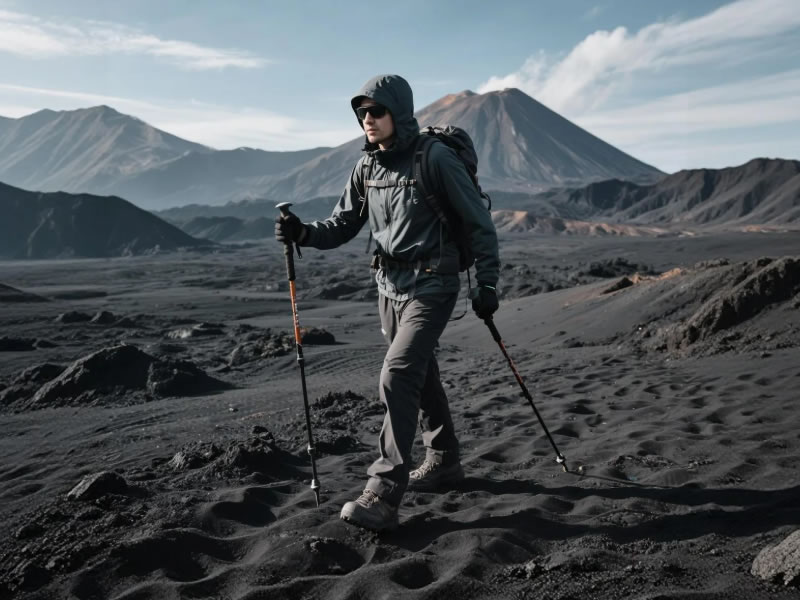
Volcanic landscapes—from the black deserts of Iceland to the ash-covered slopes of Mount Fuji, from Hawaii's volcanic national parks to the craters of Mount Etna—offer some of the most otherworldly hiking experiences on Earth. But these environments are brutally unforgiving on equipment. Volcanic ash is not like ordinary sand or dirt. It's composed of sharp, angular, glass-like particles that can destroy poorly designed gear in hours. For hikers dreaming of traversing these dramatic landscapes, a critical question arises: can your walking poles handle volcanic ash terrain? The answer requires understanding the unique challenges of this environment and choosing equipment built to survive.
Recommended trekking pole purchase link:https://s.click.aliexpress.com/e/_c4M7OWaN
The Short Answer
Yes, but volcanic ash is brutally abrasive and demands specific equipment. Standard walking poles will be destroyed quickly. You need aluminum poles (carbon fiber can be scored and weakened), sealed flick-lock mechanisms that resist ash infiltration, and large baskets for soft ash. The Leki Makalu series with sealed Speed Locks is a top choice. Black Diamond Alpine Cork poles with their easy-to-clean flick-locks can work with diligent maintenance. But regardless of choice, immediate and thorough cleaning after every hike is non-negotiable—ash will grind mechanisms to death if left to accumulate.
Why Volcanic Ash Is So Destructive
Volcanic ash is fundamentally different from ordinary sand or dirt:
It's Sharp and Angular: Unlike beach sand, which is rounded by water erosion, volcanic ash consists of tiny, glass-like shards. These particles act like microscopic cutting tools.
It's Abrasive: The sharp edges grind against metal, plastic, and carbon fiber, wearing down surfaces rapidly.
It Infiltrates Everything: Ash particles are fine enough to penetrate the smallest gaps—locking mechanisms, adjustment joints, basket attachments.
It Can Be Corrosive: Some volcanic ash contains sulfur compounds that can chemically attack metals.
It's Electrostatic: Fresh ash often carries a static charge, causing it to cling stubbornly to surfaces.
It's Cement-like When Wet: If ash gets wet, it can form a cement-like paste that jams mechanisms and is difficult to remove.
Critical Features for Volcanic Ash Terrain
Shaft Material: Aluminum (Not Carbon Fiber)
On volcanic terrain, aluminum has a significant advantage:
| Feature | Aluminum | Carbon Fiber |
|---|---|---|
| Abrasion Resistance | Good | Poor—scratches weaken fibers |
| Failure Mode | Bends (warning) | Snaps (catastrophic) |
| Hidden Damage | Visible wear | Internal damage invisible |
| Cleaning | Easy | Careful handling required |
Why Aluminum Wins: The sharp ash particles can score carbon fiber, creating stress points that lead to sudden, catastrophic failure. Aluminum may show surface wear, but it maintains structural integrity. 7075 aluminum is the best choice—it's the most durable alloy commonly used in poles.
Sealed Locking Mechanisms
Ash infiltration is the number one cause of pole failure in volcanic environments. You need:
- Sealed locks with rubber boots or gaskets
- Flick-locks that can be cleaned if ash gets in
- Avoid twist-locks—they're impossible to clean once ash infiltrates
Leki's Speed Lock system is among the best-sealed mechanisms available. Black Diamond's FlickLocks can be cleaned if ash gets in, making them a good second choice.
Large, Secure Baskets
Volcanic ash can be soft and deep, like walking in flour. You need:
- Large baskets (3-4 inches) to prevent sinking
- Secure attachments that won't fail under suction
- Easy removal for cleaning
Interchangeable basket systems are ideal—you can swap to smaller baskets when you reach firmer ground.
Carbide Tips (Replaceable)
The abrasive ash will wear down tips quickly:
- Carbide tips are the hardest option, resisting wear best
- Replaceable design is essential—you'll need new tips
- Carry spares—volcanic terrain will destroy them
Easy-to-Clean Design
After every hike, you'll need to clean your poles thoroughly. Look for:
- Smooth exteriors without crevices that trap ash
- Removable baskets for thorough cleaning
- Accessible mechanisms that can be flushed
Recommended Poles for Volcanic Terrain
Best Overall: Leki Makalu Series with Speed Lock
Leki's engineering excellence makes these the top choice for volcanic conditions:
- Locks: Speed Lock system—well-sealed, resistant to ash infiltration
- Shaft: Durable aluminum—withstands abrasion
- Grips: Cork or Aergon—comfortable, easy to clean
- Baskets: Interchangeable, large options available
- Tips: Carbide, replaceable
- Seals: Rubber boots at joints
Why They Work: The sealed Speed Locks are the best defense against ash infiltration. The aluminum shaft handles abrasion. Add large baskets, and you're equipped for deep ash.
Best for Easy Cleaning: Black Diamond Alpine Cork
Black Diamond's design allows for thorough cleaning:
- Locks: FlickLock—can be opened and cleaned if ash gets in
- Shaft: Durable aluminum (7075)
- Grips: Cork—comfortable, easy to wipe clean
- Baskets: Interchangeable
- Tips: Carbide, replaceable
Why They Work: The flick-locks can be disassembled for cleaning if ash infiltrates. The cork grips wipe clean easily. With diligent post-hike maintenance, they'll survive volcanic conditions.
Best UK-Made: Mountain King Approach
For those seeking British craftsmanship:
- Shaft: 7075 aluminum—exceptionally strong
- Locks: Reliable flick-lock system
- Grips: Foam or cork options
- Baskets: Interchangeable
- Construction: Built to withstand demanding conditions
Why They Work: The 7075 aluminum is the same alloy used in high-end tent poles, chosen for its strength and durability. The simple design has fewer crevices for ash to hide.
Best Budget: Cascade Mountain Tech Aluminum
For occasional volcanic hikes:
- Shaft: Aluminum (not 7075, but decent)
- Grips: Cork on many models
- Locks: Flick-lock style—functional
- Tips: Carbide, replaceable
- Value: Affordable enough to replace if ash destroys them
Pros: Cork grips at budget prices, functional locks
Cons: Less refined, may need more frequent replacement
Essential Accessories for Volcanic Terrain
Large Baskets
Purchase dedicated ash/sand baskets. Standard baskets are useless in deep ash.
Spare Tips
Volcanic ash wears down carbide faster than any other surface. Carry multiple spares.
Spare Baskets
Baskets can be torn off in suction. Carry a spare.
Small Brush
For cleaning ash from locks and crevices on the trail.
Compressed Air or Blower
For detailed cleaning at home—ash hides in tiny spaces.
Maintenance: The Most Critical Factor
Immediately After Each Hike (Before Leaving the Area):
- Tap Poles Vigorously: Remove loose ash.
- Extend Sections: Don't leave poles collapsed.
- Open Locks: Expose mechanisms for cleaning.
- Brush Off Ash: Use a brush to remove as much as possible.
- If Possible, Rinse: Fresh water (if available) helps remove ash, but ensure you can dry thoroughly.
At Home (Same Day):
- Disassemble if Possible: Remove baskets, extend all sections.
- Thorough Cleaning: Use compressed air, brushes, and mild soapy water to remove all ash.
- Dry Completely: Use compressed air to blow out moisture, then allow to air dry fully.
- Inspect for Damage: Check for wear on shafts, tips, and mechanisms.
- Light Lubrication: Apply a tiny amount of silicone lubricant to moving parts.
Never:
- Store poles with ash residue
- Collapse wet poles with ash inside
- Ignore gritty-feeling mechanisms
Techniques for Hiking in Volcanic Ash
Use Large Baskets Always
In volcanic ash, you need maximum flotation. Don't bother with standard baskets.
Plant Deliberately
Place poles where they'll get purchase. Let the basket float on the surface—don't jam it deep.
Adjust Length for Conditions:
- Deep ash: Longer poles help you stay upright
- Steep ash slopes: Shorten for better leverage
- Descending: Lengthen for stability and braking
Check Locks Frequently
Ash can infiltrate and cause loosening. Check tension regularly.
Clean Periodically During Long Hikes
If hiking multiple days in ash, clean mechanisms each evening. Ash left overnight can cause permanent damage.
What Volcanic Terrain Hikers Say
"I guided treks on Mount Etna for five years," shares Marco, an Italian mountain guide. "The ash destroyed cheap poles in days. My Leki Makalus with Speed Locks survived season after season with proper cleaning. The sealed locks made all the difference."
"Climbing Volcán Acatenango in Guatemala taught me a hard lesson," says Jennifer, a volcano enthusiast. "I used carbon fiber poles. The ash scored them badly. They snapped on the descent. Now I use aluminum and clean them obsessively."
The Bottom Line
Can walking poles handle volcanic ash terrain? Yes, if they're specifically chosen and meticulously maintained. The combination of sealed locking mechanisms, durable aluminum shafts, large baskets, and aggressive carbide tips gives you a fighting chance against this uniquely destructive environment.
The Leki Makalu series with Speed Locks leads the category, offering the best defense against ash infiltration. Black Diamond Alpine Cork poles provide excellent durability with easy-to-clean flick-locks. UK-made Mountain King poles offer exceptional 7075 aluminum construction. Budget-conscious hikers can manage with Cascade Mountain Tech poles, accepting that they may need more frequent replacement.
But remember: in volcanic terrain, the most important factor isn't the pole you choose—it's how you care for it. Immediate, thorough cleaning after every hike is essential. Ash left to accumulate will grind mechanisms to death. With the right equipment and diligent maintenance, your poles will survive the black sands and support you through some of the most dramatic landscapes on Earth.
Disclaimer: This article provides general information about gear selection for volcanic terrain. Conditions vary significantly between different volcanic environments. Always research specific conditions for your destination and prepare accordingly.




