




Best Walking Poles for Plus-Size Hikers (300+ lbs)? A Complete Guide to Strength and Safety
For plus-size hikers, finding gear that is both comfortable and safe can be a challenge. Many products on the market are designed with a "one-size-fits-all" approach that often overlooks the specific needs of heavier individuals. Walking poles are no exception. Using poles not rated for your weight is a gamble with serious consequences: a sudden collapse on a steep descent, a bent shaft on uneven terrain, or a catastrophic snap can lead to dangerous falls. This guide is dedicated to helping plus-size hikers (300+ lbs) find walking poles that offer the strength, stability, and reliability needed to enjoy the trails safely and confidently.
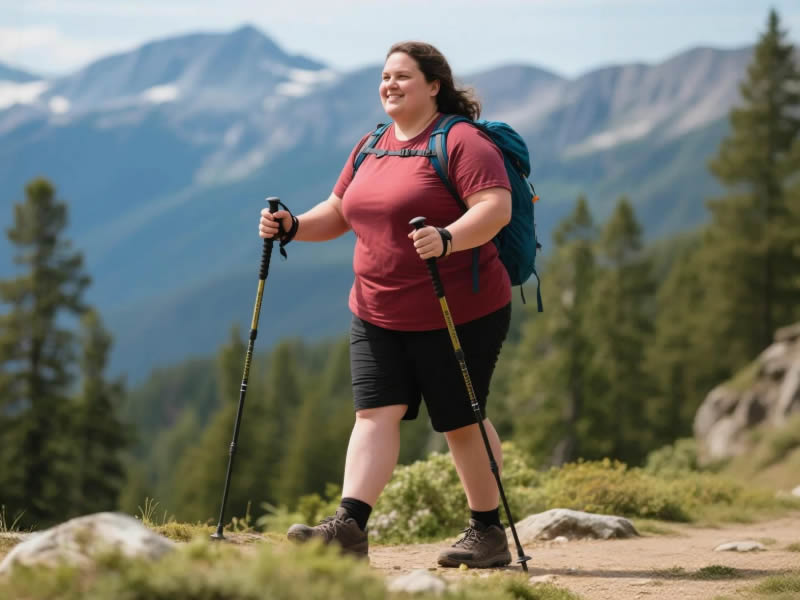
Recommended trekking pole purchase link:https://s.click.aliexpress.com/e/_c4M7OWaN
The Short Answer
Yes, poles rated for 300+ lbs do exist. The key is prioritizing 7075 aluminum over carbon fiber for its superior strength and ductility, choosing external flick-lock mechanisms for a more reliable grip under heavy load, and selecting poles with explicit or proven high weight ratings. The Black Diamond Trail Sport 3 is a top contender, tested and trusted by many in this weight class. The LEKI Makalu series also offers excellent load capacity and robust construction. Avoid carbon fiber at this weight; aluminum is the safer, more durable choice. Always check manufacturer specifications and user reviews, and don't rely on assumptions.
Why Weight Rating Matters: The Physics of Failure
Understanding why poles fail helps you choose ones that won't.
- Compressive Strength: Poles are designed to withstand force along their vertical axis. Exceeding this limit can cause the shaft to buckle or the locking mechanism to slip.
- Lateral Stress: On uneven terrain, poles are subjected to sideways forces they aren't primarily designed for. This is where heavier hikers are most at risk, as the leverage can be immense.
- Locking Mechanism Grip: This is often the weakest link. A lock that holds 200 lbs may slip at 300 lbs, especially when jarred by a sudden movement. External flick-locks generally provide a stronger, more consistent clamping force than internal twist-locks.
Critical Features for Plus-Size Hikers
1. Shaft Material: 7075 Aluminum is the Gold Standard
- 7075 Aluminum: This is an aerospace-grade alloy with an exceptional strength-to-weight ratio. It's the material of choice for applications where failure is not an option. Unlike cheaper aluminum, 7075 resists bending and will provide clear warning signs (like starting to bend) before catastrophic failure. It also performs better in cold weather than carbon fiber.
- 6061 Aluminum: A good, common alloy, but not as strong as 7075. It's acceptable for many hikers but is not the top recommendation for those at the upper end of the weight scale.
- Carbon Fiber: While lightweight, carbon fiber is more brittle. It can be strong under ideal vertical loads, but a sharp impact from a rock or a sudden lateral force can cause it to crack or snap without warning. For plus-size hikers, the risk is simply too high.
2. Locking Mechanism: External Flick-Locks Win
- External Flick-Locks (Lever-Locks): These provide a powerful, mechanical clamp that is less likely to slip under heavy, repeated loads. They are also easier to inspect, maintain, and tighten in the field. Look for robust, all-metal construction.
- Internal Twist-Locks: These can be prone to slipping, especially if any grit gets into the mechanism or if they aren't tightened with perfect force. They offer less surface area and clamping power compared to a good flick-lock.
3. Grip Material and Design
- Cork or High-Density Foam: Cork is excellent as it molds to your hand, provides a secure grip even when sweaty, and doesn't transfer heat. High-density foam is also a good, durable option.
- Sufficient Length: The grip should be long enough to accommodate different hand positions, allowing you to choke up for steep climbs or move your hand down for better leverage on descents.
4. Strap Quality and Adjustment
- Wide, Padded Straps: A good strap distributes the weight you're transferring through your arms, preventing chafing and hand fatigue. Look for straps that are easily adjustable, even with gloves on.
Recommended Poles for 300+ lbs
Best Overall: Black Diamond Trail Sport 3
The Black Diamond Trail Sport 3 is a workhorse that has earned its reputation for reliability.
- Shaft: Durable aluminum (while not always specified as 7075, its reputation for strength is well-established).
- Locks: Black Diamond's FlickLock is one of the most trusted and reliable external locking systems on the market. It provides a powerful, secure clamp.
- Grips: Comfortable foam grips that provide a good hold and reduce fatigue.
- Weight: A reasonable weight that balances durability with usability.
- Why They Work: Countless plus-size hikers have relied on these poles for years. They are built to take a beating and their locking mechanisms are known to hold securely under significant load.
Best Premium/Heavy-Duty: LEKI Makalu Series
LEKI poles are synonymous with German engineering and quality. The Makalu series is designed for high-altitude and demanding terrain.
- Shaft: High-strength aluminum (typically 7075) that can withstand extreme forces.
- Locks: LEKI's Speed Lock system is another excellent external lock, known for its security and durability in all conditions.
- Grips: The Aergon grip is ergonomically shaped to reduce hand fatigue and provide excellent control, which is crucial on long, demanding hikes.
- Why They Work: These are poles built for the world's toughest environments. They offer exceptional strength and reliability, making them a top choice for hikers who need gear they can trust completely.
Best Value/Easy to Find: Cascade Mountain Tech Aluminum
For hikers on a budget, Cascade Mountain Tech offers surprisingly robust aluminum poles.
- Shaft: Aluminum (material grade varies by model).
- Locks: Flick-lock style mechanism. While not as refined as Black Diamond or LEKI, they are functional and can be reliable.
- Grips: Many models feature comfortable cork grips, which is a great feature at this price point.
- Why They Work: They are an affordable entry point into secure, aluminum poles. They are a good option for getting started, though they may require more frequent inspection and maintenance of the locking mechanisms.
Red Flags to Avoid
- Poles with no stated weight limit. If a manufacturer is vague about the load capacity, it's a sign the product isn't engineered for heavier users.
- Ultra-light carbon fiber poles. The weight savings come at the cost of impact resistance and a safety margin.
- Cheap twist-lock mechanisms. These are prone to slipping and are difficult to service.
- Plastic components in high-stress areas. Look for metal on all locking parts.
Pro-Tips for Plus-Size Hikers
- Over-Test at Home: Before your first real hike, put your full weight on the poles in a safe environment. Lean into them, shift your weight, and simulate the forces of walking. If they slip or feel unstable, adjust or return them.
- Check Locks Frequently: Make it a habit to check the tightness of your flick-locks during breaks. Temperature changes and vibration can cause them to loosen.
- Inspect for Damage: After every hike, look for any signs of bending, dents, or wear on the shafts and locks.
- Replace Worn Tips: Worn carbide tips lose their bite and can cause slips, putting extra stress on the pole. Replace them regularly.
- Consider a Test Drive: If possible, visit a local outfitter to hold and adjust different models. See how the locks feel and how the grips fit your hands.
The Bottom Line
Finding the right walking pole as a plus-size hiker is about prioritizing safety and durability over grams and flashy features. The market offers excellent, reliable options built with 7075 aluminum and robust external flick-locks that can confidently support your adventures. The Black Diamond Trail Sport 3 and LEKI Makalu series stand out as top-tier choices that have proven themselves on the trails.
Don't let poorly made gear hold you back or put you at risk. Invest in a quality pair of poles designed for the job, inspect them regularly, and get out there to enjoy the trails with confidence and stability.




