




Walking Poles for Young Adults with Mobility Issues? A Guide to Confidence, Independence, and Style
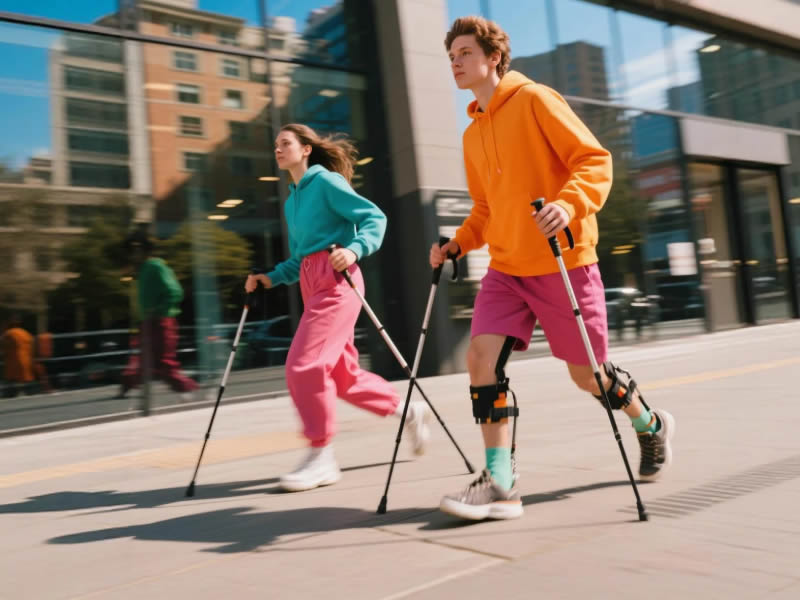
For young adults navigating mobility challenges—whether from cerebral palsy, multiple sclerosis, Ehlers-Danlos syndrome, post-injury recovery, or other conditions—the desire for independence and normalcy is powerful. Walking poles can be transformative tools, offering stability, reducing fatigue, and enabling participation in activities that might otherwise feel inaccessible. But for young adults, there's an additional dimension: the poles must not look or feel like "medical equipment." They should be sleek, functional, and even stylish—tools that enhance life rather than announce limitations. This guide explores how young adults with mobility issues can choose walking poles that support their bodies and their identities.
Recommended trekking pole purchase link:https://s.click.aliexpress.com/e/_c4M7OWaN
The Short Answer
Yes, walking poles can provide invaluable stability and confidence for young adults with mobility issues. They offer crucial support for balance, reduce joint strain and fatigue, and can make walking longer distances possible. Prioritize lightweight carbon fiber poles that won't add to your fatigue. Choose comfortable cork grips that reduce hand fatigue and look natural. Adjustable length allows you to adapt to changing needs and different terrains. The Black Diamond Distance Carbon Z is an excellent ultralight, sleek option. The LEKI Wanderfreund offers extra stability for uneven terrain with its unique rolling tips. Always consult a physical therapist for personalized guidance on what features best suit your specific needs.
Why Walking Poles Matter for Young Adults
Mobility challenges in young adulthood come with unique considerations:
Desire for Normalcy: Medical-looking equipment can feel stigmatizing. Poles designed for hiking and outdoor activities look like adventure gear, not medical devices. They signal capability, not limitation.
Active Lifestyle: Young adulthood is a time for exploration, adventure, and pushing boundaries. Poles can make these activities accessible.
Energy Conservation: Many conditions cause fatigue. Poles distribute workload, conserving energy for the things that matter.
Joint Protection: Conditions like EDS or early arthritis benefit from reduced joint load. Poles transfer weight from legs to arms.
Balance Support: For conditions affecting balance, poles provide two additional points of contact, dramatically improving stability.
Confidence: Knowing you have support can reduce anxiety about falling, allowing you to focus on enjoying the experience.
Social Inclusion: With poles, you may be able to participate in group activities that might otherwise be off-limits.
Critical Features for Young Adults
Lightweight Construction (Essential)
Heavy poles add to fatigue and feel cumbersome. Lightweight poles become extensions of your body:
- Carbon fiber poles are the lightest option—many under 10 ounces per pair
- Lightweight aluminum is a good second choice
- Every ounce counts when you'll be lifting poles thousands of times
Comfortable, Natural-Looking Grips
Your grips should feel good in your hands and look good too:
- Cork grips are ideal—natural material, comfortable, absorb sweat, and mold to your hands over time
- Foam grips are a good alternative—cushioned, lightweight
- Natural aesthetics (cork, earth tones) look like gear, not medical equipment
Adjustable or Fixed Length?
- Adjustable poles offer flexibility for different terrains and can be shared
- Fixed-length poles are lighter and simpler—ideal if you know your preferred length
- Consider your needs: Will you use poles on varied terrain? Do your needs change day to day?
Secure, Simple Locks
You don't want to struggle with complicated mechanisms:
- Flick-locks are generally easier to operate than twist-locks
- Simple designs with large levers require less fine motor control
- Reliable mechanisms mean you can trust your poles
Rubber Tips for Versatility
Many walks may be on paved paths or gentle terrain. Rubber tips provide:
- Better traction on hard surfaces
- Quieter operation
- Reduced jarring
Recommended Poles for Young Adults
Best Ultralight: Black Diamond Distance Carbon Z
The Distance Carbon Z is sleek, simple, and nearly weightless:
- Weight: Under 10 ounces per pair—so light you'll forget you're carrying them
- Grips: Foam—comfortable, clean design
- Construction: Carbon fiber—light, responsive
- Deployment: Z-pole system folds to 34cm for easy storage
- Length: Fixed—choose based on your height (measure with physical therapist)
- Aesthetics: Sleek, modern, looks like performance gear
Why They Work: At this weight, they're barely noticeable. The clean design doesn't scream "medical device." They're simply great gear.
Best for Stability: LEKI Wanderfreund
The Wanderfreund offers unique features for those needing extra stability:
- Grips: Ergonomic Aergon—comfortable, reduces hand fatigue
- Tips: Rolling tips—maintain contact with ground, providing continuous support
- Shock Absorption: Built-in—reduces joint impact
- Weight: Moderate but well-balanced
- Stability: Excellent on varied terrain
Why They Work: The rolling tips provide exceptional stability, especially on uneven ground. The ergonomic grips are among the most comfortable available.
Best Adjustable: LEKI Micro Vario Carbon
For those who need length flexibility:
- Weight: Approximately 11 ounces per pair—very light for adjustable poles
- Grips: Cork—comfortable, natural-looking
- Construction: Carbon fiber
- Locks: Speed Lock—simple, secure
- Adjustability: 4-section design with wide range
- Packability: Collapses to 36cm
Why They Work: The cork grips are comfortable and natural-looking. The adjustability lets you fine-tune for different activities and terrains.
Best Budget: Cascade Mountain Tech Carbon Fiber with Cork Grips
For budget-conscious users:
- Grips: Cork—comfortable, natural
- Weight: Carbon fiber—reasonably light (14-16 ounces)
- Locks: Flick-lock style—functional
- Tips: Carbide—add rubber tips
- Value: Affordable
Pros: Cork grips at budget prices, decent weight savings
Cons: Locks less refined than premium options
Best for Hand Comfort: Black Diamond Alpine Cork
For those who prioritize grip comfort:
- Grips: Cork—excellent comfort, natural material
- Construction: Aluminum (durable) or carbon options
- Locks: FlickLock—reliable, easy to operate
- Weight: Moderate
- Aesthetics: Classic, timeless design
Why They Work: The cork grips are among the best available. They're comfortable, natural-looking, and mold to your hands over time.
Addressing the Psychological Aspect
For young adults, the psychological impact of using mobility aids is real:
Reframing the Narrative: Walking poles aren't a sign of weakness or limitation. They're tools of empowerment. Athletes use them. Adventurers use them. They're gear, not medical equipment.
Choosing Your Look: You have options. Sleek carbon fiber, natural cork, subtle colors—you can choose poles that reflect your personal style.
Confidence in Motion: The stability poles provide will show in your movement. You'll walk taller, move more confidently, and project capability.
Social Situations: Having poles can actually be a conversation starter. "Those are cool poles—where'd you get them?" is a very different question than "What's that for?"
Working with Professionals
Physical Therapist Consultation
Before investing in poles, consult a physical therapist who can:
- Assess your specific mobility needs
- Recommend appropriate pole type and features
- Help determine correct length
- Teach proper technique
- Design a progressive walking program
Occupational Therapist Input
An occupational therapist can help with:
- Energy conservation strategies
- Integrating pole use into daily activities
- Addressing specific functional challenges
Trying Before Buying
If possible, test different poles before purchasing. Visit an outdoor retailer that allows you to hold and adjust various models. Pay attention to:
- How the grips feel in your hands
- How easy the locks are to operate
- The overall weight and balance
Techniques for Daily Use
Learn Proper Technique
Work with your physical therapist to master:
- The natural cross-body rhythm (left pole with right foot)
- Using straps to reduce grip force
- Adjusting length for different terrains
- Planting poles for maximum stability
Start Gradually
Begin with short walks on familiar, even terrain. Build up as your body adapts.
Use on Varied Surfaces
Practice on different surfaces—pavement, packed trails, grass—to build confidence.
Incorporate into Daily Life
Use poles for:
- Walks around the neighborhood
- Trips to the park
- Outdoor social activities
- Exercise and fitness
Maintenance and Care
Clean Regularly
Wipe down after use, especially if you've been on muddy or dusty trails.
Check Locks
Periodically ensure locking mechanisms are secure.
Replace Worn Tips
Rubber tips wear out; replace them as needed.
Store Properly
Keep poles in a dry place when not in use.
What Young Adults Say
"I was nervous about using poles at 24," shares Alex, who has Ehlers-Danlos syndrome. "I thought they'd make me look old or disabled. Then I found carbon fiber poles with cork grips. They look like adventure gear. Now I hike with friends and keep up. They're my secret weapon."
"My physical therapist recommended poles for my balance issues," says Jamie, a college student with MS. "I was skeptical, but the difference is incredible. I don't wobble anymore. And honestly, they look cool. People ask about them all the time."
The Bottom Line
For young adults with mobility issues, walking poles offer far more than physical support. They offer independence, confidence, and the ability to participate fully in life. The right poles become tools of empowerment—not markers of limitation.
The Black Diamond Distance Carbon Z provides ultralight, sleek performance that virtually disappears in your hands. The LEKI Wanderfreund offers exceptional stability with its unique rolling tips. The LEKI Micro Vario Carbon combines adjustability with cork comfort. All offer the kind of clean, functional aesthetics that look like adventure gear, not medical equipment.
Remember that the best poles are the ones that work for your specific body and needs. Work with your healthcare team to find the right solution. And once you have them, use them with pride. They're not a sign of what you can't do—they're tools for all the things you can.
Disclaimer: This article provides general information and does not constitute medical advice. Always consult your healthcare providers, including physical and occupational therapists, for personalized guidance on mobility aids and exercise programs.




