




Titanium walking poles – are they actually lighter?
Titanium holds a mythical status in the outdoor world. It is strong, corrosion-resistant, and undeniably cool. When hikers see titanium walking poles, they often assume they are acquiring the ultimate lightweight upgrade. But the reality is more complicated—and may surprise you. The question "Are titanium walking poles actually lighter?" deserves a detailed answer rooted in materials science, engineering, and real-world trail performance.
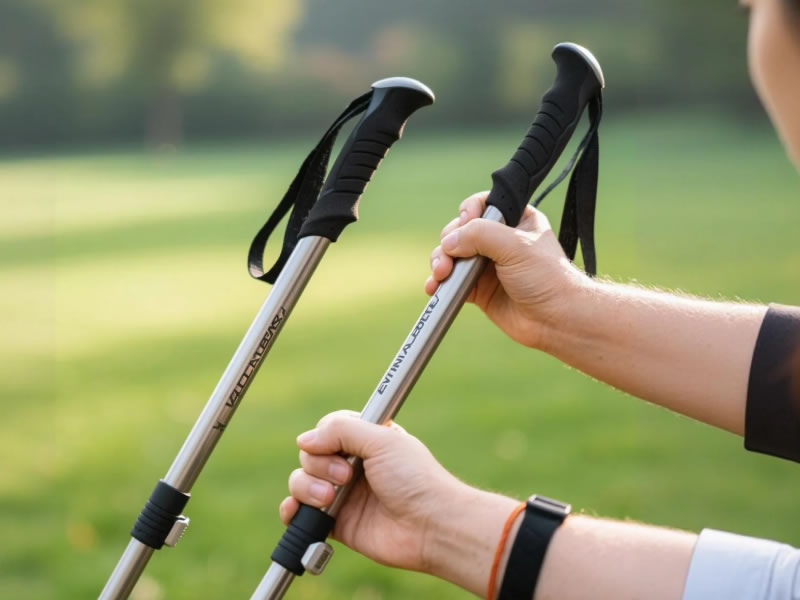
Recommended trekking pole purchase link: https://s.click.aliexpress.com/e/_c4M7OWaN
The Myth of Titanium Lightness
Titanium is often associated with lightweight performance because of its exceptional strength-to-weight ratio. Pound for pound, titanium is stronger than steel. However, strength-to-weight ratio is not the same as absolute weight. When comparing trekking poles made from different materials, we must consider density, wall thickness, and structural requirements.
Material Densities (approximate):
- Aluminum: 2.7 g/cm³
- Titanium: 4.5 g/cm³
- Steel: 7.8 g/cm³
- Carbon fiber: 1.6 g/cm³ (varies by layup)
Titanium is 67% denser than aluminum. This means that for a pole of identical dimensions, the titanium version will weigh significantly more. Manufacturers can use thinner walls with titanium because of its strength, but there are practical limits to how thin a tube can be before it becomes too flexible or prone to denting.
The Engineering Compromise
To understand whether titanium poles are lighter, we must consider equivalent strength. A titanium pole designed to have the same stiffness and load capacity as a high-end aluminum pole (like 7075 aluminum) will generally end up weighing similar or slightly more. The higher density offsets the strength advantage when wall thickness is reduced.
Carbon fiber, by contrast, is both less dense and can be engineered for exceptional stiffness. Pure carbon fiber poles are almost always lighter than titanium poles of comparable strength.
The weight hierarchy typically looks like this:
- Lightest: Carbon fiber
- Middle: High-end aluminum (7075)
- Heavier: Titanium
- Heaviest: Steel
So Why Choose Titanium?
If titanium is not lighter, why does it exist as a trekking pole material? Because weight is not the only virtue. Titanium offers unique properties that some hikers value above all else.
Unmatched Durability:
Titanium is incredibly tough. Unlike aluminum, which bends and stays bent, or carbon fiber, which can crack or shatter, titanium has elastic memory. It can flex under load and spring back to its original shape. If you abuse titanium poles—jamming them between rocks, leaning heavily, subjecting them to lateral stress—they are far less likely to suffer permanent damage.
Vibration Damping:
Titanium naturally absorbs and dampens vibration better than aluminum. On long descents over rocky terrain, titanium poles transmit less shock to your hands and wrists, reducing fatigue.
Corrosion Resistance:
Titanium is virtually immune to corrosion. It laughs at salt water, sweat, rain, and mud. A titanium pole can last a lifetime with minimal maintenance, while aluminum may eventually corrode if the anodizing wears through.
The "Forever Pole" Factor:
Many hikers choose titanium not for lightness, but for longevity. A well-made titanium pole may be the last pole you ever buy. This sustainability angle appeals to those who prefer buying once and using indefinitely.
The Trade-Offs
Titanium poles are not without disadvantages beyond weight:
- Cost: Titanium is expensive. Manufacturing costs are high, and prices reflect that.
- Flex: Some hikers find titanium poles too "springy" or flexible compared to stiff carbon fiber.
- Cold Transfer: Titanium conducts cold more than carbon, meaning grips can feel colder in winter (though grip material matters more).
Who Should Buy Titanium Poles?
| Hiker Type | Recommendation |
|---|---|
| Gram-counting ultralighter | Carbon fiber |
| Budget-conscious hiker | Aluminum |
| Durability-obsessed adventurer | Titanium |
| Corrosion-concerned (coastal, wet) | Titanium |
| "Buy it for life" enthusiast | Titanium |
Titanium poles are ideal for:
- Hikers who destroy gear and want something indestructible.
- Those hiking in marine environments or extreme wet conditions.
- People who value vibration damping and flex over ultimate stiffness.
- Anyone willing to carry a few extra ounces for decades of reliability.
The Verdict
Are titanium walking poles actually lighter? No, not compared to modern carbon fiber or even high-end aluminum. They occupy a unique niche: heavier than the lightest options, but tougher than anything else on the market.
Think of titanium poles as the "overlanding" choice—built for a lifetime of abuse rather than chasing grams. If your priority is the absolute lightest setup for fast-and-light adventures, look to carbon fiber. If you want a pole that will survive falls, car doors, and decades of service without complaint, titanium is your material.
Weight is not the only measure of value. Choose what matters most to you.




