




Bamboo walking poles – eco-friendly alternative?
In an era of growing environmental consciousness, outdoor enthusiasts are increasingly questioning the materials in their gear. Bamboo walking poles have emerged as a intriguing alternative to aluminum, carbon fiber, and titanium. But are they truly a viable eco-friendly option, or merely a niche novelty? This deep dive explores the sustainability, performance, and practicality of bamboo trekking poles to help you decide if they belong on your next hike.
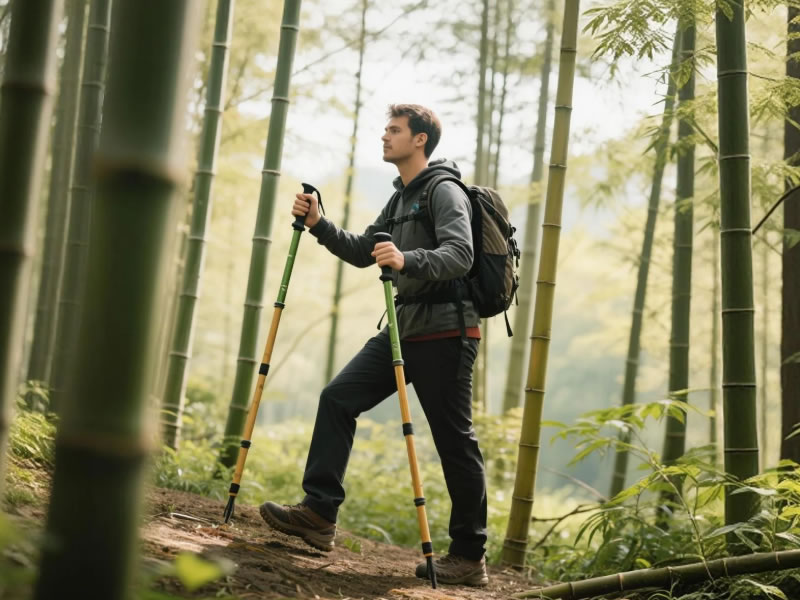
Recommended trekking pole purchase link: https://s.click.aliexpress.com/e/_c4M7OWaN
The Allure of Bamboo
Bamboo is not a tree—it is a fast-growing grass that can reach maturity in 3-5 years, compared to decades for hardwood trees. It regenerates from its own root system without replanting, prevents soil erosion, and sequesters carbon dioxide at impressive rates. For hikers seeking to minimize their environmental footprint, bamboo presents an appealing renewable resource.
Sustainability credentials:
- Rapidly renewable (harvestable every 3-5 years)
- Biodegradable at end of life
- Low processing energy compared to metal smelting
- No toxic byproducts in production
- Often grown without pesticides or fertilizers
The Performance Reality
Before embracing bamboo, we must examine how it performs as a trekking pole material.
Weight:
Bamboo is surprisingly heavy. A pair of bamboo poles typically weighs 18-24 ounces, significantly more than aluminum (16-18 oz) and far heavier than carbon fiber (8-12 oz). The density of bamboo varies by species and age, but it cannot compete with modern synthetics for lightweight performance.
Strength and Durability:
Bamboo has excellent tensile strength—it is sometimes called "natural fiberglass." It can withstand significant compression along its length. However, it is vulnerable to:
- Splitting if impacted sideways
- Moisture absorption leading to rot (if not properly sealed)
- Insect damage in some environments
- Inconsistent strength between individual poles
Shock Absorption:
Bamboo naturally dampens vibration better than aluminum, offering comfortable shock absorption on rough terrain. Many users report a pleasant, springy feel.
Adjustability and Features
Here lies the biggest practical limitation: bamboo poles are typically fixed length. You cannot telescope them to adjust for terrain changes or pack them small. Some artisans offer adjustable bamboo poles with metal hardware, but these compromise the eco-friendly ethos and add failure points.
Additionally, bamboo poles rarely include:
- Replaceable carbide tips
- Interchangeable baskets
- Ergonomic grips with straps
- Flick-lock mechanisms
You are essentially buying a natural stick with a handle—simple, but limited.
Environmental Trade-Offs
While bamboo itself is sustainable, consider the full lifecycle:
Bamboo Pros:
- Renewable material
- Minimal processing
- Biodegradable disposal
Bamboo Cons:
- Shorter lifespan (may crack or rot)
- No replaceable parts (entire pole discarded when tip wears)
- Often shipped from Asia (transportation carbon footprint)
- May involve varnishes or sealants (less eco-friendly)
A carbon fiber pole that lasts 10 years with replaceable tips might ultimately have lower environmental impact than a bamboo pole replaced every 2-3 years. This "longevity vs. renewability" debate is complex.
Who Should Choose Bamboo?
| Hiker Type | Bamboo Suitability |
|---|---|
| Casual nature walker | Excellent |
| Eco-purist | Very good |
| Day hiker on gentle trails | Good |
| Backpacker with heavy load | Poor |
| Thru-hiker | Poor |
| Technical terrain hiker | Poor |
Bamboo poles are ideal for:
- Leisurely walks in parks and nature reserves
- Hikers prioritizing sustainability above all else
- Those who appreciate natural aesthetics and craftsmanship
- Short, gentle trails where adjustability isn't needed
Bamboo poles are NOT ideal for:
- Long-distance backpacking
- Rocky or technical terrain
- Hikers needing adjustable length
- Anyone carrying heavy packs
The Verdict
Are bamboo walking poles a genuine eco-friendly alternative? Yes, but with important caveats.
For casual hikers who value sustainability and don't demand high performance, bamboo offers a beautiful, renewable, and biodegradable option that connects you more directly with nature. The experience of hiking with a naturally grown staff has a unique appeal that synthetic materials cannot replicate.
For serious hikers, backpackers, and adventurers, bamboo's limitations—weight, fixed length, lack of replaceable parts, and durability concerns—make it impractical as a primary pole. In these cases, a high-quality aluminum or carbon fiber pole used for many years with replaceable components may actually be the more sustainable choice overall.
The most eco-friendly pole is the one you use for decades, not the one made from renewable materials but replaced every few seasons. Consider your hiking style, then choose accordingly.




