




Trekking poles Interchangeable tip systems – worth the investment?
When you purchase a pair of trekking poles, the tips are the component that works hardest. They scrape against rock, bite into dirt, punch through snow, and clack against pavement. Over time, they wear down. For hikers who venture across varied terrain—or who simply want their poles to last—interchangeable tip systems offer a compelling solution. But are they worth the extra cost and complexity? This deep dive examines the benefits, trade-offs, and real-world value of interchangeable tip systems to help you decide if they deserve a place in your gear arsenal.
Recommended trekking pole purchase link: https://s.click.aliexpress.com/e/_c4M7OWaN
What Is an Interchangeable Tip System?
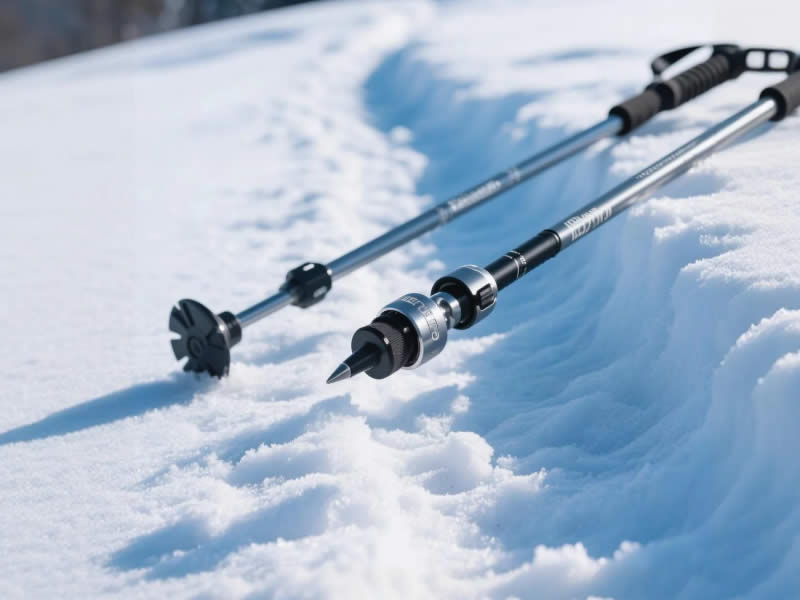
An interchangeable tip system allows you to remove and replace the tip of your trekking pole without replacing the entire pole. Most systems use a simple screw-in, push-in, or twist-lock mechanism that secures the tip to the lower section. The same attachment point typically accepts different accessories:
- Carbide tips: For general trail use on dirt, rock, and uneven terrain
- Rubber boots or feet: For pavement, asphalt, and hard surfaces (protects tips and reduces noise)
- Snow baskets: Large-diameter discs that prevent poles from sinking in deep snow
- Mud baskets: Smaller than snow baskets but wider than standard, designed for soft, muddy ground
- Hard surface tips: Specialized rubber or plastic tips for urban or indoor use
The Case for Interchangeable Systems
Terrain Adaptability:
The most obvious benefit is versatility. A single pair of poles can serve a hiker who transitions from rocky mountain trails to sidewalk fitness walking to winter snowshoeing. Swap in carbide tips for the backcountry, rubber feet for the neighborhood loop, and snow baskets for winter adventures. Without interchangeability, you either compromise with one tip type for all conditions or own multiple pole sets.
Extended Pole Lifespan:
Tips wear out. It is a fact of trekking pole use. With a fixed-tip pole, a worn tip means the pole is effectively compromised—you either continue using a slippery, less effective tip or replace the entire pole. With an interchangeable system, you simply replace the worn tip for a fraction of the cost of new poles. A $10–$20 tip replacement can extend the life of $150 poles indefinitely.
Travel Convenience:
Rubber tips serve a critical function for travelers. Many airlines require trekking poles to be checked baggage, but rubber tips can be used to protect gear bags and comply with some airline policies. More importantly, rubber tips prevent the carbide tips from damaging luggage, car interiors, or floors when poles are stored.
Noise Reduction:
On pavement or hard-packed trails, carbide tips create a distinctive clicking sound that can be annoying to the user and disruptive to others. Rubber boots silence this noise, making urban or front-country walking more pleasant.
Seasonal Flexibility:
For hikers who enjoy both summer trails and winter snowshoeing, interchangeable systems are essential. Snow baskets (typically 2–3 inches in diameter) prevent poles from plunging deep into powder, while summer baskets or bare tips provide proper traction on dirt and rock. One set of poles serves both seasons.
The Trade-Offs
Initial Cost:
Poles with interchangeable tip systems typically cost $10–$40 more than comparable fixed-tip models. The system itself requires precision manufacturing to ensure secure attachment, which adds to production costs.
Slight Weight Penalty:
The attachment mechanism—whether screw threads, a locking collar, or a push-button system—adds a small amount of weight to the lower section. Typically 0.2–0.5 ounces per pole—negligible for most hikers but noted by gram-counters.
Potential Failure Points:
Any mechanical interface introduces a potential failure point. Interchangeable tips can:
- Loosen over time if not checked periodically
- Cross-thread if attached incorrectly
- Accumulate grit that interferes with attachment
- Be lost if not properly secured
Quality systems from reputable brands mitigate these risks, but they exist.
Accessory Cost:
While the initial investment includes one set of tips, additional accessories (extra carbide tips, rubber boots, snow baskets) are separate purchases. A full accessory set can add $20–$50 to the total investment.
Who Benefits Most?
| Hiker Type | Value of Interchangeable System |
|---|---|
| Multi-terrain hiker (trails, pavement, snow) | High |
| Frequent traveler | High |
| Winter snowshoer | High |
| Long-distance, high-mileage hiker | High (tip replacement) |
| Single-terrain casual hiker | Low |
| Ultralight minimalist | Moderate (weight penalty) |
Cost-Per-Mile Analysis
Consider a hiker who covers 500 miles per year on mixed terrain:
- Fixed-tip poles ($100): Tips wear out after 2–3 years. Replace entire poles: $100 every 3 years = $33/year.
- Interchangeable poles ($130): Replace tips every 2 years ($15). Initial investment plus tip replacements over 6 years: $130 + $45 = $175, or $29/year.
Over time, interchangeable systems can be more economical, especially if snow baskets or rubber boots eliminate the need for separate winter poles.
The Verdict
Interchangeable tip systems are worth the investment for hikers who:
- Encounter varied terrain (trail, pavement, snow, mud)
- Travel frequently with poles
- Log significant miles and will wear out tips over time
- Prefer one set of poles for year-round use
For casual hikers who stay on a single terrain type (e.g., only dirt trails in fair weather), fixed tips may suffice. The added cost and complexity deliver limited value.
However, for the majority of active hikers who explore different environments, the versatility, longevity, and travel convenience of interchangeable systems justify the modest upfront premium. The ability to adapt your poles to the trail—and replace worn tips instead of entire poles—pays dividends over years of use.
One set of poles, every terrain, years of service. That’s the promise of interchangeable tips.




