




Trekking poles Shock-absorbing tips for joint pain relief?
For hikers with arthritis, old injuries, or simply the cumulative wear of years on the trail, every step can send a jarring shock through the body. Trekking poles are already valued for redistributing load from knees and hips, but the impact of the pole itself planting on hard ground travels up through the wrists, elbows, and shoulders. Shock-absorbing tips promise to dampen this impact, offering relief where it is needed most. But do they actually work? This deep dive examines the technology behind shock-absorbing tips, their real-world effectiveness for joint pain relief, and whether they are a worthwhile investment for the joint-sensitive hiker.
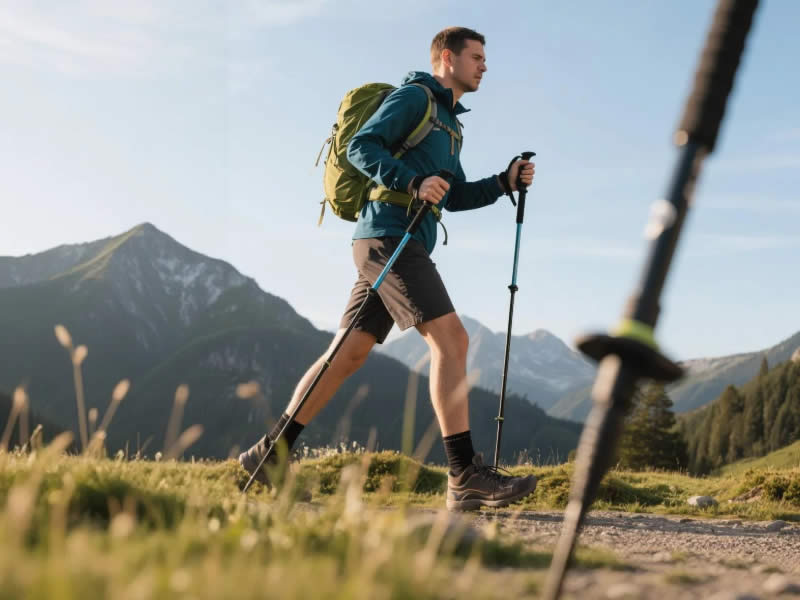
Recommended trekking pole purchase link: https://s.click.aliexpress.com/e/_c4M7OWaN
What Are Shock-Absorbing Tips?
Shock-absorbing tips are specialized attachments that fit onto the end of trekking poles, designed to compress upon impact and absorb vibration before it travels up the shaft. Unlike standard carbide tips (which transmit nearly all impact force) or simple rubber boots (which cushion but do not actively absorb), shock-absorbing tips incorporate a mechanical or elastomer-based damping system.
Common designs:
- Spring-loaded tips: A metal spring inside the tip housing compresses when the pole strikes the ground, absorbing the initial impact. The spring then returns the tip to its extended position as weight is released.
- Elastomer-based tips: Instead of a metal spring, these use a rubber or polymer compound that compresses under load. Elastomers provide a smoother, quieter damping action and are less prone to mechanical failure than springs.
- Hybrid systems: Some premium tips combine a spring with an elastomer core, offering progressive damping—soft for small impacts, firmer for heavy loads.
How They Help with Joint Pain
The mechanism is straightforward: reducing peak impact force. When a standard pole plants on hard ground, the deceleration is near-instantaneous, sending a sharp shockwave up the shaft. A shock-absorbing tip extends the deceleration time—instead of stopping abruptly, the tip compresses over a few millimeters, spreading the force over a slightly longer duration.
Real-world effect: Studies on shock-absorbing trekking poles (including those with internal shaft dampers) suggest peak impact forces at the wrist can be reduced by 20–40% compared to rigid poles. While this is not a cure for underlying joint conditions, it can mean the difference between completing a hike and cutting it short due to pain.
Types of Shock Absorption: Tips vs. Internal Systems
It is important to distinguish between shock-absorbing tips and full-pole shock absorption systems (such as Leki’s Shock Stop or Black Diamond’s Trail Shock). Both aim to reduce impact, but they do so differently:
| Feature | Shock-Absorbing Tips | Internal Shaft Shock |
|---|---|---|
| Location | Tip only | Inside upper shaft |
| Travel distance | 3–8 mm | 10–20 mm |
| Mechanism | Spring or elastomer | Spring or elastomer cartridge |
| Weight added | Minimal (0.5–1 oz per pole) | Moderate (1–2 oz per pole) |
| Terrain effect | Most noticeable on hard surfaces | Effective across all terrain |
| Complexity | Simple, fewer parts | More complex, more failure points |
For joint pain relief, internal shock systems generally provide more damping (longer travel distance) and are effective on a wider range of surfaces. However, shock-absorbing tips are more affordable, add less weight, and can be added to existing poles without replacing the entire set.
Effectiveness by Joint Type
| Joint | Benefit Level | Notes |
|---|---|---|
| Wrists | High | Most direct impact transmission; noticeable relief |
| Elbows | Moderate | Reduced vibration translates to less strain |
| Shoulders | Moderate | Cumulative reduction in repetitive impact |
| Hands (arthritis) | Moderate | Less jarring during each plant |
| Knees/hips | Indirect | Poles already reduce load; tips add marginal benefit |
Who Benefits Most?
Shock-absorbing tips are most valuable for:
- Hikers with wrist or hand arthritis: The direct reduction in impact at the point of contact is most noticeable here.
- Those who hike primarily on hard surfaces: Pavement, hardpack, and compacted trails transmit the most shock; tips are highly effective here.
- Recovering from wrist or elbow injury: Reduced vibration aids healing and prevents re-injury.
- Older hikers with general joint sensitivity: Cumulative reduction across hundreds of steps adds up.
They are less beneficial for:
- Hikers on soft, natural trails: Dirt, pine needle duff, and moss already absorb impact.
- Those with primarily knee or hip pain: The primary benefit of poles is load redistribution; tips add marginal benefit.
- Technical terrain specialists: Some users dislike the “mushy” feel and reduced feedback.
The Trade-Offs
Weight: Shock-absorbing tips add weight—typically 0.5–1 ounce per pole. For lightweight enthusiasts, this may be a consideration.
Feel: Some experienced hikers find the slight compression disconcerting, especially on steep or technical terrain where precise feedback is valued. The tip can feel “soft” or “mushy” compared to rigid carbide.
Durability: Springs and elastomers wear over time. Spring-loaded tips may corrode or lose tension; elastomers can harden or crack in extreme temperatures. Regular inspection and replacement (every 500–1,000 miles) are recommended.
Cost: Quality shock-absorbing tips typically cost $15–$30 per pair—more than standard rubber boots but less than replacing an entire pole.
The Verdict
Shock-absorbing tips provide meaningful relief for joint-sensitive hikers, particularly for wrist, hand, and elbow discomfort. They are most effective on hard surfaces and for users who feel the jarring impact of each plant. While they do not eliminate joint strain entirely, the 20–40% reduction in peak impact force can translate to longer, more comfortable hikes.
For those with moderate joint pain who already use trekking poles, adding shock-absorbing tips is a cost-effective upgrade. For those with severe arthritis or chronic wrist issues, internal shock-absorbing poles may offer greater benefit. In all cases, combining shock-absorbing tips with ergonomic grips and proper poling technique maximizes relief.
Every step should support the journey, not punish the body. Choose tips that soften the impact.




