




Warranty coverage for Trekking Poles breakage?
A broken trekking pole is frustrating enough; discovering that the break is not covered under warranty can add insult to injury. Understanding what manufacturers actually cover—and what they consider normal wear, accident, or misuse—can save you money and help you choose poles with realistic expectations. This deep dive explains the landscape of trekking pole warranties, what “lifetime warranty” really means, and how to protect yourself from unexpected replacement costs.
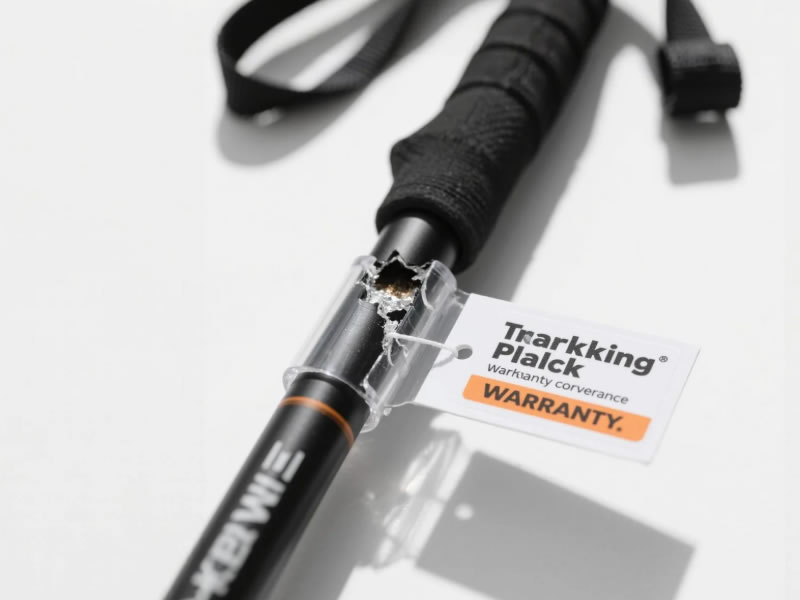
Recommended trekking pole purchase link: https://s.click.aliexpress.com/e/_c4M7OWaN
Manufacturing Defects vs. Accidental Breakage
The single most important distinction in any trekking pole warranty is whether the failure is due to a manufacturing defect or accidental damage.
Manufacturing defects include:
- Locks that fail to hold tension despite proper adjustment
- Delamination or cracking of carbon fiber without impact evidence
- Internal cord that frays or breaks under normal use
- Grips that separate from the shaft
- Baskets or tips that fall off due to faulty attachment
These are almost always covered, usually for a defined period (1–5 years, sometimes “lifetime” for the original owner).
Accidental breakage includes:
- Bending or snapping the pole in a fall
- Catching the pole in a rock crack and torquing it
- Running over poles with a vehicle
- Using the pole as a lever or pry bar
Accidental breakage is almost never covered by a standard warranty. It falls under “user error” or “misuse,” regardless of how careful you thought you were.
What “Lifetime Warranty” Actually Means
When a brand advertises a “lifetime warranty,” it sounds like your poles are covered forever. In reality, “lifetime” usually means:
- The expected lifetime of the product as determined by the manufacturer (often 5–10 years).
- Coverage for the original owner only—warranties typically do not transfer if you buy used poles.
- Defects only, not accidents.
Black Diamond, Leki, and Komperdell all offer strong defect warranties (often 1–5 years, sometimes longer for original owners), but they explicitly exclude damage from falls, impacts, and normal wear.
Brand‑by‑Brand Overview
| Brand | Defect Warranty | Accidental Coverage? | Notes |
|---|---|---|---|
| Black Diamond | 1–5 years (varies by model) | No | Strong support for defects; sells replacement parts |
| Leki | 2–5 years (depending on model) | No | Excellent parts availability; warranty requires proof of purchase |
| Komperdell | 3 years (limited) | No | Solid defect coverage; European warranty may differ |
| REI Co-op | 1 year (REI warranty) + REI return policy | No | REI’s generous return policy may cover accidents if returned within a year |
| Gossamer Gear | 1 year (defects) | No | Sells replacement sections for many models |
| Cascade Mountain Tech | 1 year (limited) | No | Budget brand; warranty may be harder to claim |
What Is Usually Not Covered
Even under a defect warranty, you are unlikely to receive coverage for:
- Worn tips or baskets – considered consumable items.
- Scratches, cosmetic damage – does not affect function.
- Bent aluminum from a fall – user accident.
- Snapped carbon from impact – user accident.
- Damage from improper storage or transport (e.g., poles crushed in a car trunk).
How to Make a Warranty Claim
To maximize your chances of a successful claim:
- Keep your receipt. Most brands require proof of purchase and date.
- Register your poles if the manufacturer offers registration. Some extend warranty coverage for registered products.
- Document the failure. Take clear photos showing the defect (e.g., a lock that will not tighten, a delaminated carbon shaft). If the failure is due to a defect, the photos should show no impact damage around the area.
- Contact the brand directly. Many have online warranty claim forms. Be honest about how the failure occurred—if you misrepresent an accident as a defect, they may deny the claim and note it in your file.
When Warranty Won’t Help: Alternatives
If your break is clearly accidental and not covered:
- Check your credit card. Some premium cards offer purchase protection or accidental damage coverage for items bought with the card, usually for 90–120 days after purchase.
- Buy replacement sections. Many brands (Black Diamond, Leki, Gossamer Gear) sell individual pole sections. Replacing a single section is often far cheaper than buying a new pair.
- Consider a “crash replacement” policy. Some brands offer a discount on a new pair if you break a pole accidentally. Ask customer service—they may have an unpublished program.
The Verdict
Trekking pole warranties are designed to protect you from manufacturing defects, not from the inevitable falls and rock catches that happen on the trail. For most hikers, the real value lies in brands that offer replaceable parts and reasonably priced sections, allowing you to repair accidental damage without relying on warranty coverage.
When choosing poles, do not let a “lifetime warranty” be your primary decision factor. Instead, look for:
- 7075 aluminum or quality carbon construction
- External flick locks that can be tightened or replaced
- Replaceable sections available for purchase
- A brand with a reputation for standing behind its products—even if they do not cover accidents, they should make repair parts easy to find
Warranties are a safety net for hidden flaws. Real durability is what keeps your poles alive after the falls you know you will take.




