




Double Walking Pole vs Single Walking Pole Alternating? A Complete Guide to Choosing Your Support
When it comes to using walking poles, one of the most common questions is whether to use two poles (double) or just one, alternating hands. Both approaches have their place, and the choice depends on your terrain, your physical needs, and what you're trying to accomplish. This guide explores the benefits and trade-offs of each style, helping you decide which is right for your hike.
Recommended trekking pole purchase link: https://s.click.aliexpress.com/e/_c4M7OWaN
The Short Answer
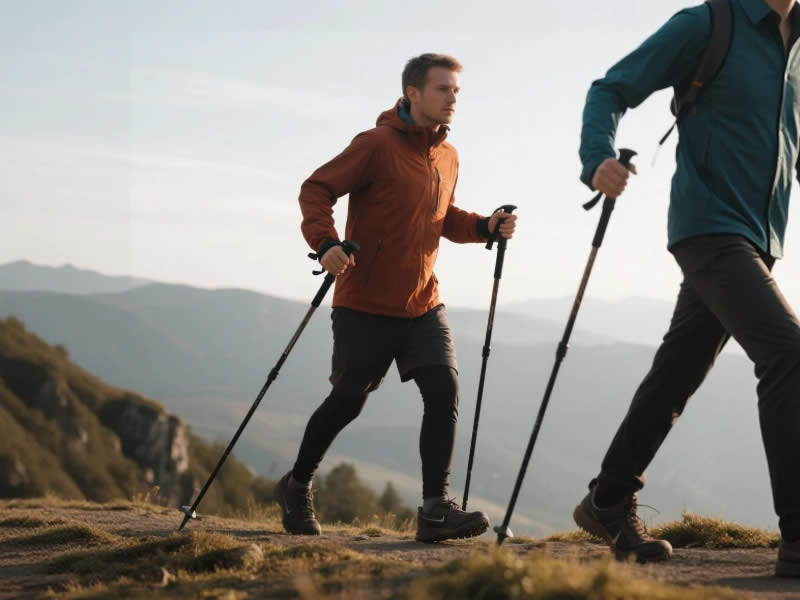
Double walking poles (two poles used simultaneously) are the standard for most hiking. They provide maximum stability, distribute weight across your whole body, reduce joint impact by 20-30%, and create a natural rhythm that powers you uphill and braces you downhill. Best for rough terrain, heavy packs, and anyone wanting joint protection.
Single alternating (one pole used, switching hands occasionally) frees a hand for other activities—like using a trekking umbrella, photography, or managing a dog leash. It offers modest stability while letting you vary your gait. Common on gentle, predictable terrain or for light support.
The bottom line: Use two poles for serious hiking, one pole for casual or hands-busy scenarios. The choice depends on your goals: joint protection and stability (double) vs convenience and free-hand tasks (single).
Double Poles: The Full Support System
Using two poles is the standard approach for most hikers, and for good reason. Here's what two poles give you:
Maximum Stability
Two poles create four points of contact with the ground (two feet + two poles). This widened base of support significantly improves balance on uneven terrain, reduces the risk of falls, and gives you confidence on rocky, root-filled trails.
Joint Protection
This is perhaps the most important benefit. Each step with two poles transfers 20-30% of your body weight from your legs to your arms. Over a long descent, this dramatically reduces impact on your knees, hips, and ankles. For anyone with joint concerns—or anyone who wants to keep their joints healthy—two poles are essential.
Rhythm and Efficiency
The natural cross-body pattern (left pole with right foot, right pole with left foot) creates a rhythm that propels you forward efficiently. On climbs, you use your arms to help pull yourself up. On descents, the poles act as brakes, absorbing shock and controlling your speed.
Even Workload
Two poles engage your upper body symmetrically, distributing effort across your arms, shoulders, and back. This reduces fatigue in your legs and helps you maintain energy over long distances.
When to Use Double Poles:
- Steep climbs and descents
- Rocky, uneven, or technical terrain
- Carrying a heavy backpack
- When you want maximum joint protection
- Long-distance hiking or thru-hiking
- Winter conditions (snow, ice)
- Anyone with balance concerns
Single Pole Alternating: When One Hand Is Enough
Using a single pole, switching hands as needed, is a different approach. It's less about full-body efficiency and more about providing modest support while keeping one hand free.
Free Hand
This is the primary advantage. With one pole, you can:
- Use a trekking umbrella for sun or rain protection
- Carry and operate a camera or smartphone
- Manage a dog leash
- Hold a map or guidebook
- Sip from a water bottle without stopping
- Grip a rock or branch on steep sections
Less Intensity, More Casual
For easy walks on level, predictable terrain, a single pole may be all you need. It provides some stability and can reduce fatigue, but it doesn't offer the full-body engagement of two poles.
Natural Gait Variation
Alternating which hand holds the pole can vary your stride pattern, which some find more natural on gentle terrain. You might hold it in your dominant hand for a while, then switch to give that arm a rest.
When to Use a Single Pole:
- Gentle, level terrain
- Urban walking or paved paths
- When you need a free hand for other activities
- Light support for minor balance issues
- As a transitional aid when one side needs more support
- Photography or birdwatching walks
The Hybrid Approach: Two Poles, One Hand Free?
Some hikers use two poles but develop techniques to free a hand when needed:
- Tuck one pole under your arm or strap it to your pack
- Use poles with quick-release straps so you can drop one pole temporarily
- Plant one pole and use it as a monopod for your camera
This gives you the stability of two poles most of the time with the ability to free a hand when necessary.
Physical Considerations
Symmetry: Using two poles promotes symmetrical movement, which can help maintain balanced muscle development and posture. A single pole, if always used on the same side, can create imbalance over time. Alternating hands helps, but the asymmetry remains.
Gait Patterns: Two poles encourage a natural cross-body gait. One pole can be used in the same pattern (pole with opposite foot) or planted on the same side as the forward foot, depending on your technique.
Load Distribution: Two poles distribute weight evenly. One pole transfers load primarily to one side, which can be helpful if that side needs support but less efficient overall.
What Experienced Hikers Say
"I use two poles for any serious hike," shares Michael, a long-distance backpacker. "The joint protection alone is worth it. But on my daily neighborhood walk, I often use one pole just to keep a hand free for my phone."
"I alternate between two poles and one depending on the day," says Sarah, a hiker with mild knee issues. "Two poles for steep trails, one for flat sections when I want to take photos. I always carry two, though—I can always put one away."
The Bottom Line
Double poles and single alternating serve different purposes. Two poles are the choice for serious hiking—providing maximum stability, joint protection, and efficiency across varied terrain. A single pole works well for casual walks, urban outings, or when you need a free hand for other activities.
Consider your terrain, your physical needs, and your activities. For most hikers, the best approach is to own a pair of quality poles and have the flexibility to use both or one depending on the day. And if you're heading into challenging terrain, two poles will serve you better than one.
Disclaimer: This article provides general information about walking pole techniques. For specific health concerns, consult a physical therapist or healthcare provider.




