




How to Use Walking Poles for River Crossing? A Complete Guide to Safe Water Crossings
River crossings are among the most hazardous moments on any hike. Even a shallow, gentle-looking stream can hide slippery rocks, unexpected depth, and deceptive currents. A slip can mean anything from a wet inconvenience to a life-threatening emergency. Walking poles, used correctly, become your third and fourth legs—transforming a precarious crossing into a controlled, manageable maneuver. This guide covers everything you need to know to cross water safely with poles.
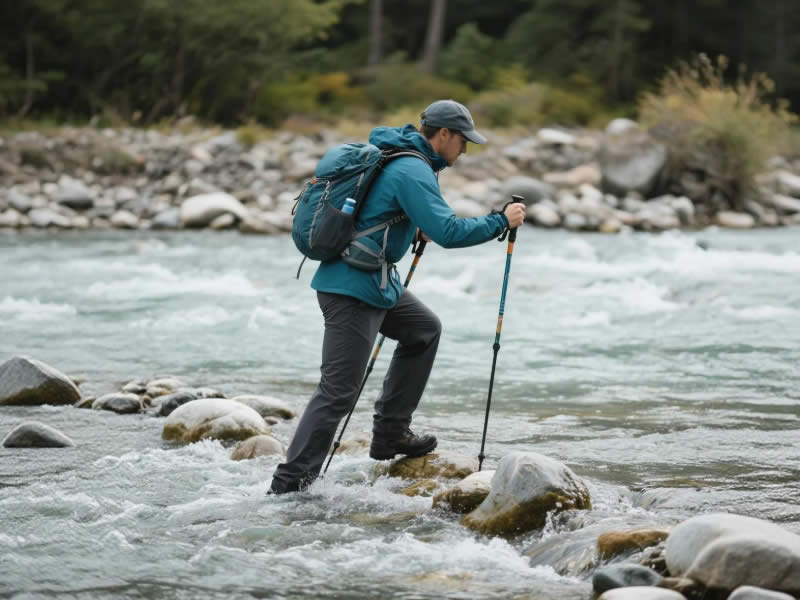
Recommended trekking pole purchase link: https://s.click.aliexpress.com/e/_c4M7OWaN
The Short Answer
Use walking poles as your "third and fourth legs" for stability. Before entering, lengthen poles 5-10cm for better reach in deeper water. Face upstream to use the current to brace against your poles rather than push you over. Plant both poles firmly upstream of your feet, creating a stable tripod. Move one foot at a time, keeping three points of contact (two poles + one foot, or two feet + one pole) at all times. Never cross your straps—a trapped pole in current could pull you under. If uncertain, turn back. Safety first.
Before You Enter: Preparation
Assess the Crossing
Never rush into water. Take time to observe:
- Depth: Can you see the bottom? Is it deeper than your knees? If water reaches mid-thigh, consider alternatives.
- Speed: Fast-moving water has immense power. If it creates whitecaps or waves, it's likely too strong.
- Bottom: Look for stable rocks or gravel. Avoid areas with large boulders (hidden gaps) or slick mud.
- Downstream Hazards: What's below? Rocks, logs, or a drop-off could trap you if you fall.
Choose Your Crossing Point
Walk upstream and downstream to find the safest spot. Look for:
- Wide, shallow sections
- Areas where the stream spreads out
- Stable-looking bottom
- Straight sections (avoid bends where current is faster)
Gear Preparation
- Lengthen poles: Add 5-10cm to your usual hiking length. Longer poles give better reach in deeper water.
- Remove baskets: They create drag in moving water. Pop them off before crossing.
- Loosen straps: Never put your hands through the straps. A pole caught in the current with your wrist trapped could pull you under. Just grip the handles.
- Secure loose gear: Tighten pack straps. Unclip hip belt for quick release if you fall.
- Waterproof essentials: Phones, cameras, and critical gear should be in waterproof bags.
The Crossing Technique
Face Upstream
This is the most important principle. Facing upstream allows you to:
- Use the current to brace against your poles
- See what's coming toward you
- Maintain stability by leaning slightly into the flow
Plant Both Poles Upstream
- Place both poles firmly in the riverbed, slightly upstream from where you'll step
- The current will push against the poles, creating a stable tripod with your body
- Test each pole plant before transferring weight
Maintain Three Points of Contact
Move one limb at a time, always keeping three points of contact with the streambed:
- Both poles plus one foot planted
- Or both feet plus one pole planted
This principle keeps you stable even if one point slips.
Move Sideways
Shuffle sideways rather than walking forward:
- Keeps your body facing the current
- Reduces the chance of a foot catching on a rock
- Allows you to maintain the three-point contact rhythm
Keep Low
Bend your knees slightly. A lower center of gravity improves stability. If water is deeper, consider crouching slightly.
Watch Your Feet
Place each foot deliberately, feeling for stable ground before transferring weight. If you encounter a loose rock, pause, find solid footing, then continue.
Single Pole Technique
If using only one pole:
- Plant it upstream and slightly to your side
- Keep your free hand above water for balance
- Move one foot at a time, maintaining two points of contact
- Consider crossing with a partner for added stability
Crossing with Others
If in a group:
- Link arms or hold onto each other's packs
- Strongest person upstream to break the current
- Move together, one step at a time
- Cross in a line, perpendicular to the current
- Keep talking to coordinate movement
What to Do If You Fall
Despite best efforts, falls happen. If you lose your footing:
- Do not fight to stay upright. Trying to stand in fast water can trap your feet.
- Point feet downstream. This prevents them from catching on rocks.
- Keep your head upstream. Use your arms to steer toward the nearest bank.
- Let go of poles if they snag—they can be replaced; your life cannot.
- Swim aggressively to the nearest shore, not straight downstream.
When Not to Cross
Turn back if:
- Water is above mid-thigh
- Current is strong enough to sweep your feet
- You can't see the bottom
- You're alone and unsure
- There's any doubt at all
No trail, no summit, no destination is worth risking your life. Turn around and find an alternate route, or save the adventure for another day.
After the Crossing
- Drain poles: Extend sections and shake out any water trapped inside.
- Check gear: Inspect for damage; rinse if in saltwater.
- Change socks: Wet feet lead to blisters. Dry socks are a small luxury.
- Celebrate: You navigated a technical challenge safely.
What Experienced Hikers Say
"River crossings are where I see the most accidents," shares Mike, a wilderness guide. "People rush, don't use their poles, or face downstream. I teach my clients to treat every crossing with respect. Face upstream, three points of contact, test each step. The poles are your best friends."
"I crossed a stream in the Sierra without lengthening my poles," says Sarah, a backpacker. "The water was deeper than expected, and my poles were too short. I barely made it. Now I always add a few centimeters before crossing."
The Bottom Line
A river crossing with poles is a skill that combines preparation, technique, and judgment. Lengthen your poles, face upstream, maintain three points of contact, and never use wrist straps. Move deliberately, test each placement, and turn back if conditions exceed your comfort or capability. Your poles are not just hiking aids—they're essential safety tools when crossing water.
Respect the river. It has carried more strength and skill than any hiker possesses. Cross only when it's safe, and when you do, cross with intention.
Disclaimer: This article provides general guidance for river crossings. Flowing water is dangerous. Always prioritize safety, turn back if uncertain, and consider professional instruction for technical routes.




