




Bluetooth walking poles for fitness tracking?
For fitness enthusiasts who love walking, Nordic walking, or trekking, tracking performance metrics is second nature. Smartwatches, fitness bands, and phone apps count steps, measure heart rate, and estimate calories burned. But there’s a catch: when you use walking poles, standard wrist‑based trackers can become inaccurate. The reason is simple—your arms move differently when holding poles, and your steps are no longer fully captured by arm swing alone. Enter Bluetooth walking poles: a new category of smart poles that embed sensors directly into the grips or shafts, wirelessly syncing data to your favorite fitness app. But are they a genuine advancement or a niche gadget? This article explores the technology, benefits, limitations, and whether Bluetooth walking poles are right for you.
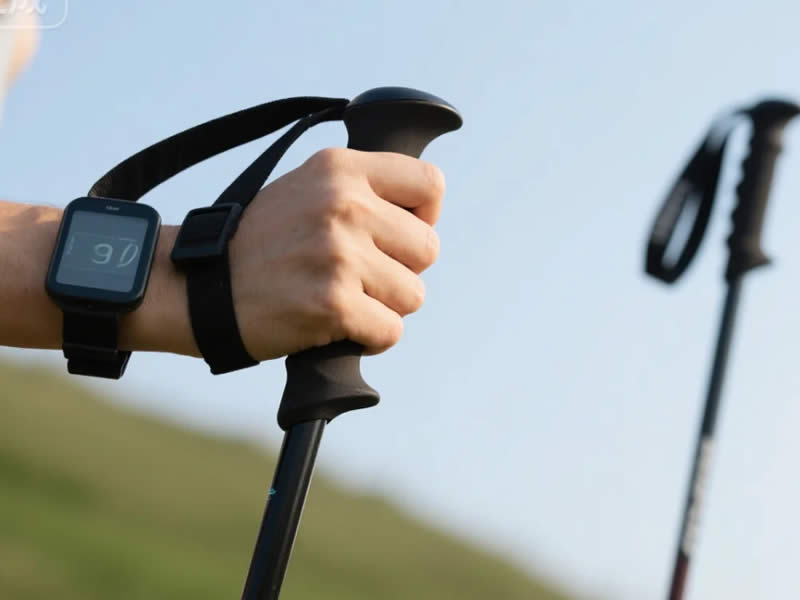
Recommended trekking pole purchase link: https://s.click.aliexpress.com/e/_c4M7OWaN
How Bluetooth Walking Poles Work
Bluetooth walking poles look like standard trekking or Nordic walking poles, but with added electronics:
- Sensors – Accelerometers, gyroscopes, and sometimes pressure sensors detect each pole plant, stride, and arm movement.
- Bluetooth chip – Transmits data to a smartphone app (iOS/Android) or a compatible fitness watch.
- Battery – Rechargeable (usually via USB‑C) housed in the grip or a sealed compartment.
- App integration – Syncs with popular platforms like Strava, Apple Health, Google Fit, or proprietary apps.
The sensors capture pole‑specific metrics that standard wearables miss:
- Pole plants per minute – Cadence specific to upper body.
- Asymmetry – Detects if one arm is doing more work than the other.
- Propulsive force – Some advanced models estimate ground contact force.
- True step count – Combines foot and pole data for accuracy.
Why Standard Fitness Trackers Fail with Poles
When you walk without poles, your arms swing naturally, and wrist‑based step counters work reasonably well. Add poles, and two problems emerge:
- Arm swing is restricted – Your hands remain on the grips, reducing wrist motion. Many trackers interpret this as “no steps.”
- Poles absorb impact – The rhythmic plant of poles means your arms move differently; step counting algorithms become confused.
Studies on Nordic walking have shown that wrist devices can undercount steps by 20–40% when poles are used. Hip‑worn devices are slightly better, but still inaccurate. Bluetooth poles solve this by measuring directly from the source—the poles themselves.
Benefits of Bluetooth Walking Poles
1. Accurate Metrics for Pole Walking
If you primarily walk with poles—whether for fitness, rehabilitation, or Nordic walking—a Bluetooth pole provides the most accurate data. You’ll see true step count, distance, cadence, and even technique metrics.
2. Technique Feedback
Some apps analyze your plant symmetry, rhythm consistency, and force distribution. This is invaluable for beginners learning proper Nordic walking form or for athletes fine‑tuning their stride.
3. No Extra Device Needed
While you still need a phone to sync, the poles eliminate the need for a separate fitness watch or clip‑on tracker. For minimalists, this reduces gear.
4. Motivation Through Data
Seeing detailed reports of your pole‑assisted workouts can boost motivation. You can track improvements in cadence, distance, and calorie burn over time.
Drawbacks and Limitations
1. Battery Life
Bluetooth sensors consume power. Most models last 10–20 hours per charge—sufficient for a week of daily walks, but you must remember to recharge. Dead poles become ordinary (heavy) poles.
2. Added Weight and Bulk
Electronics, batteries, and Bluetooth modules add weight—typically 30–60 grams per pole compared to non‑smart versions. For casual walkers this is negligible, but for gram‑conscious hikers, it matters.
3. Cost
Smart poles cost significantly more: $150–300 per pair, compared to $40–100 for good standard poles. You’re paying for the electronics and app development.
4. Durability Concerns
Poles are subjected to moisture, mud, impacts, and temperature swings. Water resistance is improving (IPX6 or IPX7 on better models), but electronics can still fail. Warranty and repairability vary by brand.
5. Limited Model Availability
As of 2026, Bluetooth walking poles remain a niche product. Leading brands like Leki, Black Diamond, and Komperdell offer only a few smart models. Many are designed for Nordic walking specifically, not general trekking.
Bluetooth Poles vs. Standard Poles + Fitness Watch
| Aspect | Bluetooth Poles | Standard Poles + Fitness Watch |
|---|---|---|
| Step accuracy | Excellent for pole walking | Poor to fair |
| Technique metrics | Yes (cadence, symmetry) | No |
| Cost | High | Moderate (watch may be multipurpose) |
| Battery management | Poles need charging | Watch charging separate |
| Versatility | Pole‑only data | Also tracks runs, swims, daily steps |
| Best for | Dedicated pole walkers | Multisport athletes |
For someone who exclusively Nordic walks or uses poles for daily fitness, Bluetooth poles make sense. For hikers who also run, bike, or do other activities, a fitness watch plus standard poles may be more practical.
Who Should Buy Bluetooth Walking Poles?
Ideal candidates:
- Nordic walking enthusiasts – Technique feedback and accurate cadence are highly valuable.
- Rehabilitation patients – Monitoring symmetry and step count supports recovery goals.
- Data‑driven fitness walkers – Those who love tracking every metric.
- Tech early adopters – Willing to experiment with emerging gadgets.
Not recommended for:
- Budget‑conscious walkers – Standard poles are far cheaper and last longer.
- Backcountry trekkers – Remote areas may lack phone connectivity; batteries may die; durability concerns.
- Casual users – If you walk with poles occasionally, the extra cost and complexity aren’t justified.
Top Models to Consider (2026)
- Leki Smart Nordic – Integrated sensors, app sync, up to 20 hours battery. Cork grip. ~$250.
- Komperdell Bluetooth Walker – Lighter design, focuses on step and cadence. ~$180.
- Traxion TechPole – Budget option (~$130) with basic step tracking and Bluetooth.
- Black Diamond Distance Smart (concept) – Not yet released; rumor of 2027 launch.
Always check recent reviews, as the market evolves quickly.
Privacy and Data Security
Any Bluetooth device that syncs with an app collects your location, movement patterns, and potentially health data. Review the manufacturer’s privacy policy. Some apps share data with third parties for research or marketing. If you value privacy, look for options that store data locally or offer anonymization.
The Verdict
Bluetooth walking poles are a niche but genuinely useful tool for dedicated pole walkers who crave accurate fitness tracking and technique analysis. They solve the inaccuracy problem that plagues wrist devices when poles are used. However, they come with higher cost, added weight, battery maintenance, and limited durability compared to traditional poles. For most recreational hikers and fitness walkers, a pair of quality standard poles combined with a chest‑strap heart rate monitor or a GPS watch offers better value and versatility. But if Nordic walking is your primary exercise and you love data, Bluetooth poles can elevate your training. As technology matures and prices drop, they may become mainstream. For now, consider your walking habits, budget, and tolerance for charging gadgets before taking the plunge.




