




How long does it take to get used to Trekking Poles?
For many first‑time users, trekking poles can feel awkward and unnatural. You might find yourself tripping over the tips, struggling to coordinate your arms and legs, or simply feeling that the poles are “in the way.” The good news: this phase passes quickly. Most hikers develop a comfortable, instinctive rhythm within 2–3 short hikes (roughly 2–4 hours of total walking). For some, it happens in the first mile; for others, it may take a few days of practice. This article explains the learning curve, factors that influence it, and practical tips to speed up the process.
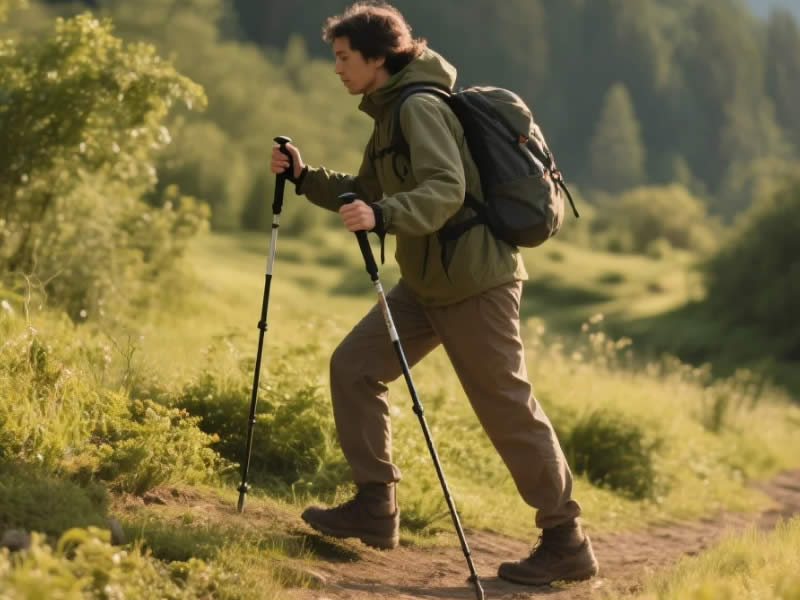
Recommended trekking pole purchase link: https://s.click.aliexpress.com/e/_c4M7OWaN
The Typical Learning Timeline
- First 30 minutes: Clumsy. You’ll think about every plant. You may occasionally hit your own feet or cross the poles in front of you. This is normal.
- 1–2 hours: You start to find a rhythm. Your opposite arm naturally moves with the opposite leg. The poles no longer feel completely foreign.
- 3–4 hours (over a few walks): You stop thinking about the poles. You adjust length automatically for uphill/downhill. You plant without looking.
- After 10–15 hours of use: Poles become an extension of your body. You’ll feel naked hiking without them.
What Makes the Learning Curve Shorter or Longer?
Faster adaptation (1–2 hours total):
- You have good coordination from sports like cross‑country skiing, Nordic walking, or even dancing.
- You practice on flat, smooth trails first.
- You watch a short video or get a quick lesson from an experienced user.
- You use flip‑lock poles (easier to adjust) with comfortable cork grips.
Slower adaptation (4–6 hours+):
- You have no prior experience with rhythmic upper‑body movements.
- You start on steep, rocky, or slippery terrain (overwhelming for beginners).
- Your poles are too heavy, have poor straps, or twist locks that slip.
- You hold the poles incorrectly (e.g., gripping them like a cane instead of planting them forward).
Key Skills to Learn – And How to Practice Them
1. Opposite Arm / Opposite Leg Rhythm
The most important technique. When you step forward with your right foot, your left arm (and pole) should move forward. This natural walking motion uses your core and saves energy. To practice:
- On a flat, empty trail, deliberately lift your right foot and left pole together. Then left foot and right pole.
- Don’t overthink – your body wants to do this naturally once you relax.
2. Planting, Not Reaching
Beginners often reach too far forward, planting the pole ahead of the front foot. This strains shoulders and kills momentum. Instead, plant the pole roughly level with your rear foot (or slightly ahead). The pole tip should hit the ground as your opposite heel touches down.
3. Using Wrist Straps Correctly
Many novices ignore straps or grip them wrong. Correct method: Slide your hand up through the strap from below, then grip the pole so the strap runs between your thumb and index finger. Your hand rests on the strap, not vice versa. This lets you relax your grip and transfer force to the strap.
4. Adjusting Length for Terrain
- Flat ground: Grip top reaches your wrist crease when standing.
- Uphill: Shorten poles by 5–10 cm to keep your shoulders level.
- Downhill: Lengthen poles by 5–10 cm to plant further ahead and control speed.
Practice adjusting your poles at the trailhead before you start and again when the slope changes.
Common Beginner Problems and Fixes
| Problem | Likely Cause | Quick Fix |
|---|---|---|
| Poles click loudly | No rubber tips on pavement | Add rubber paws |
| Poles slip or collapse | Locks not tight | Tighten flip locks or twist locks |
| Wrists hurt after 30 min | Straps used incorrectly | Watch a strap video; loosen grip |
| Shoulders ache | Poles too long | Shorten by 2–3 cm |
| Tripping over tips | Planting too far forward | Plant closer to your feet |
| Arms get tired | Poles too heavy or gripping too tight | Switch to lighter poles; relax hands |
Practical Steps to Get Used to Poles Quickly
- Start on a flat, familiar trail – A smooth dirt path or grassy field. No roots, no steep climbs.
- Walk without poles for 2 minutes to get your natural arm‑swing rhythm.
- Pick up the poles and try to match that same rhythm – opposite arm/leg.
- Look ahead, not at the poles – Your peripheral vision will handle planting.
- Use rubber tips – They mute the sound and reduce the mental “click distraction.”
- Take a short break after 20 minutes – shake out your arms, adjust strap tightness, and reflect on what felt good or odd.
- Repeat on a slightly more varied trail – Add gentle ups and downs. Practice lengthening/shortening poles.
- Hike with an experienced friend – They can point out small form corrections in real time.
When to Expect Full Comfort
- After 3–5 miles (5–8 km) of practice on easy terrain, most beginners stop tripping and start enjoying the benefits.
- After 10–15 miles (over several walks), you’ll automatically reach for your poles before any hike.
- After 50 miles, you’ll wonder how you ever hiked without them – and you’ll notice your knees feel better, your posture improves, and you have more upper‑body stamina.
What If You Still Struggle After 5 Hours?
Some people take longer – and that’s okay. Consider:
- Trying a different grip material – Cork vs. foam vs. rubber can change comfort significantly.
- Switching to ergonomic poles (e.g., Pacerpole) that force a more natural wrist angle.
- Taking a 30‑minute lesson from a Nordic walking instructor (online or in person). A small investment can transform your technique.
- Recording yourself with a phone to see if you’re reaching too far or crossing poles.
Final Thoughts
Getting used to trekking poles is not a weeks‑long struggle. For the vast majority of hikers, it takes less time than breaking in a new pair of boots. Embrace the first awkward mile, laugh at your missteps, and focus on the opposite‑arm rhythm. Within a few short walks, you’ll stop thinking about the poles and start enjoying the benefits: less knee pain, more speed, and a full‑body workout. So grab a pair, hit a flat trail, and give yourself two hours. You’ll be surprised how quickly they become second nature. Happy trails.




