




Best Trekking Poles for wildland firefighters?
Wildland firefighters face some of the most brutal working conditions on earth: extreme heat, choking ash, steep and unstable terrain, heavy packs (often 40–60 lbs), and long shifts lasting 12–16 hours. Their gear must be absolutely reliable, resistant to heat and abrasion, and field‑repairable. Trekking poles are not standard issue for most crews, but many experienced firefighters carry them voluntarily. A good pair of poles reduces fatigue, prevents ankle injuries on uneven burn scars, and provides stability when carrying heavy tools or hose packs. However, not every trekking pole can survive a fireline. This guide explains what features matter most for wildland firefighters, which poles are up to the task, and how to maintain them in extreme conditions.
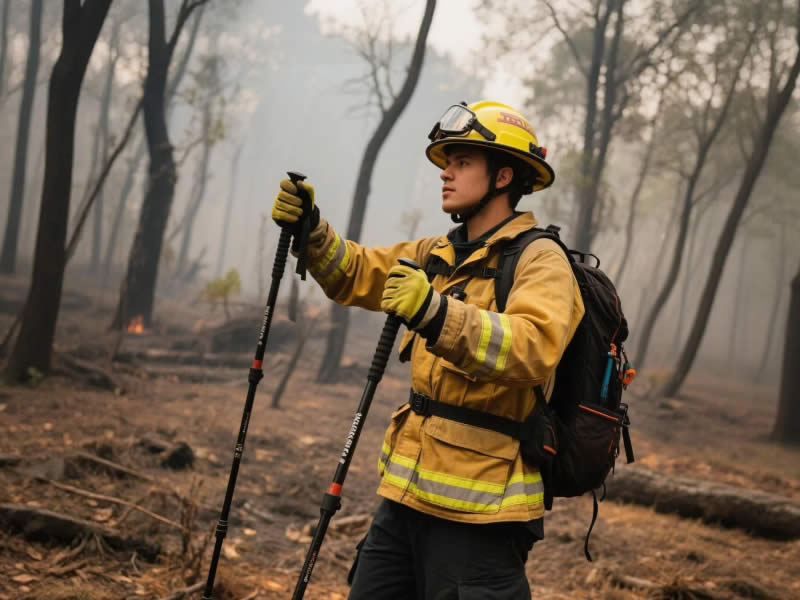
Recommended trekking pole purchase link: https://s.click.aliexpress.com/e/_c4M7OWaN
Why Firefighters Need Specialized Poles
Unlike hikers, firefighters work in environments that are actively destructive:
- Heat – Radiant heat from smoldering logs can melt rubber grips or weaken carbon fiber.
- Ash and dust – Fine particulate clogs locks and abrades shafts.
- Abrasive surfaces – Walking on charred, rocky ground wears down tips quickly.
- Heavy loads – Fire packs are much heavier than recreational backpacks.
- Steep, unstable terrain – Burn scars are slippery and prone to rolling rocks.
Standard recreational poles will fail rapidly under these conditions. Firefighters need poles that are overbuilt, heat‑resistant, and easy to clean.
Critical Features for Fireline Poles
1. 7075 Aluminum Shafts – Absolutely No Carbon Fiber
Carbon fiber can delaminate or snap when exposed to high heat (even indirect radiant heat) or when subjected to lateral stress. Aluminum, specifically 7075 alloy, is heat‑resistant, will bend rather than break, and can often be straightened in the field. For fireline use, aluminum is the only safe choice.
2. Metal Flip Locks (Lever Locks) – Not Plastic, Not Twist
Plastic flip lock levers can melt or become brittle when exposed to heat. Look for metal cams and levers (e.g., Leki SpeedLock, Black Diamond FlickLock). Twist locks are a disaster in dusty conditions – ash and grit will jam them, and they are impossible to clean quickly in the field.
3. Cork Grips – Avoid Rubber and Foam
Rubber grips can melt or become sticky when exposed to heat. Foam grips absorb sweat and ash, becoming slick and smelly. Cork grips are naturally heat‑resistant, wick moisture, and remain grippy even when covered in ash. They also do not melt under moderate radiant heat. An extended foam section below the grip (a “choke grip”) is acceptable if it’s not the primary grip – but all‑cork is best.
4. Replaceable Carbide Tips
Walking on burned, rocky ground destroys tips. Non‑replaceable tips mean the pole is trash after a few shifts. Replaceable carbide tips (screw‑in or press‑fit) allow you to swap worn tips in minutes. Carry spare tips in your pack.
5. Large, Interchangeable Baskets (Mud or Snow Baskets)
Ash and loose soil are like soft snow – standard small baskets will sink. Use large baskets (often called “mud baskets” or “power baskets”) to prevent the pole from plunging deep with every plant. Baskets should be easily swappable (twist‑on or snap).
6. Rubber Tips (Paws) for Transport Only – Not for Fireline
Rubber tips will melt or burn when exposed to heat or ash. Use them only when walking to and from the fireline on pavement or in staging areas. On the fireline, remove rubber tips and rely on carbide.
7. Simple, Heat‑Resistant Wrist Straps
Straps should be made of nylon webbing (not elastic) and attached with metal rivets. Avoid straps with plastic quick‑release buckles – they can melt. Padded straps are fine as long as the padding is not foam (which absorbs sweat and ash). Leather straps are durable but can dry out and crack; treat with leather conditioner.
8. Bright Colors for Visibility
In smoky conditions or dense brush, a dropped pole can be lost. Bright orange, red, or yellow poles are easier to spot. Some firefighters even add reflective tape for low‑light visibility.
Top Trekking Poles for Wildland Firefighters
1. Leki Makalu (7075 Aluminum, Cork Grip)
- Shaft: 7075 aluminum
- Locks: SpeedLock (metal flip lock)
- Grip: Cork with extended foam choke (the foam section is a potential weak point, but the primary grip is cork)
- Tips: Replaceable carbide (Leki spare parts widely available)
- Baskets: Interchangeable; large mud baskets sold separately
- Weight: ~260g per pole
- Price: $120–160
- Why it’s great: Proven in mountain guiding and SAR. Metal locks, durable cork grip, and every part replaceable. Many firefighters swear by them.
2. Black Diamond Trail Ergo Cork
- Shaft: Aluminum (Black Diamond’s proprietary alloy, similar to 7075)
- Locks: FlickLock (metal cam, no plastic)
- Grip: Cork with ergonomic shape
- Tips: Replaceable carbide
- Baskets: Interchangeable
- Weight: ~270g
- Price: $130–150
- Why it’s great: The FlickLock is legendary for reliability and is easy to clean. The cork grip is comfortable. No foam to melt.
3. Komperdell Expedition Cork
- Shaft: 7075 aluminum
- Locks: Power Lock 2.0 (metal levers)
- Grip: Cork with extended foam section (similar to Leki)
- Tips: Replaceable Vario tips
- Baskets: Large power baskets included
- Weight: ~280g
- Price: $140–180
- Why it’s great: Extremely robust; the included large baskets are perfect for ash and soft soil.
4. Cascade Mountain Tech Aluminum (Budget Fireline Option)
- Shaft: 6061 aluminum (less strong than 7075, but still far better than carbon)
- Locks: Flip locks (plastic levers – potential weak point)
- Grip: Cork
- Tips: Replaceable
- Baskets: Interchangeable (aftermarket large baskets available)
- Weight: ~240g
- Price: $50–70
- Why it’s great: Affordable enough to be considered disposable. The plastic levers may melt if exposed to direct flame, but for mop‑up or support roles, they work. Many firefighters buy these as backups or for crew members.
What to Avoid at All Costs
- Carbon fiber poles – They will fail under heat or lateral stress.
- Twist locks – Dust and ash will jam them.
- Plastic flip locks – Heat can melt or warp them.
- Rubber grips – Melt and become sticky.
- Foam grips – Absorb sweat and ash, become slippery.
- Non‑replaceable tips – Once worn, the pole is useless.
- Folding (Z‑style) poles – The internal cord can melt, and the joints are weak.
Field Maintenance and Spare Parts
Firefighting is hard on gear. Carry a small repair kit:
- 2 spare carbide tips
- Spare flip lock lever and screw (for your pole model)
- Small Phillips screwdriver (or multi‑tool)
- Zip ties (temporary lock repair if a lever breaks)
- Duct tape (wrapped around a pole section)
- Small brush (to clean ash from locks)
After each shift, rinse poles with water (if available) to remove ash. Ash is caustic and can corrode aluminum over time. Clean locks with a brush, then apply a dry lubricant (graphite) to moving parts – never use wet lubricants (they attract more grit). Inspect tips for wear; replace if rounded.
Safety Note: Poles vs. Fire Tools
Trekking poles are not firefighting tools. Do not use them to dig fireline, pry burning logs, or stir hot ash – they will fail. Carry a proper Pulaski, shovel, or McLeod for that work. Poles are for walking support only.
Final Thoughts
Wildland firefighters who choose to carry trekking poles need equipment that is as tough as they are. The ideal fireline pole is made of 7075 aluminum, has metal flip locks, a cork grip, replaceable carbide tips, and large baskets. The Leki Makalu and Black Diamond Trail Ergo are top choices, while Cascade Mountain Tech offers a budget alternative. Avoid carbon fiber, twist locks, and any plastic or rubber components that can melt. With proper maintenance and a small repair kit, a good pair of poles will last through many fire seasons – saving your knees, preventing falls, and helping you stay safe on the line. Stay safe out there.




