




Trekking Poles as symbols of hiking achievements?
For many hikers, a pair of trekking poles is far more than a mobility aid. They are silent witnesses to personal triumphs, physical milestones, and emotional journeys. Unlike a medal that sits in a drawer or a digital badge on a phone screen, trekking poles bear the physical marks of every climb, every mile, every storm weathered. They become living symbols of hiking achievements – not because they are flashy, but because they are honest. This article explores how these simple tools transform into powerful emblems of perseverance, how hikers use them to commemorate goals, and why they resonate so deeply in outdoor culture.
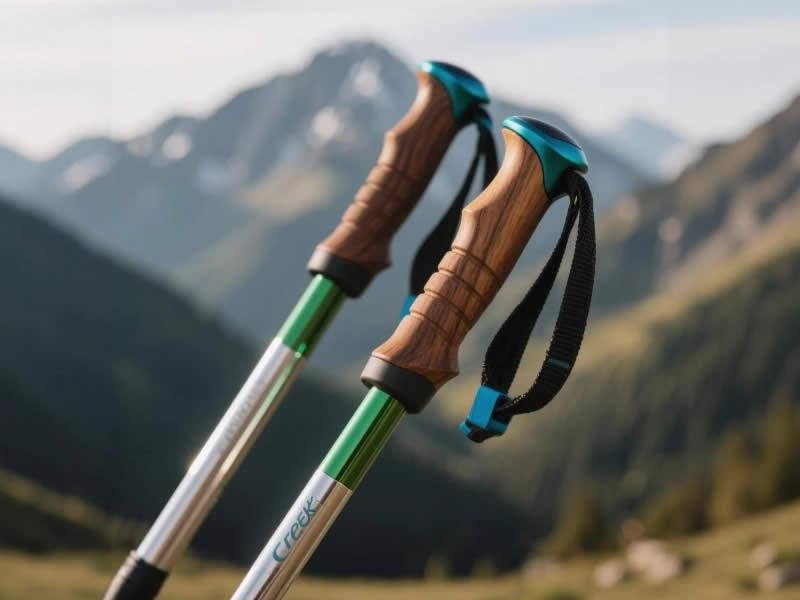
Recommended trekking pole purchase link: https://s.click.aliexpress.com/e/_c4M7OWaN
The Scars of Success
A new pair of trekking poles is pristine: perfect anodized shafts, untouched cork grips, sharp carbide tips. After a few hundred miles, they tell a different story. The lower sections are scratched from rocky scrambles. The cork has molded to a specific handprint, darkening with sweat and dirt. Maybe there’s a small dent from a fall on scree, or a slight bend from a desperate plant on a steep descent. These are not flaws; they are earned marks of achievement.
Hikers often point to these scars with pride. “See this gouge? That’s from the Presidential Traverse in a whiteout. I slipped on ice and jammed the pole between boulders to stop a fall.” Every scratch recalls a moment of challenge overcome. Unlike a pristine trophy, worn poles cannot be faked. They are proof of time on trail.
Engraving Memories
Many hikers take the symbolism a step further by engraving their poles. Using a simple electric etcher or sending them to a trophy shop, they add:
- Summit dates – “Mt. Whitney – 6/15/22”
- Trail names – “AT 2021” or “PCT Thru‑Hike”
- Mile markers – “2,190 mi – Appalachian Trail”
- Personal mantras – “Not all who wander are lost” or “One step at a time”
- Coordinates – Of a special peak or a campsite where a life decision was made
These engravings transform poles from generic gear into personalized monuments. When a hiker looks at the shaft, they are reminded not just of a number, but of the sunrise on a ridge, the exhaustion of a 20‑mile day, the joy of a trail family.
Rituals of Achievement
In some hiking communities, poles play a role in rituals of accomplishment. On long‑distance trails like the Appalachian Trail or Pacific Crest Trail, thru‑hikers often decorate their poles with stickers from each state or national park. At trail’s end, they might plant their poles in the ground for a summit photo, the poles framing the view. Some hikers pass their poles to a new friend who is starting the trail, symbolizing the transfer of knowledge and luck.
For peak baggers, planting a pole on a summit is a common victory pose – the pole stands as a temporary flag, a declaration of “I made it.” The pole itself becomes a prop in the memory, and later, a reminder of that specific achievement.
The Contrast with Digital Metrics
Modern fitness trackers and smartphones log every step, every vertical foot, every calorie burned. But those numbers are ephemeral. A screen goes dark; an app gets updated; data is lost. Trekking poles, by contrast, are analog and permanent. They do not need batteries. They do not lie. The wear on a carbide tip is a direct measure of distance traveled on rocky ground. The smoothness of a cork grip reflects hours of gripping in rain and sun.
This physicality gives poles a symbolic weight that digital achievements lack. When a hiker leans on their poles at a viewpoint, they are leaning on their own history.
Poles as Motivation
For beginners, seeing a friend’s worn poles can be inspiring. Those scratches represent what is possible. Many hikers report that their first pair of poles felt like a rite of passage – buying them was a commitment to becoming a “real hiker.” And after thousands of miles, those same poles become a source of confidence. “If these poles could survive that storm, I can survive this climb.”
In this way, poles serve as a tangible link between past and future achievements. They remind us that we have overcome difficult terrain before, so we can do it again.
Stories from the Trail
A hiker in her sixties once told me about her Leki poles, which she had used for 15 years. The lower sections were almost smooth from abrasion. She had replaced the tips five times and the straps twice. “These poles have been to Machu Picchu, to Everest Base Camp, and on every trail in my home state. When I look at them, I see my life. I hope my daughter will use them someday.”
Another hiker, a thru‑hiker who completed the Triple Crown, keeps his poles mounted on a wall. He calls them his “walking sticks of glory.” They are bent, scratched, and faded. But to him, they are worth more than any medal.
Creating Your Own Symbol
You don’t need to thru‑hike a long trail to make your poles meaningful. Every hike has value. You can start a tradition: after a particularly hard or beautiful hike, add a small sticker or a thin colored zip tie to your poles. Over time, they become a timeline of your outdoor life. Or simply take a photo of your poles at each summit, then compile the photos. The poles are the constant thread, the silent partner in every achievement.
Final Thoughts
Trekking poles are humble tools. They are not expensive jewelry or high‑tech gadgets. But their very simplicity makes them perfect symbols of hiking achievements. They absorb our effort, our sweat, our stories. They wear their history on their sleeves – or rather, on their shafts. Whether you engrave them, decorate them, or just let them accumulate natural scars, your poles can become a powerful reminder of how far you have walked. So next time you finish a meaningful hike, take a moment to look at your poles. They have been with you every step. Honor them, and they will continue to support you – both physically and emotionally – on the trails ahead.




