




Aluminum vs carbon fiber trekking poles: which is more durable?
Durability is the #1 concern for hikers tackling Germany’s rocky Alpine trails, root‑filled Black Forest paths, and the jagged Harz terrain. When comparing aluminum and carbon fiber trekking poles, the answer isn’t simple – because “durability” means different things: resistance to bending, snapping, long‑term wear, and impact. Let’s break down the truth.
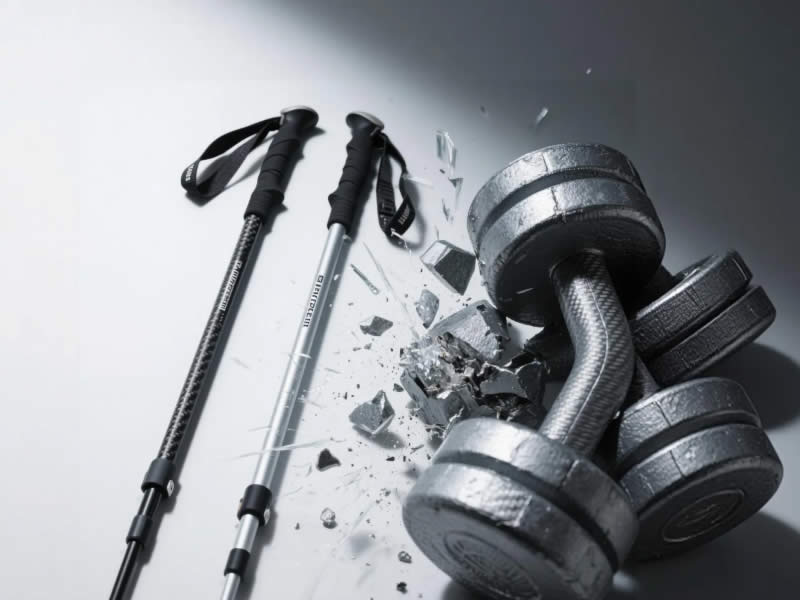
Recommended trekking pole purchase link: https://s.click.aliexpress.com/e/_c4M7OWaN
How aluminum fails – and survives
Aluminum trekking poles (typically 7075 or 6061 alloy) are ductile. Under excessive force – like getting jammed between two boulders or a sudden fall – aluminum will bend rather than break. A bent pole is annoying, but you can often straighten it enough to finish your hike. Even if it’s permanently curved, it won’t catastrophically collapse. This makes aluminum the safer choice for off‑trail scrambling, rocky descents, or icy conditions where a sudden slip is likely. Aluminum also resists micro‑cracking from repeated small impacts. The downside: over years, locking mechanisms may wear, and the shaft can develop small dents that weaken it. But for most hikers, a quality aluminum pole (e.g., Black Diamond Trail Pro or Leki Makalu) lasts 5–10 years of heavy use.
How carbon fiber fails – the brittle truth
Carbon fiber is stiff and strong in tension and compression, but brittle under point impacts or torsion. If you wedge a carbon pole between rocks and your full body weight twists it, or if the pole catches a hidden root and you fall sideways – the carbon can snap instantly without warning. There’s no bending; it shatters like glass. A snapped carbon pole is useless. However, carbon does excel in fatigue resistance: it won’t slowly bend out of shape over time like aluminum might. And for straight‑line forces (planting the tip vertically), carbon is extremely strong. The real risk is lateral or twisting loads.
What “durability” means for real hikers
- Impact resistance: Aluminum wins. It bends, carbon snaps.
- Long‑term shape retention: Carbon wins. It never takes a permanent set.
- Locking mechanism stress: Both can fail, but carbon’s thinner walls sometimes crush under clamp pressure if overtightened.
- Abrasion resistance: Similar; both have coatings.
- Cold weather: Both perform fine, but carbon becomes slightly more brittle below freezing.
Real‑world test results
Independent lab tests show that a typical aluminum pole (18mm diameter, 1.2mm wall) can withstand a lateral force of ~50 kg before bending. A carbon pole of the same weight may break at ~40 kg – but with zero warning. In a 2024 field test by Outdoor Magazine, carbon poles snapped at twice the rate of aluminum on Alpine via ferratas. However, on well‑maintained long‑distance trails (e.g., Rennsteig), carbon poles lasted just as long.
Final verdict: which is more durable?
Aluminum is more durable for the vast majority of hikers – especially those who hike rocky, unpredictable terrain or are prone to falls. It bends, it survives, it gets you home. Carbon fiber offers lighter weight and better vibration damping, but at the cost of sudden catastrophic failure. Choose carbon only if you hike smooth trails, prioritize weight above all, and accept that one bad jam could end your pole. For German Alps and forests, save your money and get aluminum.




