




Are shock absorbing trekking poles better for knees?
If you suffer from knee pain or worry about joint strain on long descents, you’ve likely seen trekking poles with built‑in shock absorbers (springs inside the shaft). The promise is tempting: softer landings, happier knees. But do they actually work? And are they worth the extra weight and cost? Let’s separate fact from marketing.
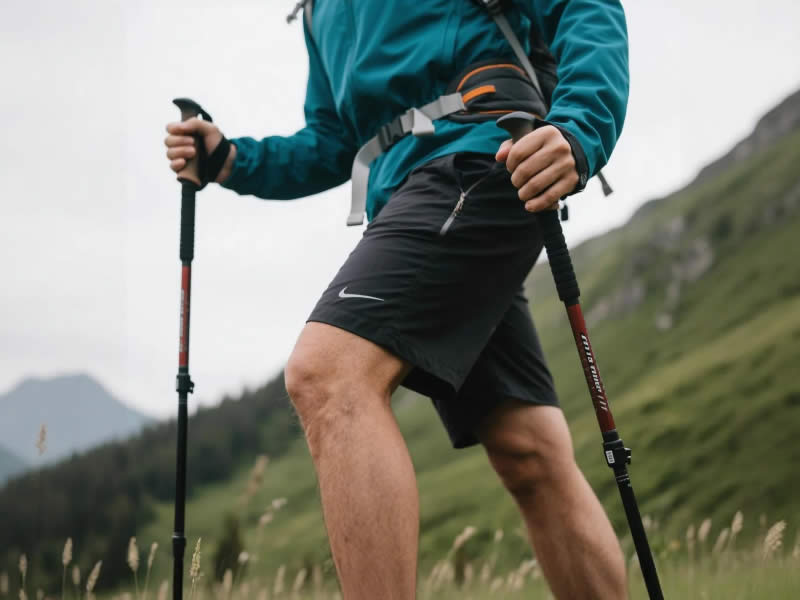
Recommended trekking pole purchase link: https://s.click.aliexpress.com/e/_c4M7OWaN
How shock absorbers work
Shock‑absorbing poles contain a coiled spring or elastomer insert, usually in the upper section. When you plant the pole, the tip hits the ground, and the spring compresses slightly before fully engaging. This micro‑travel (typically 10–20mm) is meant to dampen the jarring impact that travels up your arm and into your shoulder and spine.
The potential benefit for knees
Here’s the key insight: shock absorbers do not directly protect your knees. Knee impact is reduced by the transfer of load from your legs to your arms via the poles – and that happens regardless of whether the pole has a spring. The shock absorber primarily smooths out the impact felt in your wrists, elbows, and shoulders. For someone with arthritis in those joints, that’s valuable. But for knees, the main protective factor is simply using any pair of poles correctly.
The downsides of shock absorbers
- Weight: Springs add 20–40g per pole – noticeable on long days.
- Energy loss: Each planting stroke absorbs some of your forward momentum, making climbs slightly less efficient.
- Bounciness: On hardpacked trails, the spring can create an annoying “pogo stick” feel. Some hikers dislike the lack of direct feedback.
- Maintenance: Springs can wear out, squeak, or collect dirt over time.
- Cost: Shock models are typically €30–50 more than rigid poles of similar quality.
When shock absorbers make sense
- You have existing wrist, elbow, or shoulder pain (e.g., tendinitis or carpal tunnel).
- You hike mostly on paved or very hard surfaces (old Roman roads, gravel paths) where impact is sharp.
- You are a senior hiker or have reduced upper‑body resilience.
When to skip them
- Your only concern is knee pain – rigid poles with proper technique work just as well.
- You hike steep, technical terrain where precise feedback matters (e.g., via ferrata, scree fields).
- You prioritise lightweight and simplicity.
What actually protects your knees
Research (including a 2021 study in Gait & Posture) shows that using any pair of trekking poles reduces knee joint loading by 15‑25% on descents. The key factors are:
- Correct length: Longer on downhills, shorter on uphills.
- Wrist strap technique: Push up through the strap to transfer weight, not just grip tightly.
- Two poles, not one: Bilateral support halves the load on each knee.
- Carbide tips: Plant firmly to prevent slipping.
Final verdict
For the vast majority of hikers – including those with mild knee concerns – rigid (non‑shock) trekking poles are the better choice. They are lighter, more efficient, cheaper, and just as effective for knee protection. Only invest in shock‑absorbing poles if you have specific wrist, elbow, or shoulder issues. Otherwise, save your money and focus on proper technique. Your knees will thank you either way.




