




How do I know if I need trekking poles?
Many hikers see trekking poles as optional gear – nice to have but not essential. However, for certain terrains, body types, and hiking styles, poles can transform your experience from painful to pleasurable. So how do you know if you actually need them? Ask yourself these five questions.
Recommended trekking pole purchase link: https://s.click.aliexpress.com/e/_c4M7OWaN
1. Do you hike steep or uneven terrain?
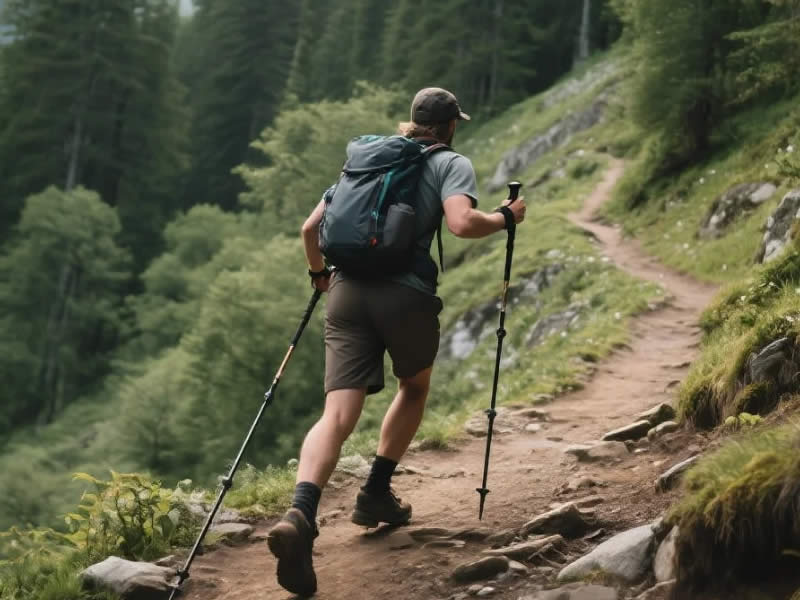
If your local trails include significant uphill and downhill sections – like Germany’s Alps, the Harz mountains, or the Black Forest’s root‑covered paths – poles are a game‑changer. On ascents, they transfer workload from your legs to your arms, saving energy. On descents, they absorb impact that would otherwise hammer your knees. Flat, paved paths rarely require poles; steep, rocky trails almost always benefit from them.
2. Do you carry a heavy backpack?
Backpackers and thru‑hikers carrying more than 8–10 kg should absolutely use poles. The extra weight shifts your center of gravity forward, increasing fall risk. Two poles provide four points of contact, stabilizing you on loose scree, wet logs, or slippery grass. Without poles, a heavy pack turns a minor trip into a face‑plant.
3. Do you have knee, hip, or ankle issues?
Research shows that trekking poles reduce knee joint loading by up to 25% on descents. If you already experience pain after hiking, poles can add years to your active life. They also help with balance if you have weak ankles or a history of falls. For older hikers or those recovering from injury, poles are often recommended by physiotherapists.
4. Do you struggle with balance or endurance?
Even without pain, some hikers naturally feel unsteady on narrow ridges or slippery slopes. Poles provide constant tactile feedback – you “feel” the trail through your hands before committing your full weight. They also engage your upper body, turning hiking into a full‑body workout that improves cardiovascular endurance.
5. Do you hike in snow, mud, or river crossings?
In winter conditions, poles with snow baskets prevent you from sinking and help you test ice thickness. In deep mud, they stop you from losing a boot. For stream crossings, they act as a third and fourth leg, keeping you upright against current.
When you probably don’t need poles
- Short, flat nature walks under 5 km.
- Groomed, paved urban trails.
- Scrambling or via ferrata where hands are needed for rock holds (poles get stowed).
- You simply prefer walking without them – some people find poles distracting.
The quick self‑test
Next time you hike a steep downhill section, notice your knees and quads. Do they burn? Do you walk cautiously, leaning back? If yes, borrow a pair of poles for one hike. You’ll likely feel the difference immediately – less joint pain, more confidence, and faster descents.
Final verdict
You need trekking poles if you answer “yes” to any of the first three questions. They aren’t just for old or injured hikers – they’re smart tools for anyone who wants to hike longer, safer, and with less pain. For €40–100, it’s one of the best investments in your outdoor health.




