




What are the benefits of carbon fiber trekking poles?
Carbon fiber trekking poles have gained a loyal following among long‑distance hikers, trail runners, and ultralight backpackers. But are the benefits worth the higher price? Let’s explore the unique advantages of carbon fiber over aluminium.
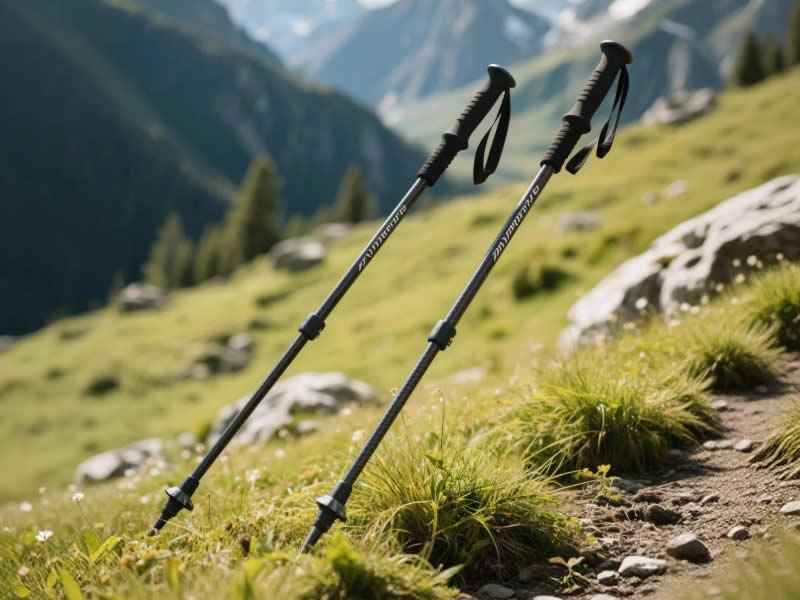
Recommended trekking pole purchase link: https://s.click.aliexpress.com/e/_c4M7OWaN
1. Ultralight weight – the biggest benefit
Carbon fiber poles are significantly lighter than aluminium. A typical pair of carbon poles weighs 300–400 grams, while aluminium poles of similar strength weigh 450–600 grams. That 150–200g saving might not sound like much, but over a 30‑km day with thousands of pole plants, lighter poles reduce arm and shoulder fatigue dramatically. For thru‑hikers covering 40–50 km daily, the cumulative saving is enormous.
2. Superior vibration damping
Carbon fiber naturally absorbs high‑frequency vibrations better than metal. On hardpacked trails, gravel paths, or rocky descents, carbon poles transmit less shock to your wrists and elbows. This reduces joint strain and “tingling” sensations after long days. Aluminium poles can feel “buzzy” on hard surfaces; carbon feels smoother and quieter.
3. Stiffness without weight penalty
Carbon fiber has an excellent stiffness‑to‑weight ratio. A carbon pole resists bending under vertical loads (planting) while remaining light. Aluminium poles of similar weight would be too flexible. This stiffness translates to efficient energy transfer – more of your push goes into forward motion, not pole flex.
4. No permanent bending
Aluminium poles will bend if overloaded or jammed. Carbon fiber, when stressed beyond its limit, snaps rather than bends. While snapping is catastrophic, carbon poles never take a permanent set. For hikers who treat their gear carefully, this means poles stay perfectly straight for years.
5. Corrosion resistance
Carbon fiber is inert. It won’t corrode from sweat, rain, or saltwater. Aluminium can oxidise over time, especially around locking mechanisms. Carbon poles require no anti‑corrosion care – just rinse and dry.
6. Better cold‑weather performance
Carbon fiber does not conduct heat away from your hands like aluminium does. In freezing temperatures, aluminium shafts feel painfully cold through thin gloves. Carbon stays relatively neutral. Additionally, carbon’s stiffness changes little with temperature, while aluminium becomes slightly more brittle below freezing.
7. Longer fatigue life
Carbon fiber does not suffer from metal fatigue in the same way aluminium does. Aluminium poles, after thousands of flex cycles, can develop micro‑cracks that eventually lead to failure. Carbon’s fatigue resistance is excellent – if you don’t overload it, it lasts indefinitely.
Trade‑offs to keep in mind
Carbon poles are not without downsides: they are more expensive (€120–200 vs. €40–100 for aluminium), can snap suddenly under lateral stress, and are not recommended for heavy backpackers (over 15 kg pack) or rocky scrambling. However, for their intended audience – weight‑conscious hikers on maintained trails – the benefits are compelling.
Final verdict
The benefits of carbon fiber trekking poles are real: lighter weight, less vibration, no bending, no corrosion, and better cold performance. If you prioritise comfort and efficiency over rugged durability, and you hike on trails where snapping is unlikely, carbon is an excellent investment. For Alpine scrambles or heavy loads, stick with aluminium. Choose carbon for long, smooth trails, fastpacking, and ultralight adventures.




