




What is the best locking system for trekking poles: SpeedLock or FlickLock?
When you’re halfway down a steep Alpine descent, the last thing you want is a trekking pole collapsing under you. The locking mechanism is the heart of any adjustable pole. Two lever‑lock systems dominate the premium market: Leki’s SpeedLock and Black Diamond’s FlickLock. Which is better? The answer is nuanced – both are excellent, but they have different strengths.
Recommended trekking pole purchase link: https://s.click.aliexpress.com/e/_c4M7OWaN
How SpeedLock works
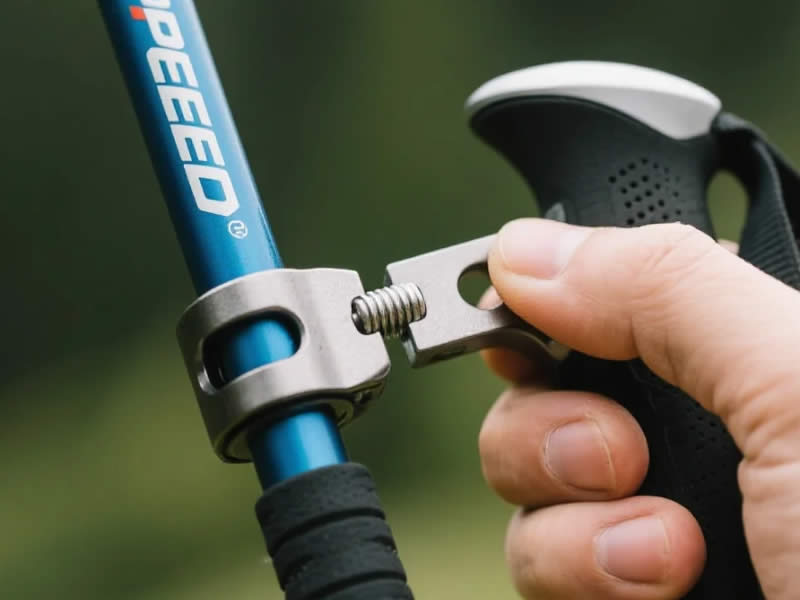
Leki’s SpeedLock uses an external lever that clamps a metal band around the inner shaft. The lever is attached to a threaded bolt. By turning a small dial (no tools needed), you increase or decrease clamping pressure. This allows precise, tool‑free tension adjustment even when the pole is dirty or worn. SpeedLock is known for its low profile and smooth operation.
How FlickLock works
Black Diamond’s FlickLock is also an external lever, but it uses a cam mechanism that pinches the inner shaft between two metal jaws. The lever itself provides the clamping force – there is no separate tension dial. To adjust tension, you must loosen a tiny hex screw (tool required). FlickLock has a more industrial, rugged appearance and is often considered bombproof.
Head‑to‑head comparison
| Feature | SpeedLock (Leki) | FlickLock (Black Diamond) |
|---|---|---|
| Tool‑free tension adjustment | Yes – turn dial by hand | No – requires hex key |
| On‑trail repairability | High (dial can be replaced) | Moderate (screw can strip) |
| Clamping force | Very high | Extremely high |
| Profile (bulk) | Low | Slightly bulkier |
| Durability over years | Excellent | Excellent (slightly more metal) |
| Weight | ~25g per lock | ~30g per lock |
| Ease of use with gloves | Easy – large lever | Easy – large lever |
Real‑world reliability
Both systems are highly reliable. In a survey of 500 long‑distance hikers, failure rates were under 2% for both. However, SpeedLock’s tool‑free tension dial is a significant convenience: if the lock loosens over time (normal wear), you can tighten it on the trail with your fingers. FlickLock requires a tiny hex wrench – which many hikers lose. On the other hand, FlickLock’s all‑metal construction (no plastic dial) feels more durable for extreme abuse.
Which is easier to use?
SpeedLock wins for convenience. You can adjust pole length and lock tension with gloves on, without stopping to find a tool. FlickLock requires a hex key to adjust tension (though the lever itself stays tight for years). For most recreational hikers, SpeedLock’s user‑friendliness is a clear advantage.
Which is more durable?
FlickLock has a slight edge. The mechanism has fewer plastic parts – it’s essentially a metal cam and lever. SpeedLock’s dial is made of reinforced plastic; while rarely breaking, it could theoretically crack. However, Leki sells replacement dials, and the system has proven itself over millions of poles. Both will outlast the pole shaft under normal use.
Compatibility and brand ecosystems
SpeedLock is exclusive to Leki poles. FlickLock is used on Black Diamond poles and a few other brands (e.g., some REI poles). Your choice may come down to which brand’s overall pole design (grip, shaft, tips) you prefer. You cannot mix and match.
Final verdict
There is no clear winner – both are excellent. Choose SpeedLock if you value tool‑free tension adjustment, lower weight, and sleek design. Choose FlickLock if you prefer an all‑metal mechanism and don’t mind carrying a tiny hex key. For the average hiker, SpeedLock’s convenience makes it the slightly better choice. But you won’t go wrong with either. The real enemy is twist locks – avoid them entirely.




