




Are titanium trekking poles better than aluminum?
Titanium sounds exotic and strong – it’s used in aerospace and high‑end bicycles. But when it comes to trekking poles, titanium is rare, expensive, and not necessarily superior to quality aluminum. Let’s separate the myths from the facts.
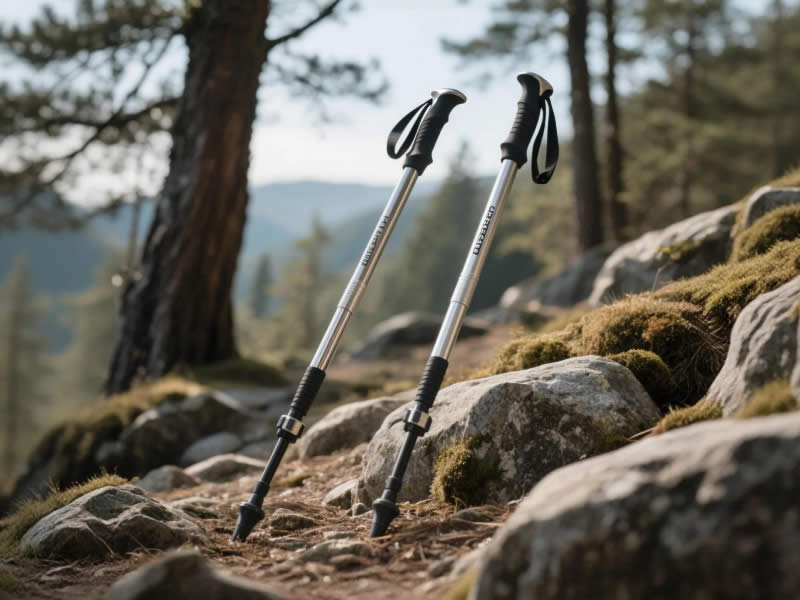
Recommended trekking pole purchase link: https://s.click.aliexpress.com/e/_c4M7OWaN
Why titanium is rarely used in trekking poles
Unlike tent stakes or cookware, trekking poles require specific properties: stiffness, weight, and cost‑effectiveness. Titanium has a higher strength‑to‑weight ratio than aluminum, but it is also more expensive and difficult to manufacture into thin‑walled tubes. Most “titanium” trekking poles are actually aluminum poles with a titanium coating or a titanium lower section. Full‑titanium poles are extremely uncommon and usually custom‑made.
Theoretical advantages of titanium
- Weight: Titanium is about 40% denser than aluminum, but it can be used in thinner walls for equivalent strength. In practice, a titanium pole might be 10–15% lighter than a comparable aluminum pole – a saving of 30–50g per pair.
- Corrosion resistance: Titanium is virtually immune to rust and salt corrosion. Aluminum can corrode (especially in saltwater or winter road salt) but resists well with basic care.
- Flexibility: Titanium has a higher elastic limit – it can bend further than aluminum without taking a permanent set. It returns to true.
Practical disadvantages of titanium
- Cost: A pair of genuine titanium poles would cost €200–300 or more – often double the price of premium aluminum poles like Leki Makalu.
- Availability: Almost no major brand (Leki, Black Diamond, Komperdell) sells full‑titanium poles. You may find obscure brands or DIY projects, but not mainstream products.
- Repairability: Titanium is harder to cut or drill. If a section bends severely, replacement parts are unavailable.
- Stiffness: Titanium is less stiff than aluminum for the same weight. A titanium pole might feel more flexible (some hikers dislike “whippy” poles).
The reality: premium aluminum is the standard
High‑end aluminum poles use 7075 alloy, which has a tensile strength of 570 MPa – very close to that of titanium (around 900–1000 MPa for commercial pure titanium, but titanium alloys can exceed 1000 MPa). However, 7075 aluminum is already extremely strong for trekking pole applications. The marginal gain from titanium does not justify the cost.
What about “titanium‑coated” or “titanium‑tipped” poles?
Some poles advertise a titanium coating on the shaft or a titanium carbide tip. The coating adds minimal benefit (mostly marketing). Titanium carbide tips are excellent – but so are tungsten carbide tips. This does not make the whole pole titanium.
Comparison table: aluminum (7075) vs. hypothetical titanium pole
| Feature | 7075 Aluminum | Titanium (grade 9) |
|---|---|---|
| Weight (per pair) | 500–550g | 450–500g |
| Tensile strength | ~570 MPa | ~900 MPa |
| Stiffness (modulus) | 69 GPa | 105 GPa (stiffer) |
| Corrosion resistance | Good (with coating) | Excellent |
| Cost (pair) | €80–120 | €250+ |
| Availability | Widely available | Almost none |
Final verdict
For practical purposes, titanium trekking poles are not better than quality aluminum poles because they are not realistically available at a reasonable price. The small weight savings (if any) do not outweigh the massive cost increase and lack of support. Stick with 7075 aluminum from reputable brands like Leki, Black Diamond, or Komperdell. If you see “titanium” in a product name, read carefully – it’s likely just a tip or a marketing gimmick. Save your money for better boots or a lighter tent.




