




What are snow baskets and when should I use them?
If you’ve ever planted a trekking pole in soft snow and watched it sink up to the grip, you understand the need for snow baskets. These simple plastic discs are one of the most underrated accessories for winter and muddy‑condition hiking. Here’s everything you need to know.
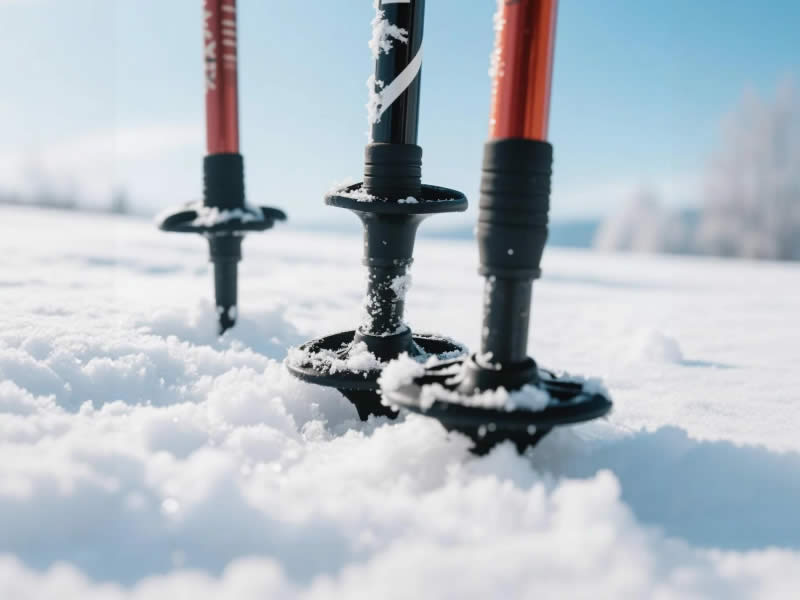
Recommended trekking pole purchase link: https://s.click.aliexpress.com/e/_c4M7OWaN
What are snow baskets?
Snow baskets (also called powder baskets or winter baskets) are circular or star‑shaped plastic attachments that sit near the tip of a trekking pole, just above the carbide point. They range from 5 cm to 10 cm in diameter. Their purpose is to prevent the pole tip from plunging deep into soft surfaces. Instead of sinking, the pole floats on top of the snow or mud, providing stability and saving you from awkward, deep plants.
Most trekking poles come with small baskets (about 5 cm) for general summer use. Snow baskets are larger (7–10 cm) and are sold separately or included with winter‑specific pole packages.
When should you use snow baskets?
Use snow baskets whenever you are walking on a surface where the pole would otherwise sink deeply:
- Deep snow: In fresh powder or soft spring snow, a small basket will still sink several centimetres. A large snow basket (8–10 cm) keeps the pole near the surface, reducing arm fatigue and improving balance.
- Wet, muddy trails: In spring thaw or after heavy rain, soft mud can swallow a pole tip. Snow baskets act like a foot, preventing the pole from becoming a suction cup.
- Loose sand or scree: On sandy beaches or loose volcanic gravel, baskets help the pole stay on top rather than plunging in.
- Boggy terrain: In peat bogs or marshy ground, baskets stop the pole from disappearing into the muck.
When should you NOT use snow baskets?
- Hardpacked or icy trails: Large baskets can lift the tip off the ice, reducing grip. Use small baskets or no baskets on hard surfaces.
- Rocky or root‑filled terrain: Baskets can get caught between rocks or under roots, causing the pole to twist or jam. In summer, remove the large baskets.
- Nordic walking on pavement: Baskets are unnecessary; use rubber tips instead.
How to swap baskets
Most quality poles have interchangeable baskets that screw on or snap into a groove. To remove a basket, twist it (if threaded) or pull it firmly (if snap‑on). To install a new basket, align it and press/twist until it clicks. Always carry a spare set – baskets can crack or pop off in deep snow.
What size basket do you need?
- 5–6 cm (small): Good for light snow, hardpack, or general summer use. Standard on most poles.
- 7–8 cm (medium): Ideal for typical winter hikes with moderate snow depth.
- 9–10 cm (large / powder baskets): For deep, light powder or very soft snow. Used in backcountry skiing and alpine touring.
Do I need snow baskets for hiking in Germany?
If you hike in the Bavarian Alps or any German mountain range in winter or early spring, yes. Snow conditions can vary from hard ice to deep powder. Having a pair of large baskets in your pack allows you to adapt. For lowland winter walks on shallow snow (under 10 cm), the standard small baskets may suffice.
Final verdict
Snow baskets are essential for any winter hiking or trekking in soft snow, mud, sand, or boggy ground. They transform your poles from sinking sticks into stable supports. Buy a pair of large baskets (€5–10) compatible with your poles, learn to swap them quickly, and carry them whenever conditions are soft. Your arms and your pace will thank you. When summer returns, switch back to small baskets or no baskets for rocky trails.




