




What is the difference between trekking poles and ski poles?
At first glance, trekking poles and ski poles look similar – two sticks with pointy ends. However, they are designed for completely different activities and are not interchangeable. Using ski poles for hiking or trekking poles for skiing can lead to poor performance, damage, or even injury. Here are the key differences.
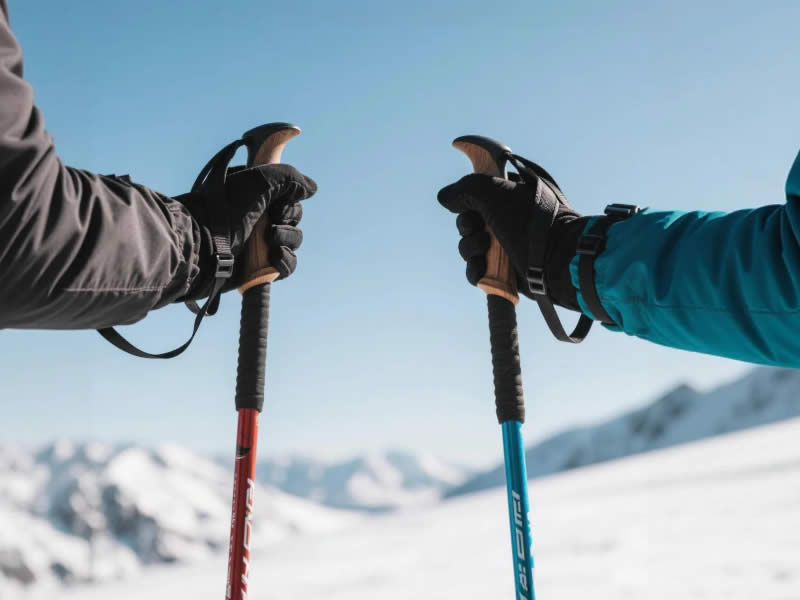
Recommended trekking pole purchase link: https://s.click.aliexpress.com/e/_c4M7OWaN
Purpose and movement
- Trekking poles are for walking and hiking on varied terrain (dirt, rock, gravel, mud, snow). They provide stability, reduce knee impact, and help with balance on steep slopes. The movement is a rhythmic plant‑and‑push, similar to natural walking.
- Ski poles are for alpine or cross‑country skiing. They are used to propel you forward (cross‑country) or to assist with turns and balance (alpine). The planting motion is often more forceful and at specific angles relative to the skis.
Adjustability
- Trekking poles: Almost always adjustable (telescopic or foldable) with lengths ranging from 100–135 cm. This allows you to shorten for uphills and lengthen for downhills – essential for varying trail gradients.
- Ski poles: Typically fixed length (non‑adjustable). The correct length is determined by your height and skiing style. Adjustable ski poles exist (e.g., for backcountry touring), but they are the exception, not the rule.
Shaft material and durability
- Trekking poles: Made of aluminum (7075 alloy) or carbon fiber. Designed to withstand lateral stress from rocky trails and occasional falls. Aluminum bends; carbon can snap.
- Ski poles: Usually aluminum (often cheaper grades) or composite. They are built to take high impact from planting on hard snow/ice but are not designed for sideways rock contact. Many ski poles are less durable on rocky terrain.
Baskets
- Trekking poles: Come with small baskets (4–6 cm) for summer use to prevent sinking into soft dirt. Interchangeable large snow baskets (7–10 cm) are available for winter hiking.
- Ski poles: Have large, fixed baskets (8–12 cm) specifically for deep snow. The baskets are often angled or shaped to aid in pushing off snow. They are not easily removable (or not designed to be removed).
Tips
- Trekking poles: Use tungsten carbide tips (hard, pointy) that bite into rock, dirt, and ice. Rubber covers are available for pavement.
- Ski poles: Use a steel tip (often with a small carbide point) that is designed for hard snow and ice. The tip is usually longer and sharper than a trekking pole tip, but it wears quickly on rock.
Grips and straps
- Trekking poles: Grips are cork, foam, or rubber, shaped for a relaxed handhold. Wrist straps are simple, adjustable loops. You push your hand up through the strap from below.
- Ski poles: Grips are often moulded plastic or rubber with a special strap (sometimes a full glove or a quick‑release system) that allows you to let go of the pole without dropping it. The strap placement is different to accommodate ski gloves.
Weight
- Trekking poles: Typically 200–300g per pole (400–600g per pair). Ultralight models go lower.
- Ski poles: Slightly heavier, around 250–350g per pole, because they need more robustness for deep snow and high forces.
Can you use them interchangeably?
- Using ski poles for hiking: Not recommended. The large baskets catch on rocks and roots; the steel tips wear quickly on rock; the fixed length is uncomfortable on slopes; the straps may not fit hiking gloves.
- Using trekking poles for skiing: Possible only in very light backcountry touring on gentle terrain. The small baskets sink in deep snow; the carbide tips are fine on hard snow but may be too short for icy conditions; the wrist straps are not designed for ski pole technique. For serious skiing, use proper ski poles.
Which one should you buy?
- For hiking, backpacking, trail running, or any walking on dirt/rock: Buy trekking poles.
- For alpine or cross‑country skiing: Buy ski poles.
- If you do both activities and want to save money, consider a pair of adjustable trekking poles with large snow baskets for winter hiking – but do not use them for aggressive skiing. You’ll likely need two separate pairs.
Final verdict
Trekking poles and ski poles are specialised tools for different sports. Trekking poles are adjustable, have carbide tips, small interchangeable baskets, and are designed for rock/dirt. Ski poles are fixed‑length, have large fixed baskets, steel tips, and are designed for snow. They are not interchangeable for serious use. Invest in the correct tool for your activity – your safety and enjoyment depend on it.




