




Are there left and right specific trekking poles?
If you’ve ever examined a pair of trekking poles closely, you might have noticed that some models look identical, while others seem to have a “handed” design. The short answer: most trekking poles are universal (the same pole works in either hand), but a growing number of high‑end poles feature left‑ and right‑specific grips for improved ergonomics. Here’s what you need to know.
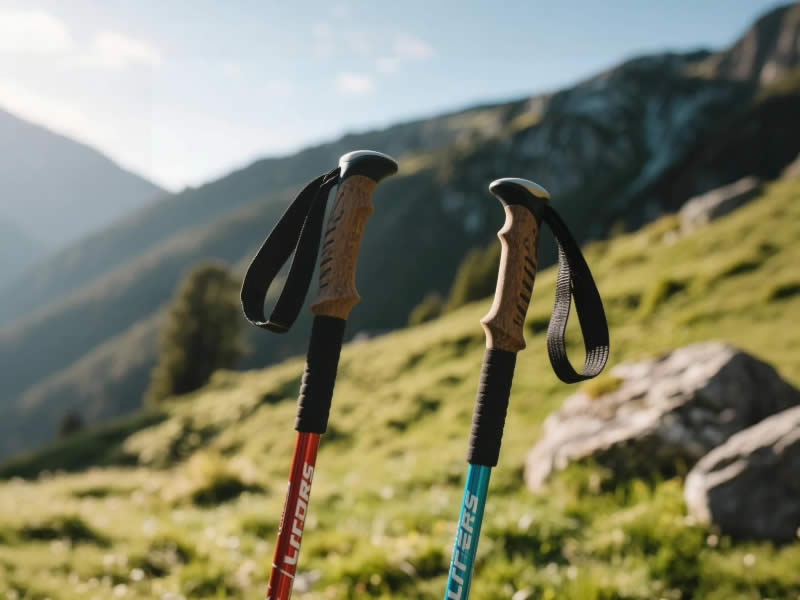
Recommended trekking pole purchase link: https://s.click.aliexpress.com/e/_c4M7OWaN
Universal poles – the vast majority
The vast majority of trekking poles – from budget Decathlon models to premium Black Diamond and Komperdell – are completely symmetrical. The shaft, lock, tip, and basket are identical for both poles. You can swap them between hands without any issue. This is practical: you don’t need to worry about which pole goes where, and you can replace a single pole without worrying about handedness.
Left/right specific poles – ergonomic grips
Some manufacturers, most notably Leki, offer left‑ and right‑specific models (e.g., Leki Makalu or Cressida). The difference is in the grip shape. The grip is contoured to fit the natural curve of your left or right hand. The thumb rest, finger grooves, and palm swell are asymmetrical. When you hold the correct pole in each hand, your wrist sits in a more neutral, relaxed position, reducing fatigue over long days.
Additionally, the wrist strap on specific poles is often angled to match the natural hand position when planting the pole. This can improve power transfer and comfort.
How to identify left/right poles
- Left poles are usually marked with an “L” (or a left‑hand icon) on the grip or shaft.
- Right poles are marked with an “R”.
- The grip shape will feel obviously different when you hold it in the wrong hand – it will be uncomfortable.
Benefits of handed poles
- Reduced hand fatigue: The ergonomic shape matches your relaxed grip, spreading pressure more evenly.
- Better alignment: Your wrist and forearm stay in a straighter line, reducing strain on tendons.
- Improved control: The thumb rest and finger grooves give you a more secure feel, especially on steep terrain.
Drawbacks
- Cost: Handed poles are often €20–50 more expensive per pair than universal models.
- Inconvenience: You must pay attention when picking them up – mixing them up feels awkward.
- Replacement issues: If you break one pole, you must buy a specific left or right replacement, not just any pole.
Do you need left/right specific poles?
For most hikers, universal poles are perfectly fine. The ergonomic benefits of handed poles are real but subtle. Unless you hike many hours daily (e.g., thru‑hiking) or have existing wrist/hand pain, the extra cost and hassle are not justified.
However, if you experience hand fatigue, numbness, or blisters between your thumb and index finger, trying a pair of handed poles (especially Leki’s ergonomic grips) might solve the problem. Many long‑distance hikers swear by them.
What about other brands?
- Black Diamond – Most models are universal, but some (e.g., Trail Pro) have a slightly asymmetrical foam grip that works for either hand (not truly left/right).
- Komperdell – Primarily universal, though some high‑end touring poles have handed grips.
- Decathlon – All universal.
Final verdict
Left and right specific trekking poles do exist, primarily from Leki and a few other premium brands. They offer ergonomic advantages for heavy users but are not necessary for most hikers. For weekend or moderate hiking, universal poles are more than adequate. If you suffer from hand fatigue or plan a very long trek, consider investing in handed poles – but always test them in a shop first to feel the difference. Otherwise, save your money and enjoy the simplicity of universal poles.




