




What is the best trekking pole for people with arthritis?
Arthritis – whether in the hands, wrists, elbows, or knees – can make hiking painful and limit your time on the trail. The right trekking poles can reduce joint stress, improve stability, and allow you to enjoy hiking again. But not all poles are arthritis‑friendly. Here’s what to look for and the best models for 2026.
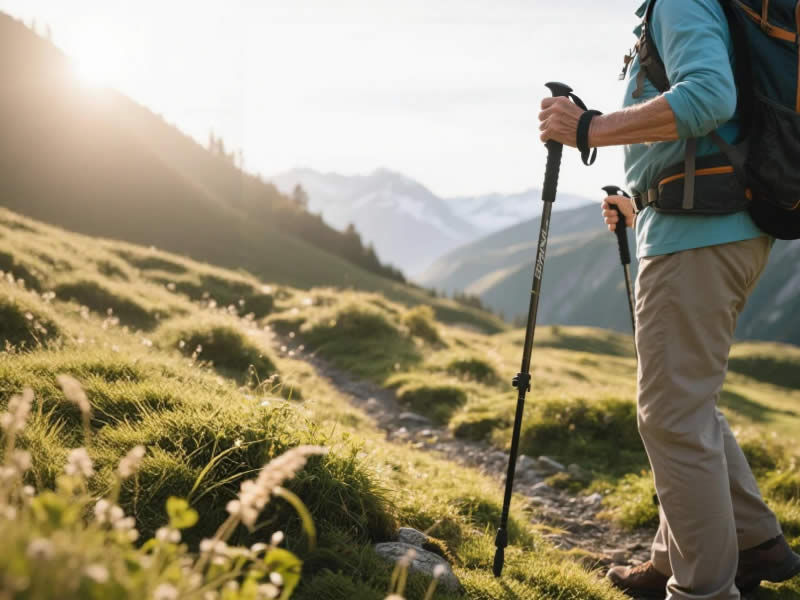
Recommended trekking pole purchase link: https://s.click.aliexpress.com/e/_c4M7OWaN
Key features for arthritis sufferers
- Shock absorption (anti‑shock): While we often recommend rigid poles for most hikers, arthritis in the wrists or elbows benefits from a spring or elastomer that cushions impact. Look for poles with a reliable shock mechanism that can be turned off on flat sections.
- Ergonomic, oversized or angled grips: A thicker, contoured grip reduces the need to clench tightly. Some grips are designed with a more natural hand angle (e.g., Leki’s “Aergon” or “Trigger Shark” system). Cork is excellent because it molds to your hand and absorbs sweat, reducing slipping.
- Wrist straps: padded and adjustable. A wide, cushioned strap allows you to transfer load without gripping hard. The strap should be easy to adjust with one hand.
- Lightweight design: Heavy poles increase arm fatigue. Aim for under 250g per pole (500g per pair). Carbon fiber is lighter but more brittle; high‑end aluminum (e.g., Leki Makalu) is a good balance.
- Lever locks over twist locks: Twist locks require a twisting motion that can aggravate wrist arthritis. Lever locks (SpeedLock, FlickLock) are easier to operate with limited hand strength.
Top trekking poles for arthritis
1. Leki Makalu with SpeedLock and Aergon grip – Leki’s Aergon cork grip is ergonomically shaped with a natural hand angle. The SpeedLock lever is easy to use. No shock absorption, but the cork grip and lightweight aluminum (260g per pole) reduce hand fatigue. Add Leki’s “Shock” version if you need cushioning. Price ~€120.
2. Black Diamond Trail Pro (with shock option) – Black Diamond offers a “Trail Pro Shock” model. The foam grip is thick and comfortable, and the FlickLock lever is very easy to operate. The shock absorber can be turned off. Weight ~280g per pole. Price ~€140.
3. Komperdell Shock Absorber Series – Specifically designed for joint comfort. The internal spring provides up to 20mm of travel. The foam grip is warm and cushioned. Lever locks are easy on hands. Weight ~290g per pole. Price ~€130.
4. Pacer Poles – These are unique: the handle is angled at 15 degrees, keeping your wrist in a natural neutral position. Many arthritis sufferers swear by them. No shock absorption, but the ergonomic design reduces wrist torque. Made of aluminum. Price ~€150.
5. Decathlon Forclaz MT500 (budget option) – No shock, but lightweight aluminum (260g), cork grip, and lever locks. At €40, it’s a low‑cost way to see if poles help. Add foam grip tape or an aftermarket shock tip (e.g., “Pacer Pole” shock tips) for more comfort.
Additional tips for arthritic hikers
- Use two poles – never one. Two poles distribute load evenly and reduce twisting on your joints.
- Adjust length carefully – too long or too short increases strain. Use the elbow‑90° rule.
- Wear gloves or grip pads – cycling gloves with gel padding can reduce vibration.
- Take breaks – stretch your fingers and shake out your hands every 20 minutes.
- Consider trekking pole accessories – “Cork‑o‑Grip” wraps or foam tubing can thicken any grip for easier holding.
What to avoid
- Twist locks – require wrist rotation.
- Very thin grips – force a tight grip.
- Heavy poles – increase fatigue.
- Carbon poles without shock – transmit more vibration than aluminum.
Final verdict
For arthritis, the Leki Makalu with Aergon cork grip (add the shock version if needed) is an excellent choice. For severe wrist or hand arthritis, Pacer Poles with their angled grips are often life‑changing. If budget is tight, the Decathlon Forclaz MT500 with added foam grip padding can work well. Always test poles in a store – hold them for a few minutes to feel the grip comfort. With the right poles, you can keep hiking for years despite arthritis.




