




How to adjust trekking pole length for different terrains?
One of the most common mistakes hikers make is using the same pole length for the entire hike. Terrain changes constantly – flat sections, steep climbs, sharp descents, side‑hills – and your pole length should change with it. Proper adjustment reduces fatigue, protects your joints, and improves stability. Here’s a terrain‑by‑terrain guide.
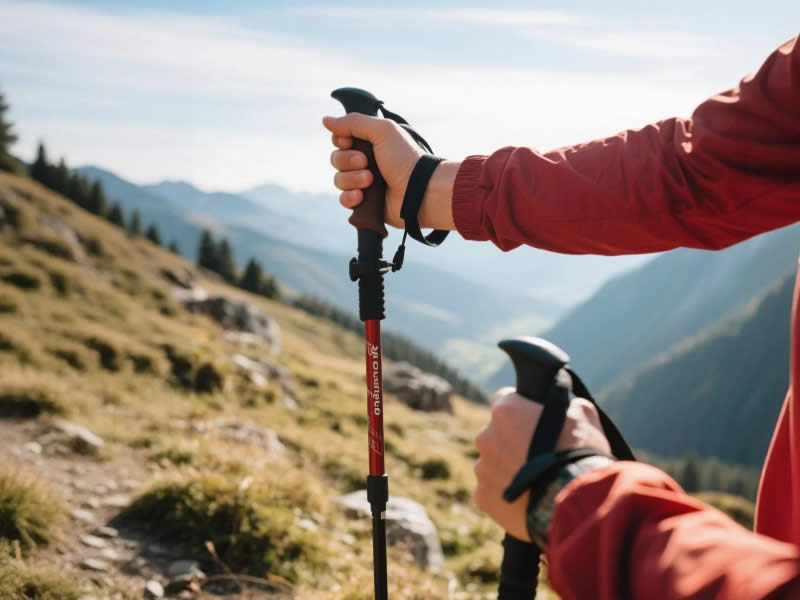
Recommended trekking pole purchase link: https://s.click.aliexpress.com/e/_c4M7OWaN
The baseline: flat terrain
On flat, level ground (or a gentle, rolling trail), set your poles so that when you stand upright with the tip on the ground, your elbow is bent at approximately 90 degrees. This neutral position allows for efficient arm swing without over‑reaching or hunching. Use this as your reference length. Mark the shaft with a permanent marker or tape for quick resetting.
Uphill: shorten by 5–10 cm
When climbing a steep slope, your hand naturally wants to be lower. If you keep the poles at flat‑terrain length, your arms will be forced too high, straining your shoulders and reducing your ability to push down effectively. Shorten each pole by 5–10 cm (2–4 inches). This allows you to plant the pole close to your feet and push yourself upward, engaging your upper body. For very steep slopes (20+ degrees), shorten even more – up to 15 cm shorter than your flat length.
Downhill: lengthen by 5–10 cm
Descending is where knee impact is highest. Lengthen your poles by 5–10 cm beyond your flat setting. The longer pole lets you plant it ahead of your body, creating a braking effect that transfers load from your knees to your arms. Your arm angle will be slightly wider than 90°, but that’s correct for downhill. If your poles are too short on a descent, you’ll lean forward excessively, losing balance and putting extra stress on your quads.
Side‑hilling (traversing a slope)
When walking across a slope, your uphill hand will naturally be higher than your downhill hand. Adjust your poles individually:
- Uphill pole: Shorten it by 5–10 cm (or more, depending on steepness).
- Downhill pole: Lengthen it by 5–10 cm.This keeps both hands level, your torso upright, and your shoulders relaxed. Without this adjustment, you’ll twist your spine, leading to back pain.
Switchbacks and uneven steps
On tight switchbacks, you may need to temporarily adjust only the pole on the inside of the turn (shorten it) while keeping the other at standard length. For trails with large, uneven rock steps, consider shortening both poles slightly to give you more control and prevent the pole from catching above the step.
How to adjust quickly
- Lever locks (SpeedLock, FlickLock): Open the lever, slide the section to the new length, close the lever. Takes 2–3 seconds per pole.
- Twist locks: Twist to loosen, adjust, twist to tighten. Slower and more finicky – another reason to prefer lever locks.
- Mark your settings: Use a permanent marker or coloured tape to mark your “flat”, “uphill”, and “downhill” lengths on the inner shaft. Then you can adjust without measuring each time.
Practice drill
On a trail with varied terrain, stop at the start of a climb. Shorten your poles. Climb for 30 seconds, then stop and lengthen them for a descent. Repeat. Within one hike, the habit will become automatic.
Common mistakes
- Never adjusting: Using flat length all day – the most common error.
- Adjusting both poles the same on side‑hills: Leads to a twisted posture.
- Lengthening poles for uphill: Makes climbing harder and strains shoulders.
- Forgetting to mark settings: Wastes time measuring each time.
Final verdict
Adjusting trekking pole length for different terrains is a simple skill that pays huge dividends in comfort and safety. Shorten for uphill, lengthen for downhill, and adjust each pole individually for side‑hills. Mark your settings for quick changes. With practice, you’ll adjust automatically, and your knees, shoulders, and back will thank you.




