




How to use trekking poles to save energy on long hikes?
Long hikes – whether a 30‑km day in the Alps or a multi‑day trek on the Rennsteig – demand energy efficiency. Every wasted motion adds up. Used correctly, trekking poles can save significant energy by transferring work from your legs to your arms, improving rhythm, and reducing muscle fatigue. Here’s how to unlock that energy savings.
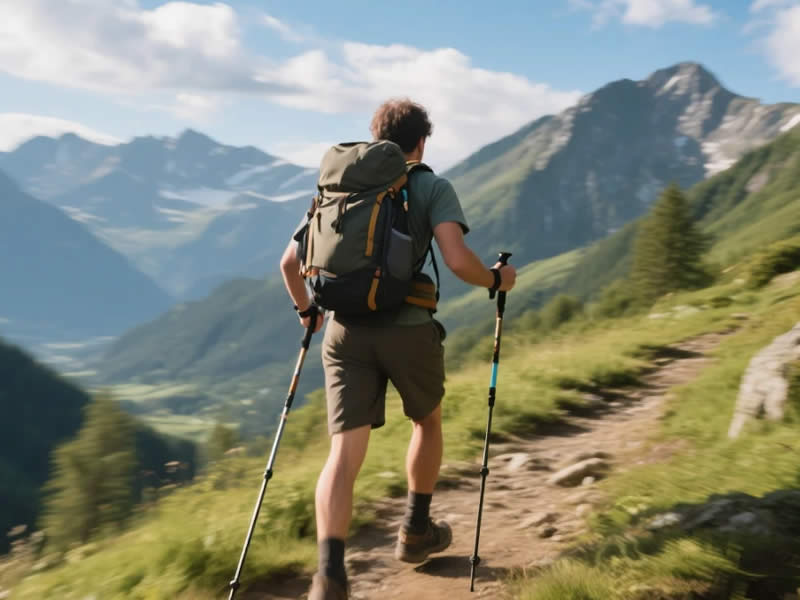
Recommended trekking pole purchase link: https://s.click.aliexpress.com/e/_c4M7OWaN
The science of energy transfer
Walking without poles relies almost entirely on your leg muscles (quadriceps, hamstrings, calves) and glutes. Adding poles engages your latissimus dorsi, triceps, and shoulder muscles. By distributing the workload across more muscle groups, you reduce the strain on any single group, delaying fatigue. Studies show that using poles reduces perceived exertion by 10–15% on hilly terrain and can lower heart rate by 5–8 beats per minute for the same pace.
Key techniques to save energy
1. Master the wrist strap (most important)
The wrist strap is not a safety leash – it’s a load‑bearing tool. Insert your hand up through the strap from below, then grip the handle. The strap should sit between your thumb and index finger, crossing the back of your hand. When you plant the pole, push down into the strap, not the grip. Your fingers can relax. This transfers your body weight directly into the pole without wasting energy on gripping. Proper strap use alone can reduce hand fatigue by 50%.
2. Use the opposite arm‑leg rhythm
As your right foot steps forward, plant your left pole. As your left foot steps forward, plant your right pole. This diagonal pattern uses your torso’s natural rotation to add momentum. It also prevents the “shuffling” gait that wastes energy. Avoid planting both poles together on flat or rolling terrain – it breaks your rhythm and doubles the work.
3. Push back, don’t just poke
Many hikers simply tap the pole on the ground. To save energy, push down and back with each plant, as if you’re propelling yourself forward on skis. This adds a small amount of forward thrust, reducing the work your legs must do. On flat ground, this can increase your efficiency by 5–10%.
4. Adjust length for terrain
- Flat or rolling: Elbow at 90°.
- Uphill: Shorten poles by 5–10 cm. This keeps your arms low, preventing shoulder strain and allowing a strong push.
- Downhill: Lengthen poles by 5–10 cm. This lets you plant ahead and brake, saving your quads and knees.
5. Maintain a relaxed grip and straight wrists
A death grip tenses your forearms and shoulders, wasting energy. With straps properly adjusted, you can keep your fingers loosely wrapped. Your wrists should remain straight (not bent up or down), which aligns your bones for efficient force transfer.
6. Use a pendulum swing
Let your arms swing naturally from the shoulder, like a pendulum. Don’t force the motion. The pole’s weight should help carry the swing. Over‑reaching or over‑lifting wastes energy.
Energy‑saving drills
- Strap practice: On a flat trail, walk 100 m gripping normally, then 100 m using only the strap (fingers relaxed). Notice the difference.
- Rhythm check: Count your steps. For every two steps, you should plant one pole (alternating). If you hear a double tap, you’re planting both poles together.
- Push test: On a gentle uphill, try pushing back with poles for 50 m, then stop pushing for 50 m. Feel the difference in leg effort.
Common energy‑wasting mistakes
- Planting poles too far forward: Over‑reaching forces you to pull yourself forward, wasting energy. Plant when your hand is level with your forward foot’s heel.
- Using poles that are too long or too short: Check your elbow angle every hour.
- Dragging poles: Lifting the tip slightly with each step is more efficient than scraping.
- Ignoring straps: Hiking without proper strap use is like using a bicycle without a chain – you lose the mechanical advantage.
Final verdict
Trekking poles save energy on long hikes when used correctly. The keys are: proper wrist strap technique, opposite arm‑leg rhythm, pushing back with each plant, adjusting length for terrain, and maintaining a relaxed grip. Practice these skills on short walks before your next long trek. Within a few hours, the movements will become automatic, and you’ll finish your hikes feeling fresher – with more energy for the summit view or the evening camp.




