




Can trekking poles be used for Nordic walking exercises?
Nordic walking is a popular low‑impact fitness activity that engages the entire body. It uses specially designed poles that differ from standard trekking poles. So, can you simply grab your hiking poles and start Nordic walking? The short answer is yes, for casual exercise, but with compromises. For serious or regular Nordic walking, dedicated poles are strongly recommended. Here’s why.
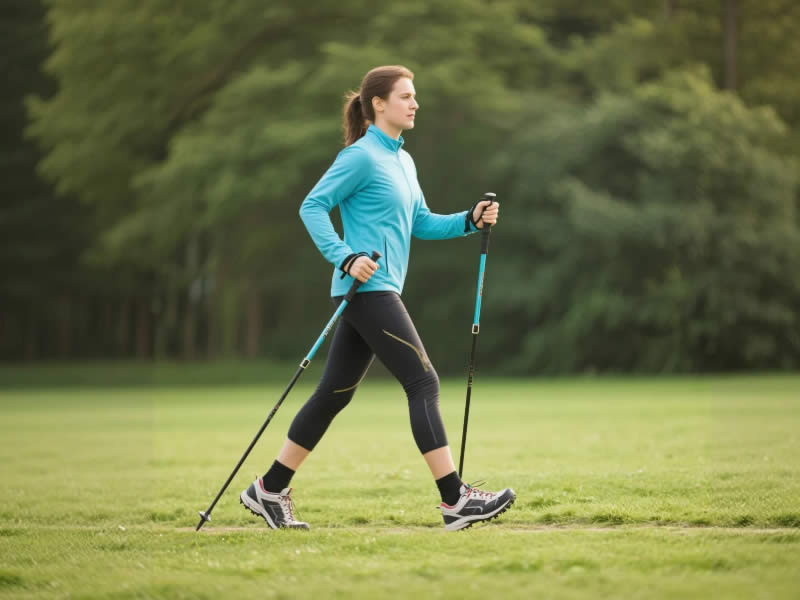
Recommended trekking pole purchase link: https://s.click.aliexpress.com/e/_c4M7OWaN
Key differences between trekking poles and Nordic walking poles
| Feature | Trekking Poles | Nordic Walking Poles |
|---|---|---|
| Length | Adjustable (typically 100–135 cm) | Fixed length (height × 0.68) |
| Locking mechanism | Lever or twist locks | No lock – fixed shaft |
| Grip & strap | Standard grip with adjustable wrist strap | Special glove‑like strap (often called a “cork grip with integrated glove”) |
| Tip | Carbide tip (often with removable rubber cover) | Carbide tip with angled, fixed basket |
| Weight | 200–300g per pole | 150–250g per pole (lighter) |
Why Nordic walking poles are different
Nordic walking involves a specific technique: you plant the pole at an angle behind you, push off, and then release the grip entirely – the pole stays attached to your hand via a glove‑like strap. This allows a natural, open‑handed backswing. Trekking poles have a simple wrist strap that is not designed for release; you’d have to keep gripping the handle, which alters the technique and reduces the upper‑body workout.
Additionally, Nordic poles are fixed length to ensure consistent technique. Adjustable trekking poles can slip or change length during the rhythmic motion, and their baskets are usually smaller, which can catch on pavement.
Can you use trekking poles for Nordic walking? – Yes, but…
For a casual walk on flat, paved paths, you can use trekking poles as a substitute. Here’s how:
- Set the length using the formula: your height (cm) × 0.68. Lock the poles securely.
- Remove carbide tips and use rubber paw covers to avoid damaging pavement and to provide grip.
- Ignore the wrist strap – you’ll have to keep holding the grip, which is tiring and changes the motion.
- Practice the opposite arm‑leg rhythm (right foot forward, left pole back).
However, you will not get the full Nordic walking benefit (reduced joint impact, 90% muscle engagement, calorie burn up to 40% higher than walking). The fixed‑length, glove‑strap design of Nordic poles is essential for proper form.
When trekking poles work well enough
- Occasional use: You already own trekking poles and want to try Nordic walking a few times.
- Mixed terrain: You plan to hike on trails but also walk on pavement sections – trekking poles are more versatile.
- Budget: You don’t want to buy a separate pair of Nordic poles.
When to buy dedicated Nordic walking poles
- Regular exercise (weekly or more): Proper Nordic poles will be more comfortable and effective.
- Joint issues: The glove strap reduces hand and wrist strain.
- Serious fitness training: You want the full calorie‑burn and muscle‑engagement benefits.
Recommended Nordic walking poles (if you decide to buy)
- Leki Nordic Walking poles – high‑quality, with glove straps.
- Exel Nordic Walker – industry standard.
- Decathlon’s Forclaz or Newfeel – budget options with fixed length and glove straps.
Final verdict
Yes, trekking poles can be used for casual Nordic walking exercises, especially if you already own them and only walk occasionally. However, for proper technique, safety, and maximum fitness benefits, dedicated Nordic walking poles with fixed length and glove‑like straps are far superior. If you plan to Nordic walk regularly, invest in the right tool. If you’re a hiker wanting to try a new activity, your trekking poles will suffice for a trial – just adjust length, use rubber tips, and accept the limitations.




