




Can trekking poles be used as emergency shelter poles?
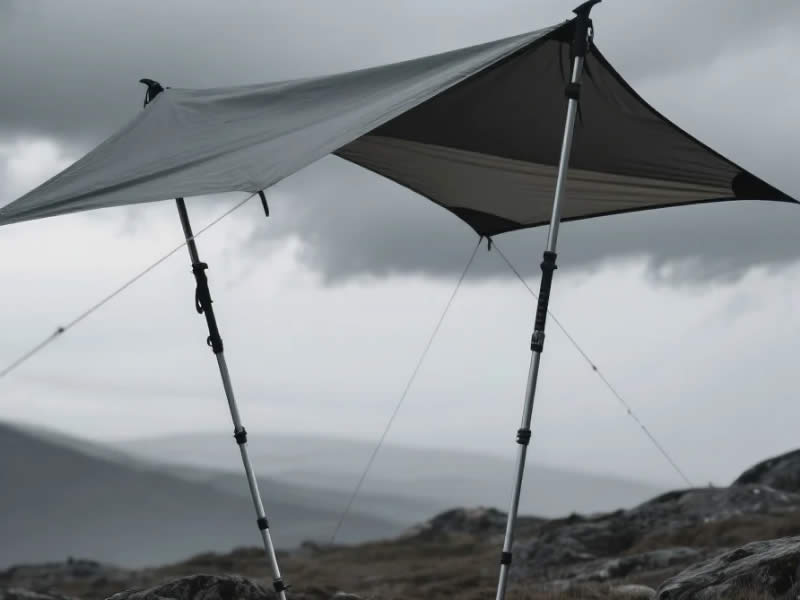
If you find yourself caught in an unexpected storm or forced to spend an unplanned night outdoors, your trekking poles can become the backbone of an emergency shelter. Yes, with a little creativity and basic gear, they can serve as excellent support poles for tarps, bivy sacks, space blankets, or even natural debris shelters. Here’s how to use them effectively and what to keep in mind.
Recommended trekking pole purchase link: https://s.click.aliexpress.com/e/_c4M7OWaN
Why trekking poles work for emergency shelters
Trekking poles are lightweight, strong, and adjustable. Their carbide tips grip the ground, preventing the shelter from sliding. Adjustable length allows you to set the peak height exactly as needed – lower for wind resistance, higher for more headroom. A pair of poles can create an A‑frame, a lean‑to, or a pyramid shelter using a tarp or poncho.
Essential gear to carry
To use poles as shelter supports, you need:
- A tarp, emergency blanket, or poncho (at least 2m × 2m).
- Guy lines (paracord or lightweight cordage).
- Stakes (or use sticks, rocks, or your ice axe).
- Your trekking poles (two poles are best; one can work for a lean‑to).
Even if you don’t plan to camp, carrying a small tarp and a few stakes adds minimal weight and can be life‑saving.
Basic shelter designs with trekking poles
1. A‑frame (two poles) – The classic backpacking shelter. Plant both poles about 1–1.5 m apart, adjust to equal height. Drape the tarp over them, forming a ridge. Stake down the corners and sides. This creates a roomy, well‑ventilated shelter. Use guy lines from the pole tops to trees or stakes for extra stability.
2. Lean‑to (one pole) – Use a single pole to prop up one edge of the tarp. Stake the other edge to the ground. This simple shelter blocks wind from one side and reflects heat from a fire. Best for short‑term protection.
3. Pyramid (one pole) – Place the pole in the center of a square tarp, lift the tarp over the tip, and spread the corners out to form a pyramid. Stake all four corners. This is very stable and sheds wind well, but headroom is limited near the edges.
4. Flat tarp with two poles – Use poles at opposite corners to lift the tarp off your face, creating a low, wind‑shedding shelter. Good for bivouacking.
How to set up quickly
- Choose a sheltered, flat, well‑drained spot away from dead trees or avalanche paths.
- Extend your poles to the desired height (usually 110–130 cm for an A‑frame).
- If using a tarp, lay it flat, then place the poles under it. For an A‑frame, position the poles so the tarp’s ridge line runs between them.
- Secure the pole tips by pushing them into the ground or placing them on a small rock (to prevent sinking). Use guy lines from the pole tops to stakes or heavy rocks.
- Stake or weight down the tarp edges. If no stakes, use large rocks, logs, or bury the corners under soil.
Important safety considerations
- Test stability – Push gently on the shelter. If it collapses, adjust guy lines or pole placement.
- Avoid lightning – Poles are metal; do not use them as the highest point in a thunderstorm. Lie flat and move poles away from your body.
- Check for sharp tips – Carbide tips can puncture your tarp. Cover them with rubber tips, a glove, or a folded sock.
- Adjust for wind – Point the narrow end of the shelter into the wind. Lower the poles for a more aerodynamic profile.
What to do if you have only one pole
A single pole still works:
- Lean‑to (as above).
- Diagonal tarp – Prop one corner of the tarp on the pole, stake the other three corners directly to the ground. This creates a small, low shelter.
- Use a tree or rock – Tie the tarp to a tree branch and use the pole to support the other side.
Improvised stakes and guy points
No stakes? Use:
- Sticks whittled to a point.
- Heavy rocks placed on tarp edges.
- Snow stakes – bury a stuff sack full of snow or use an ice axe.
- Your boots – weight down corners with boots filled with rocks.
Final verdict
Yes, trekking poles can absolutely be used as emergency shelter poles. With a small tarp and some cordage, they transform into a sturdy, adjustable frame that can protect you from rain, wind, and sun. Practice setting up your shelter at home before you need it in the wild. Carry a lightweight tarp (e.g., a 2m × 3m silnylon tarp, ~200g) and a few stakes. Your poles already serve you on the trail – they can also save your life when the weather turns. Don’t leave home without them.




