




How to adjust trekking pole straps for maximum efficiency?
Most hikers never learn to use trekking pole straps correctly. They slip their hands through the loop from the top, grip the handle, and hike – missing the single most important feature for efficiency and comfort. Proper strap adjustment transfers weight from your grip to your arms, reduces hand fatigue, and improves power transfer. Here’s how to do it right.
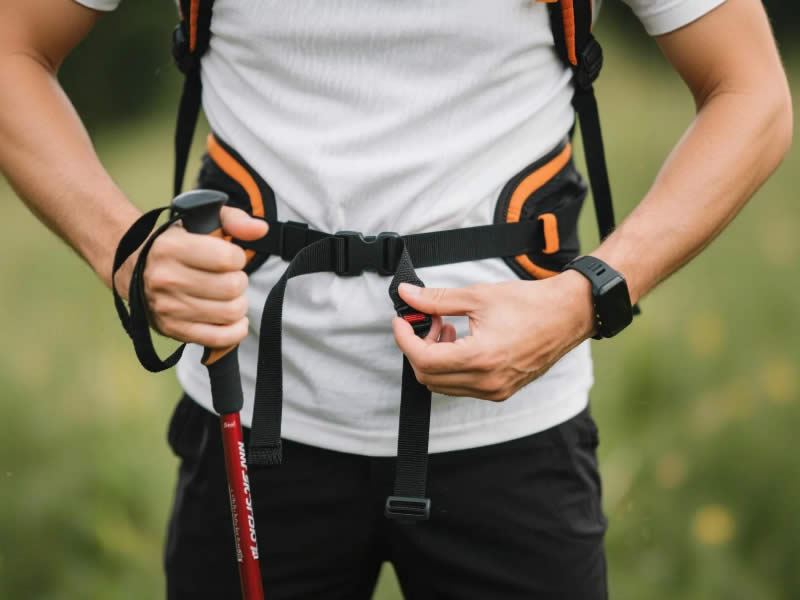
Recommended trekking pole purchase link: https://s.click.aliexpress.com/e/_c4M7OWaN
The wrong way (what most people do)
The common method: put your hand through the strap from above, so the strap wraps around your wrist. Then grip the handle. In this position, the strap does almost nothing – your fingers bear all the weight. You’ll tire quickly, develop blisters, and lose the mechanical advantage poles can provide.
The correct way: hand up from below
Follow these steps for each pole:
- Open the strap so it forms a loop large enough for your hand to pass through.
- Insert your hand from below – push your hand up through the loop, so the strap comes up around your wrist.
- Bring your hand down onto the grip – the strap should now sit between your thumb and index finger, crossing the back of your hand.
- Grip the handle lightly – the strap should be snug enough that when you relax your fingers, the pole remains attached to your hand.
- Adjust the strap length using the slider or buckle until it fits comfortably – not so tight that it cuts off circulation, not so loose that your hand slips out.
Why this works
When you push down on the pole, your hand presses into the strap, not the grip. The strap transfers force directly from your arm to the pole. Your fingers can relax, reducing fatigue and blister risk. You also maintain a more neutral wrist position, which improves power transfer and reduces strain on tendons.
How to adjust the strap for different conditions
- Summer, bare hands: Strap should be snug but not tight. You should be able to slip your hand out with a little effort.
- Thin gloves: Loosen the strap slightly to accommodate the glove thickness.
- Thick winter mittens: Open the strap fully. You may need to adjust on the trail.
- Running: Some runners prefer a looser strap or no strap at all for quick hand swaps. But for efficiency, a snug strap is still better.
Testing your adjustment
After adjusting, relax your grip completely. The pole should stay attached to your hand by the strap alone. Shake your hand gently – the pole should not fall. If it does, tighten the strap. If it cuts into your wrist, loosen it.
Common mistakes to avoid
- Strap too loose – The pole dangles, and you end up gripping tightly to control it.
- Strap too tight – Restricts blood flow, causing numbness or cold fingers.
- Strap across the palm – Should be across the back of the hand, not the palm.
- Hand inserted from above – This puts the strap on the wrong side of your wrist.
- Ignoring the strap altogether – You’re missing 50% of the pole’s benefit.
Benefits of proper strap use
- Reduced hand fatigue – Up to 50% less gripping effort.
- Fewer blisters – Less friction between skin and grip.
- Better power transfer – Each plant pushes more efficiently.
- Improved safety – Poles won’t fly away if you lose your grip.
- Less wrist strain – Neutral alignment reduces tendon stress.
Adjusting straps on different pole types
- Leki (SpeedLock straps): Pull the tab to loosen, slide the buckle to tighten. Easy one‑handed adjustment.
- Black Diamond (FlickLock straps): Similar slider mechanism. Some models have a quick‑release button.
- Decathlon / budget poles: Often have simple sliding buckles. They work but may not stay adjusted as well.
- Fixed‑length Nordic walking straps: Usually glove‑like – you insert your hand fully. Different design.
Final tip: practice at home
Before your next hike, spend 5 minutes adjusting the straps while watching TV. Put your hands in and out, tighten and loosen. Get a feel for the correct tension. Then on the trail, you’ll automatically set them right.
Final verdict
Properly adjusted wrist straps are the key to unlocking the full efficiency of trekking poles. Always insert your hand from below, adjust the strap to sit between thumb and index finger, and ensure it’s snug enough to bear weight without cutting off circulation. Master this simple skill, and your hands, wrists, and energy levels will thank you on every hike.




