




Do trekking poles improve posture while walking?
Hiking for hours with a heavy backpack or simply walking long distances can lead to a slumped, forward‑leaning posture. This not only looks awkward but also strains your back, neck, and shoulders. Trekking poles, when used correctly, can significantly improve your walking posture. Here’s how.
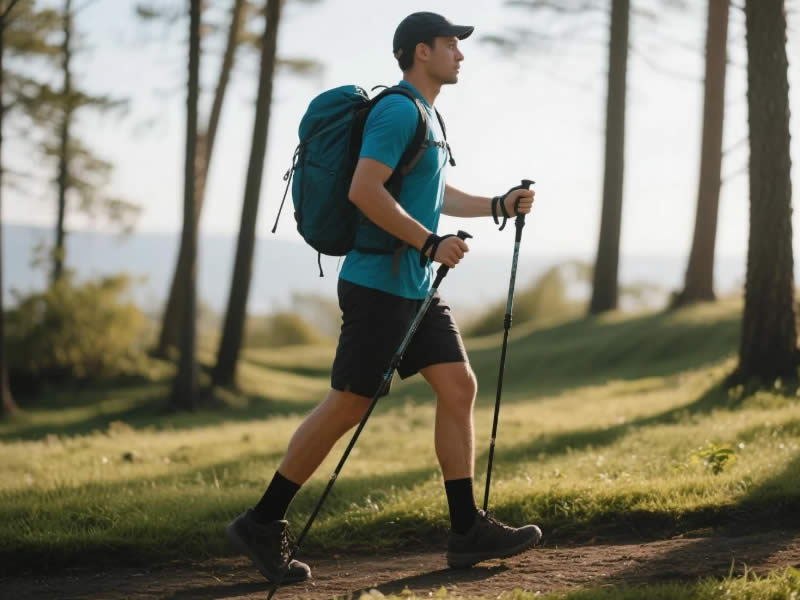
Recommended trekking pole purchase link: https://s.click.aliexpress.com/e/_c4M7OWaN
The natural tendency: forward slouch
Without poles, many hikers develop a forward‑leaning posture, especially when tired or carrying a pack. The head drops, shoulders round, and the lower back arches excessively. This “hiking slouch” increases fatigue, reduces breathing efficiency, and can lead to chronic back pain. The cause is often weak core muscles and the natural tendency to look down at the trail.
How poles encourage upright posture
Trekking poles act as tactile guides. When you hold them with properly adjusted straps and correct length, they naturally position your hands at your sides, encouraging you to stand taller. Here’s the mechanism:
- Elbow angle: With poles set to the correct length (elbow at 90° on flat ground), your shoulders are pulled back slightly, opening your chest.
- Wrist strap usage: When you push your hand up through the strap and grip lightly, the strap transfers load to your arms. This engages your upper back muscles, which naturally pull your shoulders into a more upright position.
- Forward propulsion: The act of planting the pole ahead and pushing back encourages a more upright torso, because leaning too far forward would reduce the effectiveness of the push.
What research and experts say
Physical therapists often recommend trekking poles for patients with postural issues or chronic back pain. The poles provide external feedback: if you slouch, your hands will feel too low or too high relative to the poles, prompting you to straighten up. A 2018 study in Gait & Posture found that using trekking poles increased thoracic extension (uprightness of the upper back) by an average of 8 degrees compared to walking without poles.
Proper setup for postural benefits
To improve posture, you must set up your poles correctly:
- Length: On flat ground, your elbow should be at 90°. If your poles are too short, you’ll hunch; too long, you’ll shrug your shoulders. Mark your ideal length.
- Strap adjustment: Hand up from below, strap between thumb and index finger. Snug enough to bear weight without gripping.
- Grip lightly: Relax your fingers. The strap does the work. A death grip tenses your neck and shoulders.
- Look ahead: Don’t stare at your feet. Poles allow you to look up because you have tactile feedback of the ground.
Common posture mistakes with poles
- Poles too short – forces you to bend forward.
- Poles too long – makes you hike with elevated shoulders, leading to neck pain.
- Gripping too tightly – creates tension that spreads to your upper back.
- Not using straps – you’ll grip harder and hunch more.
- Planting poles too far forward – over‑reaching pulls you into a forward lean.
Benefits of improved posture
- Reduced back and neck pain – less strain on spinal discs.
- Better breathing – upright chest allows full lung expansion.
- Less fatigue – efficient alignment uses less energy.
- Improved balance – upright centre of gravity is more stable.
- Reduced shoulder tension – poles share the load.
How to practice posture with poles
- Stand still with poles planted. Adjust length and straps. Look straight ahead. Feel your shoulders relax back.
- Walk on flat ground – focus on keeping your chest open, eyes on the horizon. Use the opposite arm‑leg rhythm.
- Check your reflection – if you see a rounded back, shorten poles slightly or engage your core.
- Use a backpack – load the pack, then notice how poles help you resist leaning forward.
Final verdict
Yes, trekking poles can significantly improve your walking posture – but only if they are adjusted correctly and used with proper technique. The combination of correct length, proper strap use, and a relaxed grip encourages an upright torso, reduces slouching, and eases back strain. For hikers who suffer from poor posture or back pain, poles are a valuable tool. Take a few minutes to set up your poles before your next hike, and consciously practice standing tall. Your spine will thank you.




