




What is the correct arm swing when using trekking poles?
Many hikers focus on pole length and grip, but forget the arm swing itself. An incorrect arm motion wastes energy, strains shoulders, and reduces the benefits of poles. The correct arm swing is natural, relaxed, and coordinated with your legs. Here’s how to master it.
Recommended trekking pole purchase link: https://s.click.aliexpress.com/e/_c4M7OWaN
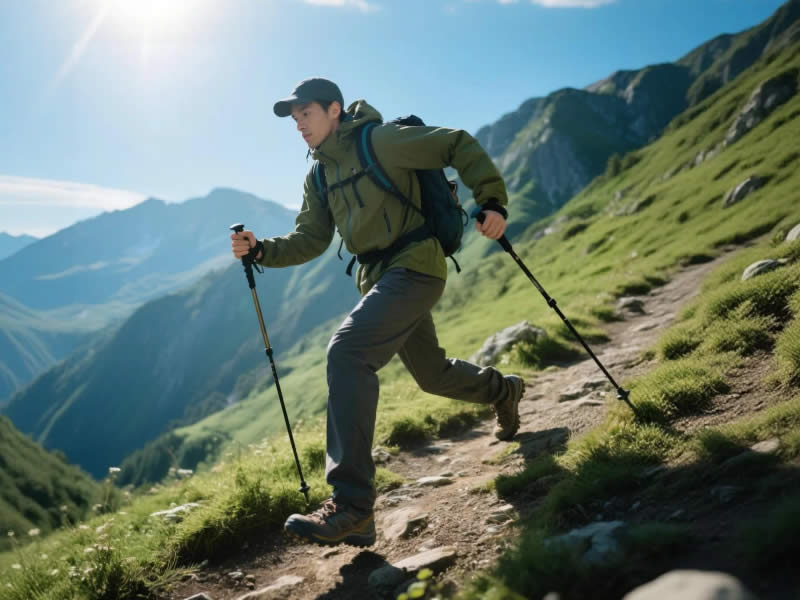
The basic principle: opposite arm to opposite leg
Your body is wired for contralateral movement – when your right foot steps forward, your left arm naturally swings forward. Trekking poles should follow this same pattern:
- Right foot forward → plant left pole
- Left foot forward → plant right pole
This diagonal rhythm maintains balance and efficiency. If you plant the same‑side pole (right foot with right pole), you’ll twist your torso and waste energy.
The arm swing motion
Start with your arms relaxed at your sides, elbows bent at about 90° (when poles are set to correct length). As you walk:
- Swing from the shoulder – not the elbow. Your shoulder joint should drive the motion, like a pendulum. Keep your elbow slightly bent throughout.
- Keep your wrist straight – do not bend your wrist up or down. A straight wrist aligns the bones for efficient force transfer.
- The plant – as your hand swings forward, plant the pole tip when your hand is roughly level with the heel of your forward foot. Do not over‑reach.
- The push – after the plant, push down and back. Your hand should end up slightly behind your hip. Then relax and let the pole swing forward again.
Common arm swing mistakes
- Over‑reaching: Planting the pole far ahead of your foot strains your shoulder and pulls you off balance. The pole should contact the ground near your forward foot’s heel.
- Chicken‑wing elbow: Keeping your elbow locked out or pointing sideways wastes energy. Keep elbows close to your body and slightly bent.
- No push: Simply tapping the pole on the ground does nothing. You must push down and back to transfer load.
- Same‑side planting: This creates a waddling gait and reduces stability.
- Stiff, robotic swing: Relax. The swing should be fluid, like a natural walk.
How the arm swing changes with terrain
- Flat ground: Use a moderate swing, planting opposite pole to forward foot. Your hand should not rise above shoulder height.
- Uphill: Shorten your poles, then take shorter, quicker swings. Your hand will naturally be lower. Focus on pushing down and back.
- Downhill: Lengthen your poles, then plant them ahead of your body. Your arm swing will be wider and more deliberate. Use both poles together on steep sections.
- Side‑hilling: The uphill arm will swing higher; the downhill arm lower. Adjust pole length individually to keep your torso upright.
Drills to improve arm swing
- No‑pole walk: Walk normally, paying attention to your natural arm swing. Notice how your left arm moves with your right leg.
- Poles, no planting: Walk with poles but don’t let them touch the ground. Swing them naturally. This builds the rhythm.
- Slow motion: On a flat trail, walk slowly and exaggerate the opposite arm‑leg motion. Check that your hand plants near your heel.
- Cadence check: Use a metronome app set to 120 bpm. Plant a pole on every second beat. Adjust your swing to match.
The role of wrist straps
Proper strap use frees your arm swing. With your hand inserted up through the strap (from below), you can relax your grip and let the strap bear the weight. Your fingers can be almost open. This allows a more natural pendulum swing without gripping tension.
Final tips
- Look ahead, not at your poles. Your peripheral vision will guide the tips.
- Keep shoulders relaxed – if you feel tension, your poles may be too long or your swing too wide.
- Practice on flat ground before trying steep terrain.
Final verdict
The correct arm swing for trekking poles is a natural, relaxed pendulum motion from the shoulder, with a slight elbow bend, following an opposite arm‑leg rhythm. Plant the pole near your forward heel, push down and back, and let the strap do the work. Avoid over‑reaching, stiff elbows, and same‑side planting. With practice, the correct swing becomes automatic, making your hiking more efficient and comfortable.




