




What is the correct way to hold trekking pole grips?
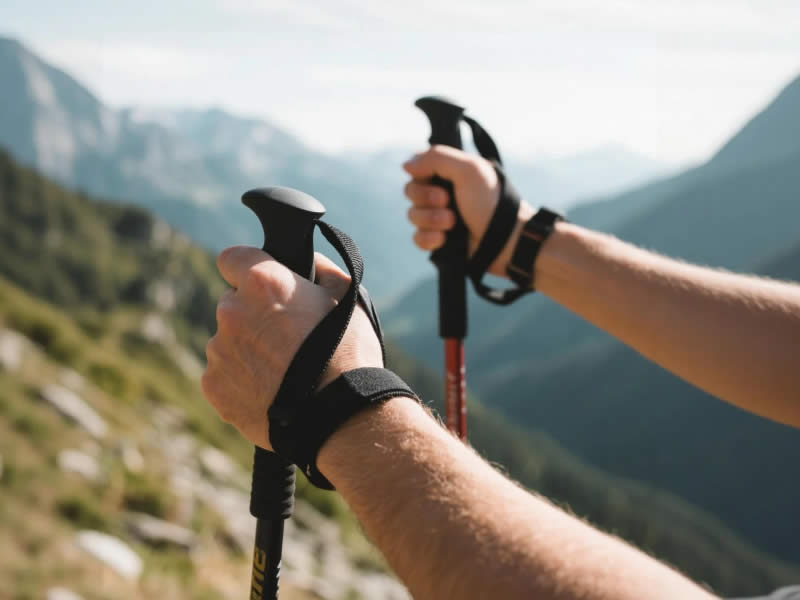
Holding a trekking pole seems trivial: just grab the handle and walk. But the vast majority of hikers – even experienced ones – hold their poles incorrectly. The wrong grip leads to hand fatigue, blisters, and reduced power transfer. The correct grip uses the wrist strap as a load‑bearing harness, allowing your fingers to relax. Here’s how to master the proper hold.
Recommended trekking pole purchase link: https://s.click.aliexpress.com/e/_c4M7OWaN
The wrong way (what most people do)
The typical mistake: slip your hand through the strap from above, so the strap wraps around your wrist. Then grip the handle tightly with your whole hand. In this position, the strap does almost nothing – your fingers bear all the weight. You’ll tire quickly, develop painful calluses, and lose the mechanical advantage poles can provide.
The correct way: hand up from below
Follow these steps for each pole:
- Open the strap so it forms a loop large enough for your hand to pass through.
- Insert your hand from below – push your hand up through the loop, so the strap comes up around your wrist.
- Bring your hand down onto the grip – the strap should now sit between your thumb and index finger, crossing the back of your hand.
- Grip the handle lightly – your fingers should be relaxed, almost loosely wrapped. The strap should be snug enough that when you relax your grip, the pole remains attached to your hand.
- Adjust the strap tension using the slider or buckle. It should be snug but not cutting off circulation. You should be able to slip your hand out with a little effort.
Why this works
When you push down on the pole, your hand presses into the strap, not the grip. The strap transfers force directly from your arm to the pole. Your fingers can relax, reducing fatigue and blister risk. You also maintain a more neutral wrist position, which improves power transfer and reduces strain on tendons.
The grip pressure: relax your fingers
Once the strap is correctly adjusted, you should be able to open your fingers almost completely and still have the pole attached. The strap is doing the work. Your grip should be light – imagine holding a raw egg or a small bird. A death grip tenses your forearms, wastes energy, and causes blisters.
Different grip materials and shapes
- Cork grips: Mold to your hand over time. Hold them with moderate pressure – they absorb sweat and stay non‑slip.
- Foam grips: Lightweight and warm. Use a slightly firmer grip because foam can be slippery when wet.
- Ergonomic (left/right specific) grips: The contoured shape guides your hand into the correct position. Follow the natural curve.
- Extended foam grips: Choke down on the foam section for steep climbs – use the same light grip but lower on the shaft.
Common grip mistakes to avoid
- Strap too loose – The pole dangles, and you end up gripping tightly to control it. Tighten the strap.
- Strap too tight – Restricts blood flow, causing numbness or cold fingers. Loosen slightly.
- Strap across the palm – Should be across the back of your hand, not the palm. Re‑insert your hand.
- Hand inserted from above – This puts the strap on the wrong side of your wrist. Always come up from below.
- Gripping so hard that your knuckles turn white – Relax. The strap bears the load.
- Holding the pole like a hammer – Keep your wrist straight, not bent. A straight wrist aligns bones for efficient force transfer.
How the grip changes with terrain
- Flat ground: Standard grip as described. Relaxed fingers, neutral wrist.
- Uphill: Shorten poles, then choke down on the extended foam section (if available). Keep the same light grip; the strap still does the work.
- Downhill: Lengthen poles, then use the same grip but plant ahead. Your hand may naturally slide up. Keep the strap snug.
- Side‑hilling: Adjust each pole length individually. The grip remains the same, but your uphill hand will be higher.
Drills to perfect your grip
- Strap test: Adjust the strap, then completely open your fingers. The pole should stay attached. Shake your hand gently – if the pole falls, tighten the strap.
- Relaxation check: While walking, consciously relax your fingers every few minutes. They should not be white or tense.
- No‑grip walk: On a safe, flat trail, try to walk with poles without gripping at all – just let the strap hold the pole. Your palm should not even touch the grip. This proves the strap’s effectiveness.
Final verdict
The correct way to hold trekking pole grips is to insert your hand up through the strap from below, let the strap sit between thumb and index finger, and then grip the handle lightly – as if holding an egg. The strap should bear the weight, not your fingers. Adjust the strap snugly, relax your grip, and keep your wrist straight. Master this simple skill, and you’ll eliminate hand fatigue, prevent blisters, and hike more efficiently. Practice on every walk until it becomes automatic – your hands will thank you.




