




Can Trekking Poles Be Used for Balance Training and Rehabilitation?
When most people think of trekking poles, they imagine hikers conquering steep mountain trails or backpackers easing the load on their knees during long descents. But these lightweight, adjustable sticks have a lesser-known application that extends far beyond the wilderness: balance training and rehabilitation. Whether you’re recovering from an injury, managing a neurological condition, or simply looking to improve your stability as you age, trekking poles may be an affordable and effective tool. In this article, we’ll explore the science, practical uses, and precautions of using trekking poles for balance and rehab.
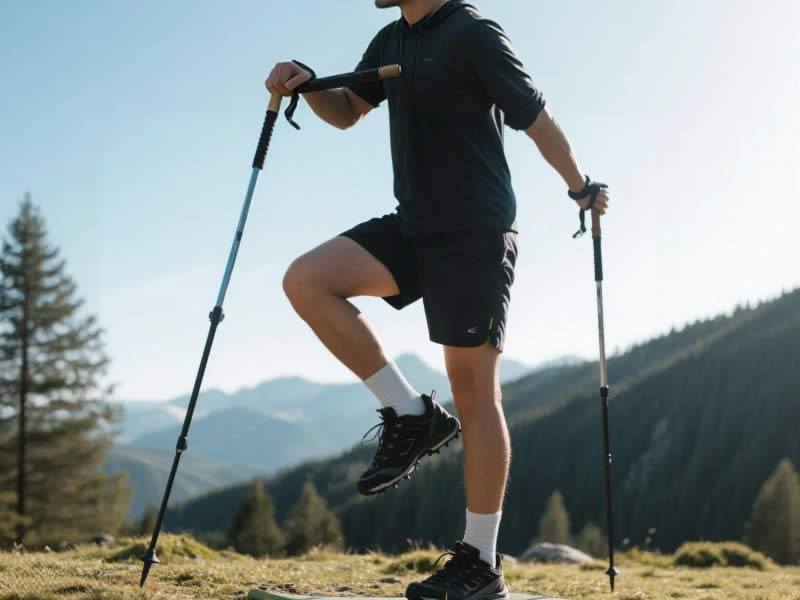
Recommended trekking pole purchase link: https://s.click.aliexpress.com/e/_c4M7OWaN
Why Balance Matters
Good balance is the foundation of nearly all physical activities. It prevents falls, reduces injury risk, and supports independence in daily life. Unfortunately, balance can deteriorate due to aging, sedentary lifestyles, stroke, Parkinson’s disease, lower limb injuries (e.g., ankle sprains, ACL tears), or vestibular disorders. Traditional balance training often involves unstable surfaces, single-leg stands, or specialized equipment like wobble boards. However, these methods can be intimidating or unsafe for someone with severe instability. That’s where trekking poles shine.
How Trekking Poles Support Balance
Trekking poles provide three key benefits for balance training:
- Enhanced base of support – By placing two poles on the ground, you effectively widen your base of support, making it harder to tip over. This allows you to safely practice challenging movements without fear of falling.
- Proprioceptive feedback – The poles transmit tactile information from the ground to your hands and arms, helping your brain better understand your body’s position in space. This is crucial for retraining balance after a neurological injury.
- Load redistribution – If you have a weak or injured leg, poles can offload up to 25% of your body weight, enabling you to perform standing and walking exercises that would otherwise be impossible.
Scientific Evidence
Research supports the use of trekking poles for balance and gait rehabilitation. A 2018 study in Gait & Posture found that older adults using trekking poles showed significantly less postural sway during standing tasks compared to walking without poles. Another trial involving stroke survivors reported that pole-assisted walking improved symmetry and reduced fear of falling. While trekking poles are not a substitute for physical therapy, they can complement clinical programs or serve as a home-based alternative when professional equipment is unavailable.
Practical Exercises for Balance and Rehab
Here are four safe, progressive exercises to try. Consult a doctor or therapist before starting, especially if you have a known condition.
1. Static standing with poles
Hold both poles vertically, tips planted on the floor about shoulder-width apart. Stand with your feet hip-width. Gradually narrow your stance (feet together, then tandem stance) while using the poles for light support. Aim for 30 seconds per position.
2. Weight shifting
From the same starting position, slowly shift your weight from side to side, then front to back. The poles prevent overbalancing. Increase difficulty by lifting one pole off the ground for a few seconds.
3. Single-leg stance with three-point support
Hold both poles in one hand (or use one pole) and lightly touch the ground. Lift your non-injured leg off the floor. Hold for 10–30 seconds. This challenges your core and standing-leg stability while keeping you safe.
4. Dynamic walking drills
Walk in a straight line, placing the poles alternately (right foot with left pole, like natural arm swing). Then try walking heel-to-toe along a taped line on the floor. Reduce pole pressure as you improve.
Important Safety Precautions
- Choose the right poles – Look for lightweight, adjustable trekking poles with rubber tips (for indoor use) or carbide tips (outdoors). Avoid cheap ski poles, which may not have ergonomic grips.
- Set proper height – When standing, your elbow should form a 90-degree angle when holding the pole vertically. For balance work, you may want poles slightly shorter to allow more downward pressure.
- Start on non-slip surfaces – Use a yoga mat or carpet indoors. Outdoors, choose dry, flat ground.
- Avoid over-reliance – The goal is to wean off poles as your balance improves. Use them as a safety net, not a crutch.
Who Can Benefit Most?
- Seniors – Reduce fall risk while maintaining active walking habits.
- Post-injury patients – ACL, ankle fracture, or hip replacement recovery.
- Neurological patients – Multiple sclerosis, Parkinson’s, or stroke survivors.
- People with chronic instability – Vestibular disorders or peripheral neuropathy.
Limitations to Keep in Mind
Trekking poles are not FDA-approved medical devices. They won’t replace professional balance boards, BOSU balls, or guided therapy for severe cases. Also, improper use (e.g., planting poles too far ahead) can create bad movement patterns. Always prioritize form over difficulty.
Final Verdict
Yes, trekking poles can be effectively used for balance training and rehabilitation – as long as you introduce them gradually, follow proper technique, and consult a healthcare provider for specific conditions. They are portable, affordable (good pairs start at $30–60), and versatile enough for both home and outdoor use. Whether you’re recovering from a sprained ankle or simply want to walk more confidently on icy sidewalks, trekking poles might be the unsupported hero you’ve been looking for. Start slow, stay consistent, and you’ll likely notice improved steadiness in just a few weeks.




