




How to Use Trekking Poles on Technical Mountain Trails?
Technical mountain trails are a different beast altogether. Think loose scree, exposed rock slabs, steep root sections, narrow ridgelines, and abrupt drop-offs. On such terrain, trekking poles are not just accessories – they are essential safety tools that can prevent a serious fall. However, using them incorrectly is worse than using none at all. This guide will teach you the precise techniques to master technical trails, from grip adjustments to terrain-specific planting strategies.
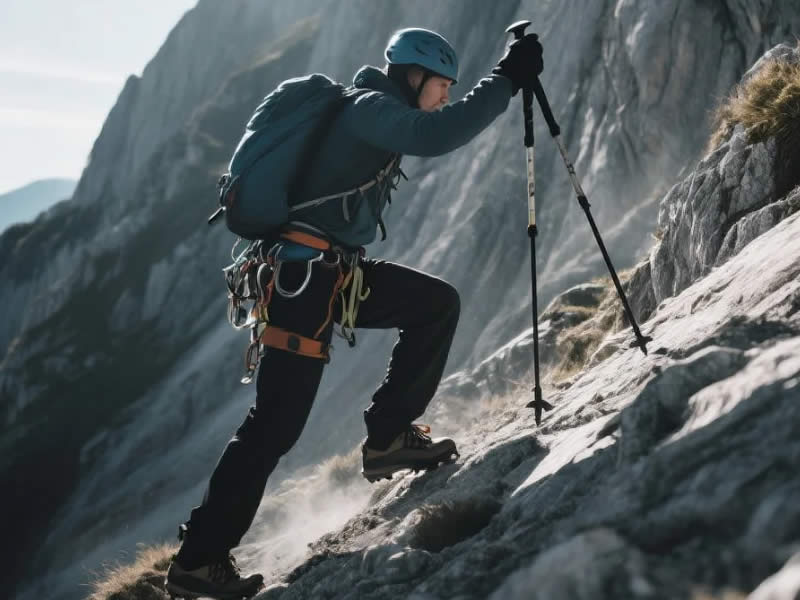
Recommended trekking pole purchase link: https://s.click.aliexpress.com/e/_c4M7OWaN
1. Adjust Pole Length for the Slope
Most hikers set their poles to one “perfect” height and leave them there. That’s a mistake on technical terrain.
- Ascending steep slopes: Shorten poles by 5–10 cm (2–4 inches) from your flat-ground setting. This allows you to plant higher up the slope without raising your shoulders. Your elbows should stay at roughly 90 degrees when gripping the pole on an incline.
- Descending steep slopes: Lengthen poles by 5–10 cm. This lets you reach downslope safely, keeping your torso upright and reducing knee impact. Never descend with poles too short – you’ll hunch forward and lose leverage.
- Traversing (side-hilling): Shorten the uphill-side pole and lengthen the downhill-side pole. This keeps both poles in effective contact with the ground, dramatically improving lateral stability on slanted trails.
2. Master the “Three-Point” Principle
On loose or unstable terrain, always maintain three points of contact with the ground. For example:
- Two feet + one pole, or
- Two poles + one foot.
Never lift both poles simultaneously on a steep or slippery section. Move one pole at a time while keeping the other planted. This rhythmic “pole–foot–pole” pattern mimics how a four-legged animal moves and is far safer than swinging both poles forward together.
3. Grip and Strap Technique for Quick Reactions
Technical trails require instant adjustments. Forget the “wrist strap death grip” used by Nordic walkers.
- Do not put your hand through the strap from below. Instead, slide your hand up through the strap, then grip the handle over the strap. The strap should run between your thumb and index finger, not around your wrist. This allows you to release the pole instantly if you trip – preventing shoulder dislocation or a face-plant.
- Use a light, loose grip. Squeezing tight fatigues your forearm muscles and reduces tactile feedback from the ground.
4. Terrain-Specific Planting Techniques
Different obstacles demand different pole placements.
- Scree or loose gravel: Plant the pole before you commit your full weight. Push down firmly to test if the tip hits a solid rock underneath. If it slides, reposition. Use the poles to “feel” your way across unstable slopes.
- Rock slabs (smooth, no soil): Swap your carbide tip for a rubber or “basket” tip. Carbide will skid horrifically on polished granite. Alternatively, use the pole’s carbide tip in a crack or divot for a secure anchor.
- Roots and mud: Plant the pole tip directly behind a root, not on top of it (it will slip). The basket (small ring near the tip) should just penetrate the soil – don’t jam the pole too deep or you’ll struggle to pull it out.
- Stream crossings: Face upstream, plant both poles wide and deep into the streambed, then move one foot at a time. Never lean on the poles; use them as probes to find stable footing.
5. Avoid the Most Dangerous Mistakes
- Planting ahead of your body: On steep descents, many hikers plant poles far downslope, then roll their center of gravity forward. This actually pulls you off balance. Instead, plant poles directly below your shoulders or slightly behind.
- Using poles to pull yourself up: Do not hook a pole over a rock or branch to hoist yourself – the shaft will snap or the tip will slip. Use your legs to climb; poles are for balance.
- Ignoring locking mechanisms: Technical terrain vibrates and twists. Check your twist-locks or flick-locks every 30 minutes. A collapsing pole during a scree crossing can cause a nasty fall.
6. When to Put Poles Away
On exposed class 3 or 4 scrambles where you need both hands for rock holds, collapse your poles and attach them to your pack. Trying to use poles on hands-and-feet climbing zones is dangerous. Know the limit.
Final Thoughts
Using trekking poles on technical mountain trails is a skill – not an instinct. Practice on moderate slopes first, then progress to loose and steep sections. Adjust length frequently, maintain three-point contact, and use terrain-specific placements. With proper technique, poles will save your knees, stabilize your core, and quite possibly save you from a life-changing fall. Invest in quality poles with reliable locks (e.g., Black Diamond, Leki, Komperdell) and learn these methods before your next alpine adventure.




