




How to use trekking poles with heavy winter gloves?
Winter hiking and mountaineering present a unique challenge: how do you operate your trekking poles when your hands are buried in thick, insulated gloves or mittens? The bulk, reduced dexterity, and slippery materials can turn a simple task into a frustrating ordeal. But with the right techniques and gear adjustments, you can maintain full control of your poles even in sub-zero conditions. This guide covers everything from glove selection to on-trail modifications.
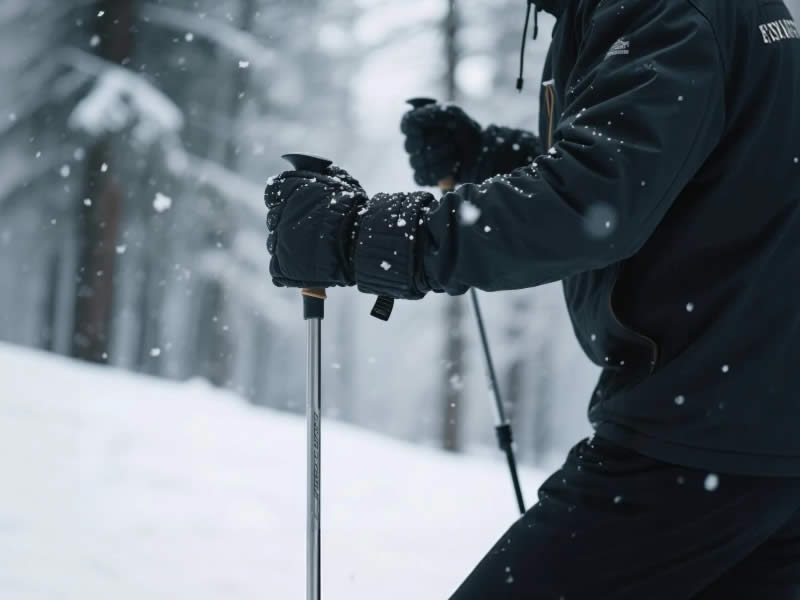
Recommended trekking pole purchase link: https://s.click.aliexpress.com/e/_c4M7OWaN
The Core Problem: Bulk vs. Precision
Heavy winter gloves (e.g., mittens with 200g+ insulation or expedition-weight gloves) are designed for warmth, not fine motor skills. Trekking poles typically feature small buttons, twist-locks, or narrow straps that are easy to manipulate with bare hands but nearly impossible with thick gloves. Common issues include:
- Inability to press small locking buttons
- Twisting slippery glove material instead of the pole shaft
- Straps that won’t cinch or release
- Dropping poles due to poor grip feel
Solution 1: Choose the Right Pole Locking System
Not all pole locking mechanisms are winter-friendly. Here’s how they rank:
| Mechanism | Winter Friendliness | Reason |
|---|---|---|
| External flip-lock (lever) | ⭐⭐⭐⭐⭐ Excellent | Large lever can be operated with heavy gloves or even teeth |
| Push-button internal lock | ⭐⭐ Poor | Small button requires fingertip precision |
| Twist-lock | ⭐ Terrible | Requires rotating a narrow shaft; glove material slips |
Recommendation: Use poles with external cam locks (e.g., Black Diamond FlickLock, LEKI SpeedLock). These feature a wide lever you can flip up/down even with bulky mittens. Avoid twist-locks entirely for winter use.
Solution 2: Modify or Remove Wrist Straps
Standard nylon wrist straps are designed for bare hands. With heavy gloves, threading your hand through the strap is awkward, and cinching the strap tight is nearly impossible.
Option A – Strap deletion: Many winter mountaineers remove the straps completely. Without straps, you simply grip the pole handle. This works well as long as you have a secure grip. However, if you drop a pole on a snowy slope, it may slide away – so attach a leash or tie the pole to your wrist with a separate cord.
Option B – Oversize strap loops: Some brands (e.g., Outdoor Research, Black Diamond) offer gloves with a carabiner loop or poles with extra-large strap openings. Alternatively, buy a simple velcro strap extension.
Option C – The “overhand” method: Instead of threading the strap around your wrist, simply loop the strap over the back of your glove and grip both the handle and the strap together. This provides a backup without requiring fine adjustments.
Solution 3: Extend and Soften the Grips
Foam grips are better than rubber or cork in winter because foam remains grippy even when wet or frozen. Cork becomes slippery when icy; rubber hardens in extreme cold. For heavy gloves, consider adding grip extenders – some poles come with an extended foam section below the main handle, allowing you to choke down without changing hand position.
You can also wrap the grip area with silicone tape or self-fusing rescue tape to create a tacky, oversized surface that heavy gloves can hold securely.
Solution 4: On-Trail Operating Techniques
Adjusting Pole Length
With flip-locks, use the flat of your palm or your forearm to push the lever open. To close, press with your other glove’s palm. Never use your teeth – frozen metal can damage enamel.
Planting and Retrieving
In deep snow, you’ll need to adjust basket size. Large powder baskets (3–4 inches / 8–10 cm) prevent sinking. To plant a pole, simply stab down with moderate force – you don’t need a delicate touch. To retrieve, pull straight up; if stuck, use a two-handed grip (one on the shaft, one on the grip).
Switching Grips
When traversing or side-hilling, you may need to shorten one pole. Instead of fiddling with locks, simply grab the pole lower on the shaft – many winter poles have a secondary foam grip zone for this purpose.
Solution 5: Glove-Specific Tips
- Mittens vs. gloves: Mittens are warmer but worse for dexterity. For active pole use where you need occasional adjustments, consider lobster-claw gloves (split-finger: two compartments – index finger separate, other three together). They offer a good balance of warmth and function.
- Heated gloves: Battery-powered heated gloves can reduce the need for extreme bulk, allowing you to wear a thinner, more dexterous glove.
- Tether your poles: Use a small carabiner or cord to attach each pole to your glove or jacket cuff. If you drop a pole, you won’t lose it in a snow drift.
Solution 6: Practice at Home
Before heading into the backcountry, practice the following with your heavy gloves on:
- Unlock and lock both pole sections
- Extend and collapse poles
- Remove and replace baskets
- Pick up a dropped pole from the ground
Expect frustration at first. After 10 minutes of practice, your muscle memory will adapt.
Common Mistakes to Avoid
- Using twist-locks in cold weather – They will freeze, slip, or become impossible to turn.
- Wearing gloves that are too tight – Restricted blood flow makes your hands colder, defeating the purpose.
- Ignoring strap management – Loose straps can snag on branches or crampons. Tuck them into your glove or cut them off.
- Gripping too hard – Heavy gloves encourage a death grip, leading to forearm fatigue. Rely on the pole’s shaft angle and your core, not crushing force.
Final Verdict
Yes, you can absolutely use trekking poles with heavy winter gloves – but you need the right equipment and technique. Choose poles with external flip-locks. Remove or modify wrist straps. Use foam grips with an extended zone. Practice adjustments before your trip. And consider tethering your poles as a safety backup. With these adaptations, your poles will provide the same stability and efficiency in deep winter as they do in summer – without frozen fingers or frustrating fumbling.




