




How to remove rust from trekking pole shafts?
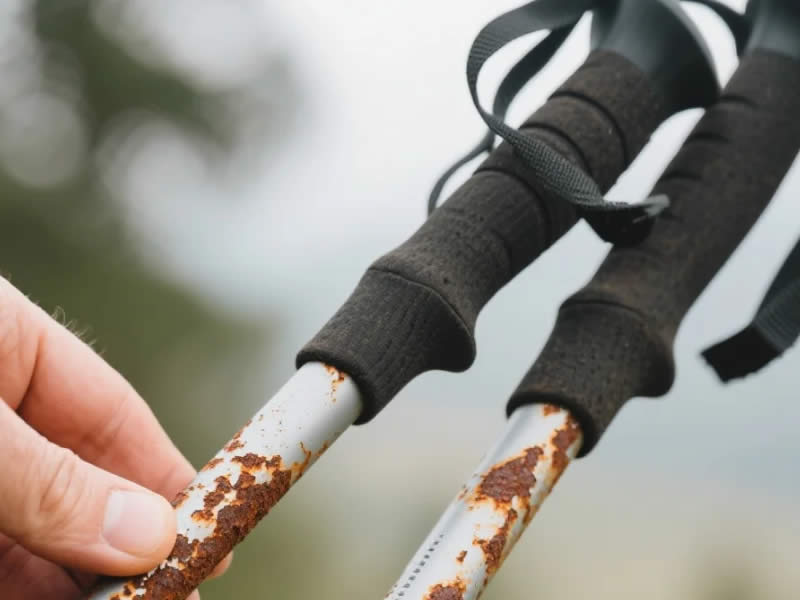
Rust on trekking pole shafts is an eyesore and, if left untreated, can weaken the metal and cause locking mechanisms to jam. While aluminum trekking poles (the most common type) do not rust in the traditional sense – aluminum oxidizes into a white, powdery substance – steel components like screws, springs, and some lower‑end pole shafts can develop reddish‑brown rust. This guide covers how to identify rust vs. oxidation, safe removal methods, and prevention for both aluminum and steel shafts.
Recommended trekking pole purchase link: https://s.click.aliexpress.com/e/_c4M7OWaN
Rust vs. oxidation: know the difference
Before grabbing abrasives, understand what you’re dealing with:
- Rust – Reddish‑brown, flaky, occurs only on iron and steel. Found on flick‑lock screws, rivets, internal springs, or cheap steel shafts.
- Aluminum oxidation – White, chalky, or grey powder. Not structurally harmful in small amounts but can make sections stick together.
This article focuses on true rust removal from steel components and, briefly, cleaning aluminum oxidation.
What you will need
- Fine steel wool (#0000 grade) or a soft brass brush
- White vinegar or lemon juice (mild acid)
- Baking soda (for neutralization)
- Clean cloths and water
- Rust remover gel (e.g., Evapo‑Rust, Naval Jelly) for heavy rust
- Aluminum polish (e.g., Mothers Mag) for oxidation
- Fine sandpaper (400–600 grit) for stubborn spots
- Silicone spray or light oil for post‑cleaning protection
Step‑by‑step rust removal from steel shafts or components
Step 1: Disassemble if possible
Remove the rusted part from the pole. For a steel lower shaft section, separate it from the upper. For rusted screws, remove them from the flick‑lock lever. This prevents damage to anodized aluminum parts.
Step 2: Clean loose rust
Use a dry cloth to wipe away loose rust flakes. Then rub the rusted area with fine steel wool (#0000) or a brass brush. Work gently in circular motions. Do not use coarse steel wool – it will scratch the metal and remove protective coatings.
Step 3: Apply mild acid (vinegar)
For remaining rust, soak a cloth in white vinegar and wrap it around the rusted area for 10–15 minutes. Vinegar dissolves rust without harsh chemicals. Alternatively, dip the steel part directly into a cup of vinegar. For screws or small parts, leave them submerged for 30 minutes.
Step 4: Scrub again
After the vinegar soak, scrub again with steel wool. Rust should lift off easily. For heavy rust, repeat the vinegar soak or use a commercial rust remover gel following the product’s instructions.
Step 5: Neutralize and dry
Rinse the part with water mixed with a tablespoon of baking soda to neutralize any remaining acid. Dry immediately with a clean cloth. Do not leave steel wet – flash rust can form within minutes.
Step 6: Protect from future rust
Apply a very thin coat of light machine oil (e.g., 3‑in‑1 oil) or silicone spray to the cleaned steel area. Wipe off excess. For internal parts like springs, a drop of oil is enough.
Removing oxidation from aluminum shafts
Aluminum oxidation appears as a white, powdery coating. It is not rust and does not require acid.
- Light oxidation – Wipe with a dry cloth or use a soft brush. No chemicals needed.
- Stubborn oxidation – Apply aluminum polish with a soft cloth, rub gently, then buff. For heavy buildup, use fine sandpaper (600 grit) wet, followed by polish.
- Prevention – Store poles in a dry place. A thin coat of car wax on aluminum shafts helps prevent oxidation.
Special case: rust inside twist‑lock mechanisms
Rust inside the expander or the inner wall of a twist‑lock can cause sticking.
- Disassemble the twist‑lock (unscrew end cap, pull out expander).
- Use a small wire brush or steel wool wrapped around a dowel to clean the inside of the outer tube.
- Wipe with a vinegar‑dampened cloth, then dry.
- Apply dry silicone spray to the inside (not oil – oil attracts dirt).
- Replace the expander if it is rusted or deformed.
What NOT to do
- Do not use vinegar on anodized aluminum – The acid can etch the coating, making it look dull. Use only on bare steel or non‑anodized parts.
- Do not use steel wool on carbon fiber – It will scratch and damage the resin. Use a plastic brush or cloth only.
- Do not submerge the entire pole – Water can get inside sealed sections, causing hidden rust. Spot‑clean only.
- Do not use naval jelly on aluminum – It is too aggressive and will damage the finish.
When rust means replacement
If the rust has caused pitting (small holes in the metal) or the shaft is significantly weakened, replace the section. Pitted steel is prone to cracking. Also, if a flick‑lock screw is so rusted that its head is stripped, buy a replacement screw from the manufacturer.
Prevention is better than removal
- Dry your poles after every wet or snowy hike – Moisture is the primary cause of rust.
- Store indoors – Never leave poles in a damp garage or car trunk.
- Lubricate steel screws annually – A tiny drop of oil on flick‑lock screws prevents rust.
- Rinse after saltwater exposure – Salt accelerates rust dramatically. Rinse with fresh water, then dry.
- Use anti‑seize on threaded joints – For screw‑on baskets or tips, a dab of anti‑seize compound prevents galvanic corrosion.
Quick reference table
| Surface | Rust/Oxidation Type | Removal Method | Aftercare |
|---|---|---|---|
| Steel shaft | Red rust | Vinegar + steel wool | Light oil |
| Flick‑lock screw | Red rust | Vinegar soak + wire brush | Replace or oil |
| Aluminum shaft | White oxidation | Aluminum polish or fine sandpaper | Car wax |
| Carbon fiber | Not applicable | N/A (never use abrasives) | N/A |
Final thoughts
Rust on trekking poles is usually preventable and almost always removable. For steel components, white vinegar and fine steel wool are your best friends. For aluminum oxidation, a simple polish restores the shine. The key is to catch rust early – a small spot is easy to clean, while deep pitting may end the pole’s life. Make post‑hike drying a habit, give your poles an annual rust check, and they will serve you reliably for years. And remember: when in doubt about structural integrity, replace rather than risk a fall.




