




How to sharpen trekking pole carbide tips?
Your trekking poles slip on wet rock. They skate across granite slabs instead of biting into the surface. You look down and see the once-sharp point has worn into a smooth, rounded nub. The immediate thought: Can I sharpen this?
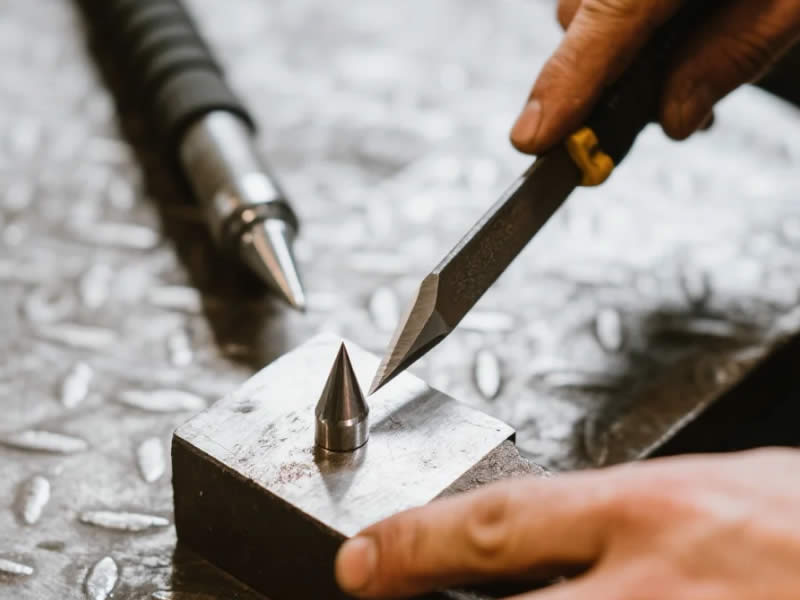
Recommended trekking pole purchase link: https://s.click.aliexpress.com/e/_c4M7OWaN
The short answer is complicated. Technically, you can sharpen certain trekking pole tips—but for the vast majority of modern poles with carbide tips, replacement is almost always the better option. This guide explains why and walks you through both approaches so you can make an informed decision.
Understanding what you are working with
Most quality trekking poles feature tips made from tungsten carbide, one of the hardest materials available for this application, ranking just below diamond on the hardness scale.-3 This exceptional hardness is why carbide tips can last thousands of miles even on rocky terrain.-
However, carbide tips are composite structures. The actual "tip" consists of a tungsten carbide insert pressed into a steel or aluminum sleeve or ferrule.-2 This matters because what often fails first is not the carbide itself but the surrounding metal housing. As Andrew Skurka, who has logged more than 10,000 backcountry miles, explains: "The failure point is not the actual tip, which is made of carbide and nearly as tough as diamond, but rather the aluminum and plastic parts of the tip."-43
Signs it is time for replacement
Most hikers wait too long. By the time they notice their tips skating on wet rock, critical wear has already occurred.
Replace your tips immediately when:
- The carbide insert is cracked or chipped
- The insert is worn flush with or recessed into the metal housing
- More than 30-40 percent of the original carbide height is gone
- The tip wobbles when pushed sideways
- The housing appears flattened or mushroom-shaped
On mixed rocky terrain like the Sierra Nevada or White Mountains, expect to replace pole tips every 500-600 miles—at that point, even if the carbide still looks acceptable, the metal housing may be compromised.-43 On packed dirt trails, you might reach 650-750 miles.-43
Why sharpening carbide usually does not make sense
Carbide's extreme hardness means standard metal files glide across it without effect.-3 Diamond abrasives can reshape carbide, but the process is difficult, time-consuming, and carries significant risks.-1
The drawbacks of attempting to sharpen carbide tips include:
- Risk of cracking: Carbide is brittle. Improper file pressure can cause chipping or cracking, leading to sudden tip failure on the trail.-1
- Compromised integrity: Excessive force or vibration during filing can loosen the carbide tip from its metal collar.-1
- Inefficiency: Even if successful, a sharpened carbide tip will not last nearly as long as a new one.
- Safety hazards: A poorly sharpened or cracked tip can snap under pressure—especially dangerous on steep or slippery ground.-1
The reality: if you own steel-tipped poles (less common on modern trekking poles), sharpening is straightforward and effective. Steel tips can be refreshed with a metal file, though they will wear down again quickly. But if your poles have carbide tips—as most quality poles do—sharpening is practically not worthwhile. Once carbide tips wear noticeably, the safe and effective solution is replacement.-3
How to sharpen steel tips (if applicable)
If your poles have steel tips, follow this procedure:
- Secure the pole in a vise, padding the jaws with a cloth to protect the shaft.
- Clean the tip area thoroughly to remove dirt and debris.
- Hold a medium-grit metal file at the existing bevel angle (typically 30-45 degrees) against the tip.
- Push the file in one direction only—away from your body and away from the pole shaft. Avoid back-and-forth sawing motions.
- Make 3-5 strokes on one section of the tip, then rotate the pole slightly and repeat
- Continue filing and rotating until you have worked your way evenly around the full circumference
- Check your progress frequently—aim for a uniform edge, not a needle-sharp point-2
For carbide tips, if you are determined to attempt sharpening despite the risks, use a diamond-coated file, follow the same filing technique, and proceed with extreme caution—but be aware you are working against the material's inherent properties.
The better approach: replace the tip
For the overwhelming majority of hikers, replacing trekking pole tips is the definitive solution. It is safer, more effective, and simpler.-1
Step 1: Remove the old tip
- Submerge the worn tip in boiling water for 10-15 seconds to soften the plastic ferrule and any adhesive.-43
- Grip low on the tip with slip-joint pliers or a wrench (using a cloth to protect the jaws)
- Twist firmly counter-clockwise while pulling the tip away from the shaft-43
Step 2: Install the new tip
- Slide the new replacement tip over the clean shaft end
- Tap the pole against a flat, hard surface (concrete floor, large rock) several times to seat the tip firmly-43
- For extra security, some users apply a small amount of epoxy, but many find friction alone sufficient
Most manufacturers—including Black Diamond, LEKI, Komperdell, and Mountain Designs—sell replacement carbide tips that screw or press onto the pole shaft.- A pair of replacement tips typically costs $10-15—far less than new poles.
When to avoid replacement entirely
If the carbide insert shows deep cracks, over 30-40 percent of its original height is gone, or the tip wobbles visibly in its housing,For immediate safety, replace the tip without attempting sharpening. A compromised tip structure cannot be restored by filing—only replaced.-2
How to make your tips last longer
Prevention is easier than repair. Follow these strategies to extend tip life:
Rotate your tips regularly: Because poles naturally maintain the same orientation relative to travel, wear concentrates on one side of the tip. Every 3-5 hiking days, loosen the pole sections, rotate the lower section 90 degrees, and retighten. This simple habit can extend tip life by up to three times.-7
Match the tip to the terrain: Use rubber tip covers (often called "road tips" or "paws") when hiking on pavement, gravel roads, or hard-packed trails. Rubber tips protect the carbide from abrasive surfaces and provide better grip on smooth ground—though they typically last only 100-200 miles on asphalt.-7
Avoid stabbing motions: Plant your poles smoothly rather than stabbing aggressively. Dragging poles between plants also increases unnecessary abrasion.-7
Clean tips after muddy or coastal hikes: Dirt, grit, and salt accelerate wear and corrosion. A quick rinse and dry after each trip preserves tip condition.-7
What about "self-sharpening" tips?
Some manufacturers advertise "self-sharpening" carbide tips. This refers to a specific metallurgical property where the softer cobalt binder wears away faster than the harder tungsten carbide particles, exposing fresh, sharp carbide edges and maintaining a rougher, more "toothy" surface longer than standard carbide.-21
The effect is subtle rather than dramatic—independent testing suggests self-sharpening formulations may extend effective tip life by 20-40 percent under abrasive conditions.-21 However, as one expert notes: "This is not 'sharpening' in the sense of a knife blade becoming sharper... The tip does not become sharper than it was when new; rather, it resists becoming smooth and rounded as quickly as standard carbide tips."-21
Self-sharpening tips are not a maintenance-free solution—just a better-engineered tip that lasts longer.
The bottom line
For carbide trekking pole tips—the standard on virtually all quality poles—sharpening is rarely the right answer. The material is too hard for conventional tools, the process risks structural damage, and a compromised tip can fail at a critical moment. Replace, don't sharpen.
Steel-tipped poles can be sharpened effectively using a metal file, but they will wear down again quickly. For most hikers, the most sensible long-term strategy is investing in quality carbide-tipped poles, rotating the tips periodically to distribute wear, using rubber covers on pavement, and replacing the carbide tips when they show significant wear.
Carry a spare pair of tips in your repair kit. Check your tips regularly—thirty seconds of inspection at resupply points can prevent a sketchy descent on bald poles.-43 And when those tips finally wear out, don't waste time with a file. Replace them and get back to the trail with confidence.




