




Are Leki trigger system trekking poles better than traditional straps?
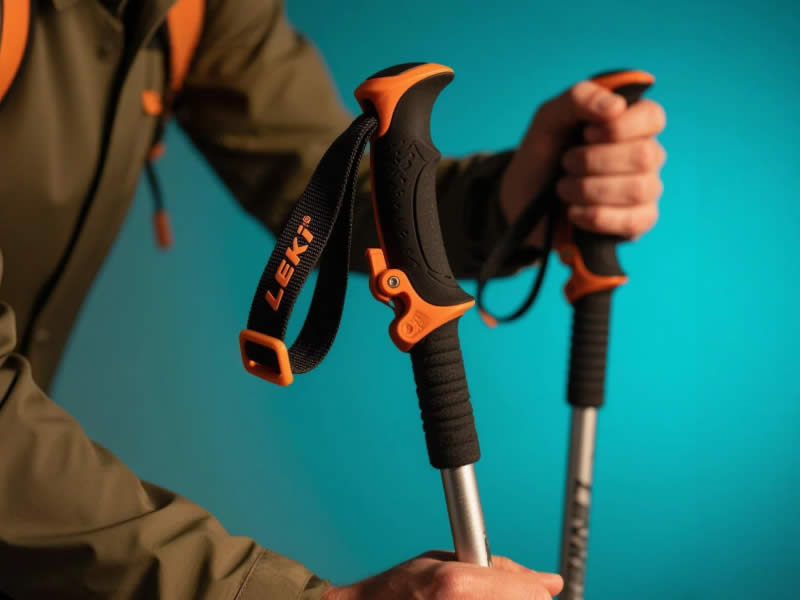
The Leki Trigger system (Trigger Shark, Trigger 3D) replaces traditional fixed wrist straps with a quick‑release buckle. It is better for specific users and scenarios, but not universally superior. This article compares both systems to help you decide.
Recommended trekking pole purchase link: https://s.click.aliexpress.com/e/_c4M7OWaN
How the Trigger system works
A small plastic “trigger” attaches to a dedicated glove or to a loop on your existing glove. The pole handle has a corresponding receiver. To connect, you push the trigger into the handle – it clicks securely. To release, you squeeze the sides of the handle or press a button (depending on the generation). The pole detaches instantly while the trigger stays on your hand.
Advantages over traditional straps
- Instant detachment – Free your hands to check a map, take a photo, or scramble without removing your hand from the strap. Traditional straps require you to pull your hand out, which is slower and clumsy.
- No dangling straps – When you release the pole, the strap stays on your hand; nothing flops around or gets caught on branches.
- Safer in falls – The pole detaches cleanly, reducing risk of shoulder or wrist injury from a trapped pole.
- Glove compatibility – Works with thin or thick gloves that have the trigger attachment. Leki sells trigger‑compatible gloves or you can sew a trigger loop onto your own gloves.
- Ideal for trail running & fastpacking – Frequent hand‑free sections make the Trigger system a game‑changer.
Disadvantages
- Requires compatible gloves – You cannot use the quick‑release feature with ordinary gloves or bare hands. The trigger loop adds bulk.
- Cost – Trigger poles are more expensive (€150‑180) and trigger gloves add €30‑50.
- Learning curve – Connecting the trigger to the handle takes practice, especially with cold hands.
- Potential for ice or mud – In freezing conditions, the mechanism can ice up, making release difficult. Traditional straps never fail mechanically.
- Less adjustability – Traditional straps can be cinched to any hand size; trigger loops come in fixed sizes (though adjustable versions exist).
Traditional straps – when they win
- Winter mountaineering – Simpler, no moving parts to freeze. Standard straps work with any glove.
- Budget users – Traditional straps are included on all basic poles and cost nothing extra.
- Hikers who rarely need free hands – If you never take your hands off the poles, the quick‑release offers little benefit.
- Backpackers with heavy loads – Some users feel more secure with a traditional strap under heavy pull forces.
Verdict
The Leki Trigger system is better for trail runners, fastpackers, and hikers who frequently need free hands. It is also safer in falls. For winter alpine use or budget‑conscious trekkers, traditional straps remain perfectly adequate. Neither is “best” overall – choose based on your typical terrain and how often you need to release the poles instantly.




