




How to maintain trekking poles after winter salt exposure?
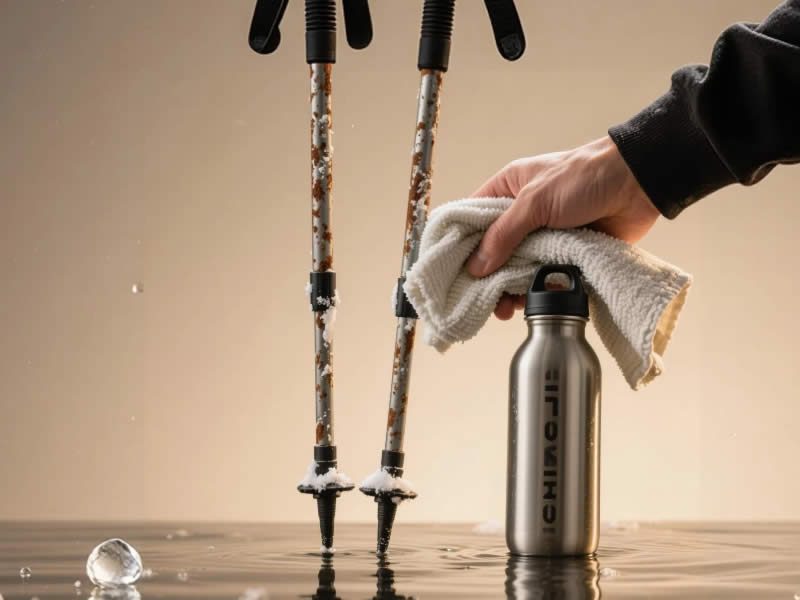
Winter hiking in Germany, the Alps, or any region where roads and paths are salted for ice control exposes your trekking poles to a hidden enemy: salt. While salt helps keep trails safe for walking, it is highly corrosive to metal components. If left untreated, salt will eat through anodized coatings, rust steel screws, and seize locking mechanisms. This guide explains how to properly clean and maintain your poles after winter salt exposure to keep them functioning for years.
Recommended trekking pole purchase link: https://s.click.aliexpress.com/e/_c4M7OWaN
Why salt is so damaging
Road salt (typically sodium chloride or calcium chloride) accelerates galvanic corrosion. When saltwater seeps into tiny crevices – between shaft sections, inside flick‑lock pivots, or around the carbide tip – it creates an electrolyte that promotes rust on steel parts and pitting on aluminium. Unlike plain water, salt residue remains even after the poles look dry. Over a few weeks, you may notice:
- White, powdery corrosion on aluminium shafts
- Brown rust on screws, springs, or baskets
- Stiff or stuck locking mechanisms
- Pitting (small holes) on the lower shaft
Immediate after‑hike care (within hours)
The most critical step is to act as soon as you return from a hike on salted trails. Salt damage accelerates with time.
- Extend poles fully – Open all sections to expose the entire shaft and lock mechanisms.
- Rinse with fresh water – Use a hose, a bucket, or a shower head to thoroughly flush all salt residue from the pole. Pay special attention to the area around the baskets, the tip, and the inside of flick‑lock levers. For twist‑locks, unscrew the end cap and rinse inside the outer tube.
- Scrub with a soft brush – An old toothbrush helps remove salt crystals from grooves and lock crevices.
- Rinse again – Ensure no salty water remains.
Drying thoroughly
After rinsing, drying is essential. Moisture alone can cause rust, but salt residue from incomplete rinsing is worse.
- Shake off excess water – Then wipe every section with a dry microfiber cloth.
- Air dry for at least 2 hours – Leave the poles extended in a warm, ventilated room. If possible, disassemble lock components (e.g., remove flick‑lock screws) to let water escape.
- Do not collapse and store wet – Trapped moisture will create a corrosive environment inside the joints.
Cleaning and lubricating locks
Salt can leave a sticky film on locking mechanisms. After winter hikes, a deeper clean is needed:
- For flick‑locks – Open the lever fully. Use a toothpick or small brush to remove any salt deposits around the cam and pivot pin. Rinse with isopropyl alcohol to dissolve residue.
- For twist‑locks – Disassemble the lock (unscrew end cap, pull out the expander). Wash all parts in warm, soapy water, rinse, and dry completely. Replace the expander if it feels hardened or cracked.
- Apply dry silicone spray – After everything is dry, spray a tiny amount on flick‑lock pivots or twist‑lock expanders. Wipe away excess. Do not oil the shaft or clamping surfaces.
Inspecting for salt damage
Once a month during winter, or after every salted hike, inspect your poles carefully:
- Shafts – Look for white powdery spots (aluminium oxide) or pitting. Light oxidation can be polished away with aluminium polish. Deep pitting means the shaft is weakened – replace the section.
- Screws and steel parts – Check flick‑lock screws and basket attachment points for reddish rust. Light rust can be removed with fine steel wool and vinegar. Heavily rusted screws should be replaced (Leki and Black Diamond sell hardware kits).
- Tips – Salt can corrode the steel ferrule holding the carbide tip. If the tip wobbles or the ferrule is cracked, replace the tip immediately.
Long‑term storage after winter
When the winter season ends and you switch back to summer baskets, give your poles a final deep clean:
- Disassemble the poles completely (separate all sections).
- Rinse with fresh water, then wipe dry.
- Apply a thin coat of car wax or silicone lubricant to the outside of shafts (not the clamping areas) to protect against future corrosion.
- Store collapsed, indoors, in a dry closet. Do not leave poles in a damp basement or garage.
What not to do
- Don’t use WD‑40 – It leaves a sticky residue that traps salt and dirt. Use dry silicone or isopropyl alcohol for cleaning.
- Don’t store poles extended – This allows moisture to settle inside joints.
- Don’t ignore salt – Even a single day on salted trails can start corrosion. Rinse after every use.
Real‑world tip from German winter hikers
Many hikers in the Bavarian Alps or the Black Forest carry a small spray bottle of fresh water in their pack. At the end of the hike, they rinse the poles before collapsing them for the drive home. This simple habit prevents salt from drying on the poles and makes the full cleaning much easier.
Final verdict
Maintaining trekking poles after winter salt exposure is straightforward: rinse, dry, clean locks, and lubricate sparingly. The most important action is to rinse with fresh water immediately after each salted hike. Neglect leads to corrosion that can ruin your poles in a single season. With 10 minutes of care after each trip, your poles will stay corrosion‑free, locks will operate smoothly, and your investment will last for many winters.




